Skip to content
Low Moisture Firewood for Cleaner, Warmer Fires
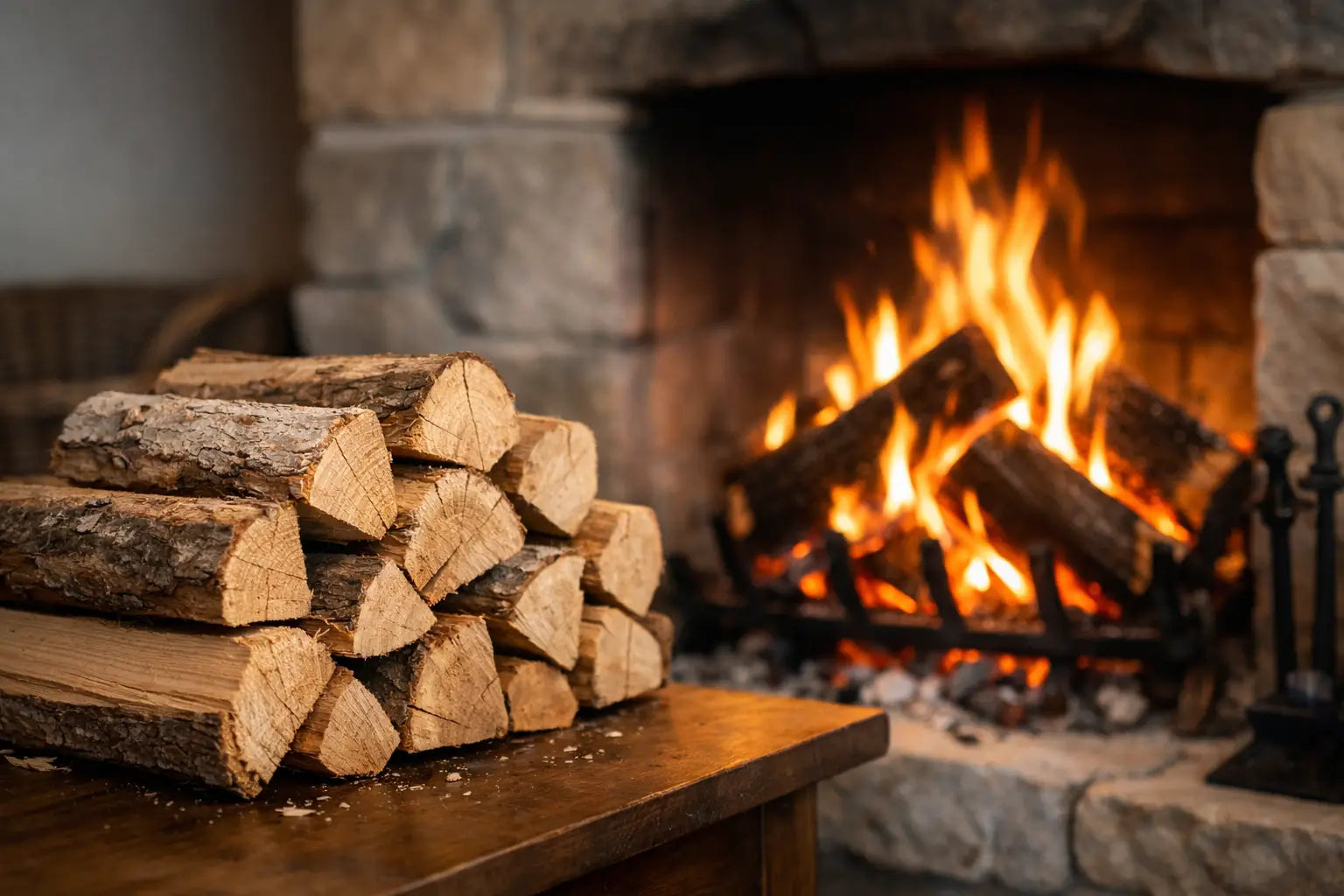
A stove that smokes on lighting, blackens its glass and seems to consume logs without producing much warmth usually has one underlying problem: wet fuel. Low moisture firewood is made for the opposite experience. It lights more readily, burns with a brighter flame and gives your stove or fireplace a better chance of delivering the heat you paid for.
For households relying on a log burner through the colder months, dry fuel is not a small detail. It affects the comfort of the room, the cleanliness of the appliance, the amount of wood you use and the time spent tending the fire. Choosing properly dried logs also removes the uncertainty that comes with buying freshly cut or poorly stored wood.
What Low Moisture Firewood Means
Firewood always contains some water. Freshly felled timber can hold a substantial amount, which is why it is unsuitable for efficient domestic burning. Before a wet log can provide useful heat, the fire must first boil away that moisture. Energy that should be warming your home is instead spent drying the wood in the firebox.
Low moisture firewood normally means logs with a moisture content below 20%. This is the recognised threshold for Ready to Burn certified wood fuel sold for domestic use in smaller quantities. It provides a practical benchmark: the logs are dry enough to burn efficiently when used in a suitable appliance with good airflow.
The difference is easy to see in use. Dry logs tend to have lighter ends, visible splits and a firmer sound when knocked together. They ignite with less fuss and produce a more stable flame. Damp logs often hiss or bubble at the ends, give off excessive smoke and leave the fire struggling for air.
A moisture meter can be useful, but it must be used correctly. Split a log and test the newly exposed inner face rather than the outside. The surface can dry while the core remains too wet to burn well. For most buyers, however, purchasing certified kiln-dried wood from a dependable supplier is a more straightforward way to know what is arriving at the door.
Why Dry Logs Give More Useful Heat
The heat value of wood is closely tied to its moisture content. Lower-moisture logs release more of their energy as heat rather than using it to evaporate water. This means you generally need fewer logs to achieve the same room temperature, provided your stove is correctly sized and operated.
Dry fuel also supports cleaner combustion. When logs burn hot enough, gases and particles are more completely burned before leaving the appliance. The practical benefits include less visible smoke, less soot on the stove glass and fewer deposits building up in the flue.
That does not mean any dry log will perform identically. Wood species, log size, stove design and air control settings all matter. Dense hardwoods such as oak, ash and hornbeam generally offer a longer, slower burn, while birch and alder are often valued for easy lighting and a lively flame. The right choice depends on whether you want quick warmth, an extended evening burn or a balance of both.
Kiln-Dried or Seasoned Firewood?
Seasoned firewood is wood that has been left to dry naturally, usually for many months and sometimes longer. When it has been properly split, stacked with good airflow and protected from persistent rain, it can become excellent fuel. The difficulty is consistency. British weather, limited storage space and variable timber sizes can all leave naturally seasoned logs wetter than expected.
Kiln-dried firewood is dried in a controlled environment to bring moisture down to a reliable level. This process makes it particularly useful for households that want fuel ready to use on delivery, rather than wood that may need further drying before it is suitable for the stove.
There is a price difference to consider. Kiln-dried logs can cost more upfront than unseasoned timber, but the comparison should not be based on the ticket price alone. Wet logs contain less usable energy, can create more mess and may require a larger volume of wood to produce similar warmth. Transparent pricing by volume, together with stated moisture content, gives a more useful indication of value.
How to Choose Low Moisture Firewood
The most reliable purchase is not necessarily the biggest stack of logs. It is the fuel that suits your appliance, storage space and normal heating routine. Before ordering, check four practical details:
- Look for a stated moisture content below 20% and Ready to Burn certification where applicable.
- Compare the actual loose volume or crate volume, rather than judging value from a product photograph or bag count alone.
- Choose a log length that fits your stove comfortably, leaving room for airflow around the fuel.
- Match the species to how you use your fire, whether that is fast lighting, longer burns or regular daily heating.
It is also worth being realistic about how quickly you burn through fuel. A decorative weekend fire uses very different quantities from a stove supporting your main heating. Ordering too little can leave you searching for fuel during a cold spell, while ordering too much without sufficient storage can compromise the quality of otherwise dry logs.
Store Dry Firewood So It Stays Dry
Even premium kiln-dried logs need correct storage after delivery. A pile left uncovered on wet ground will soon absorb moisture, especially during a British autumn or winter. The aim is to keep rain off while allowing air to move around the wood.
Store logs in a covered log store, shed with ventilation or a sheltered area against an outside wall. Raise them off the ground using a pallet, rack or solid base. Stack loosely enough for air to circulate, and avoid wrapping the wood tightly in plastic, which can trap dampness and encourage mould.
Bringing a small supply indoors a day or two before use can help surface moisture evaporate and makes handling easier. Do not store a large fuel pile beside the stove, though. Keep your main stock outside and bring in only what you expect to burn soon.
If you buy bagged logs, resist the temptation to leave the bags exposed on a patio or driveway. The packaging makes delivery and carrying convenient, but it is not a replacement for protected storage.
Get the Best Burn From Your Stove
Good firewood needs good burning practice. Start with dry kindling and smaller splits, using sufficient airflow to establish a hot fire quickly. Once the larger logs are burning well, adjust the air controls in line with your stove manufacturer's guidance.
Avoid shutting the appliance down too early in an effort to make logs last. Starving a fire of air can lead to incomplete combustion, more smoke and increased deposits in the flue. A steady, clean burn is more efficient than a smouldering one.
Regular maintenance matters as well. Empty ash as recommended for your appliance, keep air inlets clear and have the chimney or flue swept at appropriate intervals by a qualified professional. Dry logs reduce soot compared with wet fuel, but they do not remove the need for sensible stove care.
A Better Way to Plan Your Winter Fuel
Low moisture firewood gives you a dependable starting point, but the best buying decision still depends on your household. A small stove used occasionally may be well served by convenient bags of birch or alder. A busy household heating a main living area every evening may find a larger crate of dense hardwood more economical over the season.
Candowe supplies Ready to Burn kiln-dried logs in practical formats, helping customers choose dry fuel that matches their storage space and expected usage. Ordering early, storing logs properly and selecting a species suited to your stove can turn lighting the fire from a daily frustration into one of the simplest parts of keeping the house warm.
When the forecast turns cold, good fuel should not make you work harder. Keep a dry supply on hand, give it the airflow it needs and let your stove do the job it was designed to do.