Skip to content
How to Choose Firewood for a Wood Burner
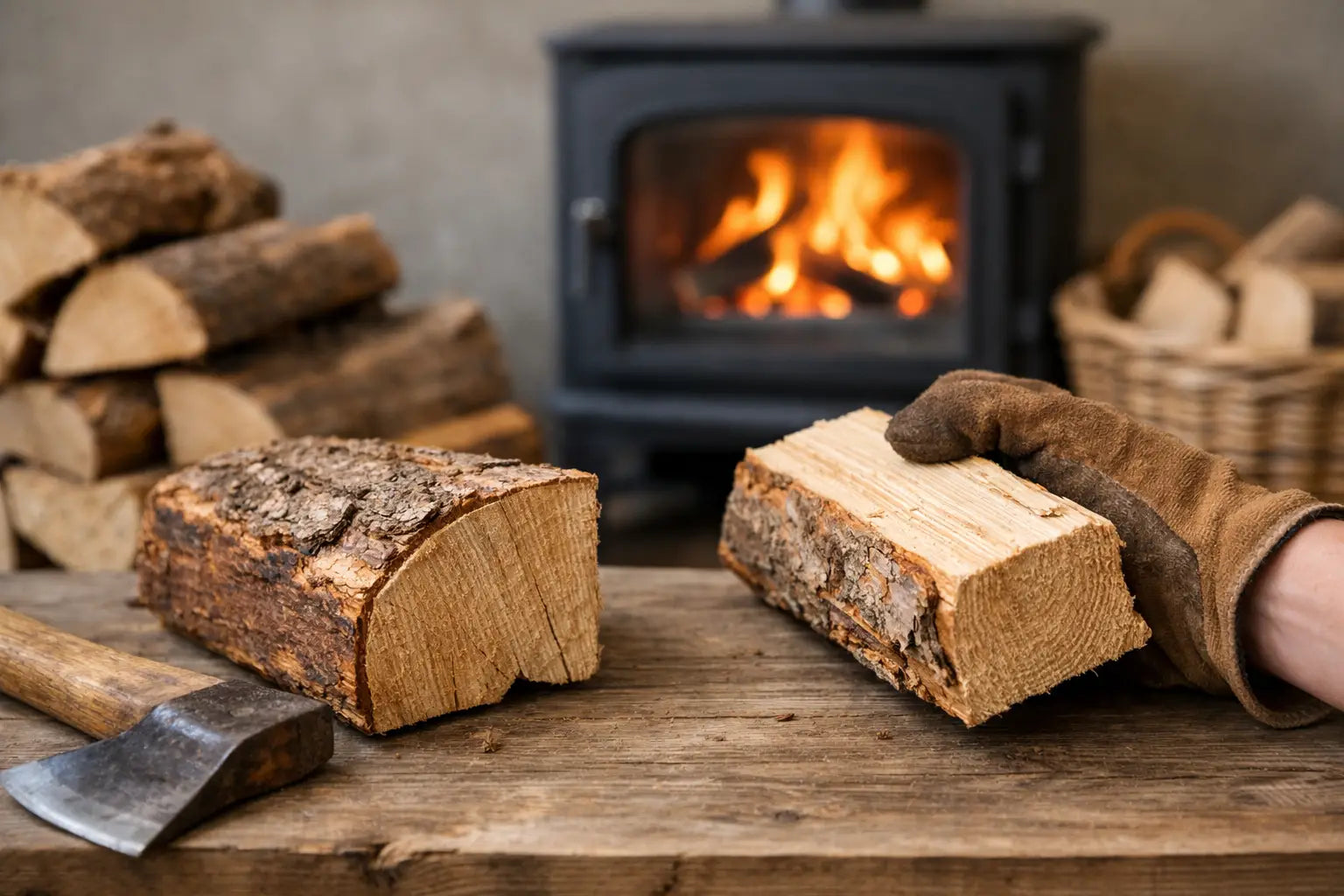
A wood burner can only perform as well as the fuel inside it. If your glass blackens quickly, the fire is difficult to light, or a load of logs disappears with little heat to show for it, the issue is often the firewood. Choosing the right firewood for wood burner use means looking beyond a low price per bag and focusing on moisture, species, size and storage.
Dry, correctly sized logs create a warmer, cleaner and more controllable fire. They also make the everyday job of heating your home simpler: less smoke when lighting, less mess around the stove and fewer disappointing fires on cold evenings.
Start with dry, Ready to Burn logs
Moisture content is the first specification to check. Freshly cut wood contains a large amount of water, and even air-dried logs can remain too damp if they have not been seasoned for long enough or stored properly. When wet wood burns, much of the heat released is used to drive off that water rather than warm your room.
For domestic stoves, choose kiln-dried logs with a moisture content below 20%. This is the standard associated with Ready to Burn certified firewood. Kiln drying removes excess moisture in a controlled process, providing consistency that is difficult to achieve with loosely stored, naturally seasoned logs.
The difference is noticeable from the first lighting. Dry logs catch more readily, burn with a steadier flame and produce more useful heat. They also reduce smoke, tar deposits and the build-up of soot on stove glass and within the flue. That does not remove the need for correct stove operation and regular chimney sweeping, but it gives your appliance the fuel it was designed to use.
Be cautious with descriptions such as “seasoned”, “barn stored” or “part dried” when no moisture figure is supplied. They may still be suitable after further drying at home, but they are not the same as fuel that arrives ready for the burner. If you need dependable heat now, a stated moisture content below 20% is far more useful than a vague claim.
Which firewood for a wood burner is best?
There is no single best log for every household. The right species depends on how you use your stove, the size of your firebox and whether you value easy lighting, a lively flame or long-lasting heat. All properly kiln-dried hardwood can provide excellent results, but each wood has a slightly different character.
Birch is a popular choice for regular use. It lights easily, burns brightly and produces good heat, making it especially useful for getting a cold stove established. Because it burns relatively quickly compared with denser hardwoods, many households use birch for evening fires or combine it with longer-burning logs.
Alder is another practical, easy-burning option. It is often chosen for a responsive, attractive flame and works well where you want to bring a room up to temperature without building an oversized fire. It can be a sensible choice for smaller stoves and milder days.
Ash offers a dependable balance of easy lighting and sustained heat. It is a familiar favourite for wood burners because it burns cleanly when dry and is suitable for everyday heating. Oak is denser and usually burns more slowly, providing a longer-lasting bed of embers. It can be ideal when you want to maintain heat through a long evening, although it benefits from a well-established fire and good airflow.
Hornbeam is among the denser hardwoods and is valued for its high heat output and long burn. It suits households that rely heavily on their stove and want fewer refuelling intervals. The trade-off is that dense logs are best used on an established fire rather than as the only fuel for lighting.
A mixed hardwood load is often the most flexible answer. Use easier-lighting logs such as birch or ash to establish the fire, then add oak or hornbeam to maintain a strong, lasting heat. This approach lets you match the fuel to the time of day rather than expecting one log type to do every job.
Choose the right log size and format
A log that is too long for the stove forces you to load it awkwardly and can restrict airflow. Before ordering, measure the usable width of your firebox, then allow a little clearance at each end. Most domestic wood burners take standard split logs comfortably, but compact stoves may need shorter lengths.
Thickness matters as well. Smaller splits catch quickly and are useful for lighting or reviving a low fire. Larger splits generally burn for longer and are better once the stove is hot. A good delivery contains consistently cut logs, so you can load the stove safely without spending time splitting oversized pieces yourself.
The format you choose should reflect both your storage space and how much wood you use. Net bags and fire-box packs are convenient for occasional fires, testing a new species or carrying fuel through the house neatly. They are also useful where access is tight or storage is limited.
For households using a wood burner most days during the heating season, crates or larger palletised loads usually offer better value per cubic metre. Check whether the advertised volume is loose-filled or stacked, as this affects how much wood you are receiving. Transparent volume information makes it easier to compare like for like, rather than judging value by the appearance of a bag or crate alone.
Store dry logs so they stay dry
Buying kiln-dried firewood is only half the job. Poor storage can quickly undo that benefit. Logs need protection from rain while still having enough airflow around them to remain dry.
Store your main supply outside in a covered log store, shed with ventilation, or beneath a purpose-made cover. Keep the wood raised off the ground on a pallet, rack or slatted base. Ground moisture can travel into the bottom layer, particularly during a wet British winter.
Avoid wrapping a whole stack tightly in plastic. While it may keep rain off, it can trap condensation and prevent air movement. A roofed top with open sides is usually a better arrangement. If you keep a small basket indoors, bring in only what you expect to burn over the next day or two. This keeps the house tidier and avoids creating a large, dusty indoor store.
Light and run the stove with clean combustion in mind
Even premium logs need the right conditions. Start with dry kindling and a small number of split logs, leaving space for air to circulate. A top-down lighting method, with kindling and a natural firelighter placed above larger logs, can reduce initial smoke and helps the fire establish cleanly.
Once the fire is burning well, follow your stove manufacturer’s instructions for adjusting the air controls. Starving a fire of air to make it last longer often leads to smouldering, dark smoke and heavy deposits. A smaller fire burning brightly and efficiently is generally preferable to a large load of logs left to slumber.
Do not burn treated timber, painted wood, old furniture, chipboard or household waste. These materials can release harmful fumes and damage your stove or flue. Keep the fuel supply simple: certified dry logs, dry kindling and, where suitable for your appliance, approved solid-fuel products.
Plan your order around real household use
A stove used for occasional weekend fires needs a very different supply from one providing daily supplementary heat. Your usage will vary with insulation, room size, stove output, outdoor temperatures and how long you run the appliance each day. For that reason, it is sensible to begin with a manageable quantity, track how quickly it is used, then move to a larger format when you understand your seasonal requirement.
Bulk buying can reduce the cost per unit and prevents the inconvenience of running short during a cold spell. It only represents good value, however, if you have a dry, accessible place to store it. For many homes, a larger crate of kiln-dried hardwood supported by smaller bags for indoor use is a practical balance.
Candowe supplies Ready to Burn kiln-dried logs in formats suited to both occasional stove use and larger household orders, helping you choose by species, volume and storage needs rather than guesswork.
The most reliable routine is straightforward: buy genuinely dry logs, select a species that suits how you heat, keep the stack protected and give the fire enough air. When those basics are in place, your wood burner becomes easier to light, cleaner to run and far more rewarding on the evenings you need it most.