Skip to content
Long Burning Firewood: What Actually Lasts?
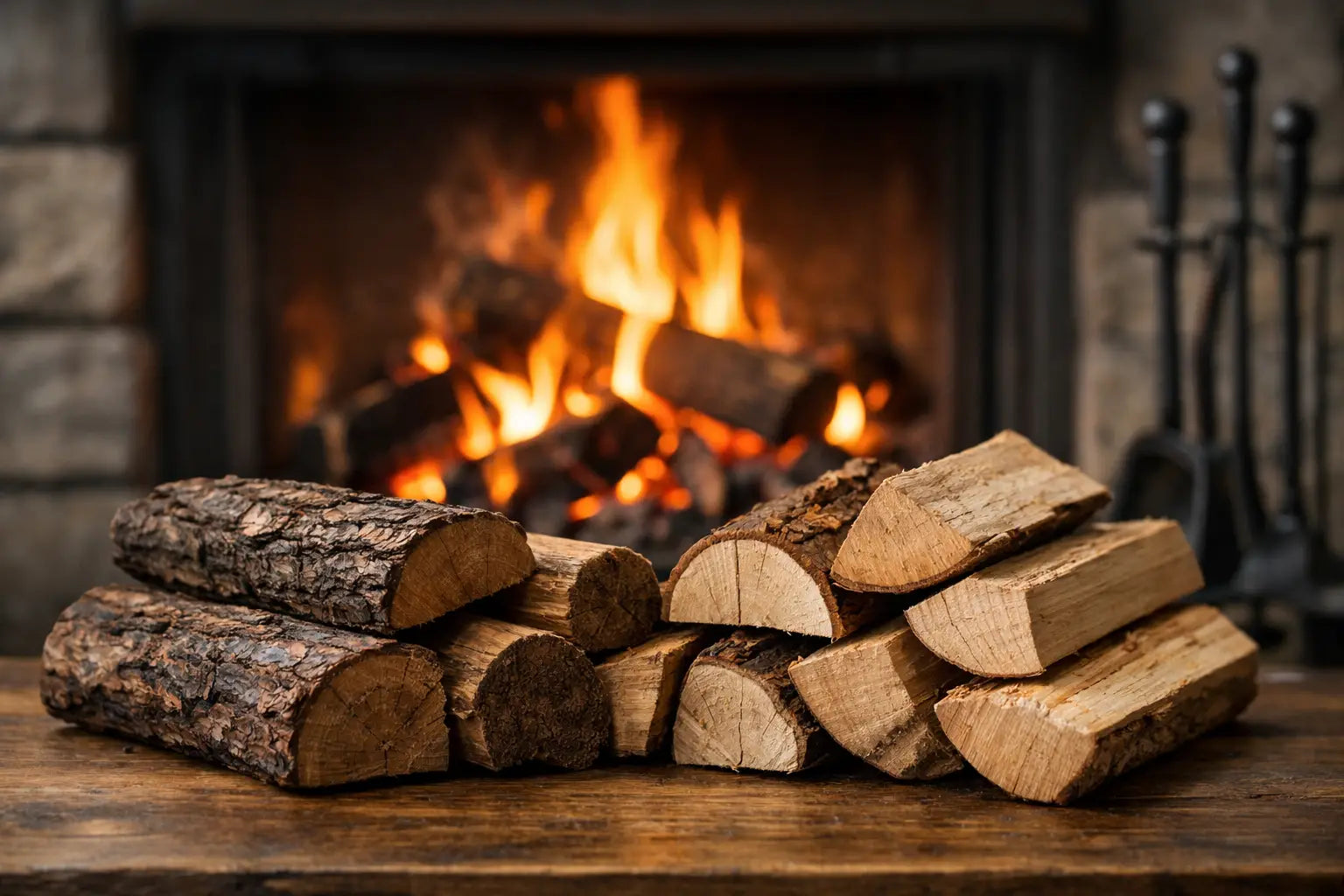
A stove that burns through a full basket before the room is warm is rarely a stove problem. More often, the logs are too wet, too light, too small or simply the wrong species for a slow, steady fire. Long burning firewood is about choosing fuel that produces dependable heat over time, while still lighting cleanly and working safely with your appliance.
For most UK households, dense kiln-dried hardwood logs offer the best answer. They give more lasting heat than softwood, create less avoidable smoke when properly dry, and make it easier to maintain an even fire through a cold evening. But species, log size, storage and how you run the stove all affect the result.
What makes long burning firewood last?
Firewood does not burn slowly just because it is labelled hardwood. The length of a burn comes from a combination of density, moisture content, log dimensions and airflow.
Dense woods contain more fuel in the same-sized log. Oak and hornbeam, for example, are heavier than birch or alder and generally form a longer-lasting bed of embers. That density means they take a little more heat to establish, but once the fire is properly burning, they release heat at a more measured pace.
Moisture content matters just as much. Wet wood uses a significant part of the fire's energy to drive off water, rather than heating the room. It can hiss, blacken the stove glass and contribute to excess smoke and deposits in the flue. Ready to Burn certified logs have a moisture content below 20%, so they are suitable for immediate use and provide a much cleaner, more predictable burn.
Log size is the final part of the equation. Larger split logs usually last longer than thin pieces because less of their surface area is exposed to the flames. They are not a substitute for dry wood, though. A large damp log will still burn poorly. The best approach is to use kindling and smaller logs to build heat, then add suitably sized hardwood logs once there is a strong bed of glowing embers.
The best firewood species for a slower burn
No one log type is right for every fire. A small stove in a well-insulated room may become uncomfortably hot with a full load of very dense hardwood, while an open fire will lose heat more quickly and may benefit from a different mix. These are the practical differences to consider.
Hornbeam
Hornbeam is one of the strongest choices when burn duration is the priority. It is very dense, gives high heat output and produces long-lasting embers. It suits cold evenings, larger rooms and households that want to reduce the frequency of refuelling.
Because it is dense, hornbeam is best added to an established fire rather than used as the only lighting fuel. Combine it with dry kindling and a few quicker-lighting logs for a straightforward start.
Oak
Oak is a well-known long-burning hardwood with a steady, substantial heat output. Properly kiln-dried oak works particularly well in log burners and stoves where you want a sustained fire rather than a rapid burst of flame.
The trade-off is that oak is not always the easiest wood to get going from cold. It performs at its best when the stove and flue are already warm and the fire has a good ember base. It should always be genuinely dry - unseasoned oak is a common source of disappointing fires.
Ash
Ash is a reliable all-round choice. It lights more readily than oak or hornbeam, burns with a clean flame and provides useful, consistent heat. It may not last quite as long as the densest hardwoods, but it is often the more flexible option for everyday stove use.
For many homes, ash is a practical main fuel, with oak or hornbeam added later in the evening when a slower burn is needed.
Birch and alder
Birch lights easily and gives an attractive, lively flame. It is excellent for starting a fire and for shorter evening burns, but it is less dense than oak, hornbeam and ash, so it is not normally the longest-lasting option. Alder is also easy to handle and quick to establish, with a generally shorter burn profile.
These woods still have a useful place in a fuel store. The key is to match them to the job: use them to bring a fire up to temperature, then use denser logs to maintain it.
How to make your logs burn longer without smouldering
Turning the air controls down too early does not create an efficient overnight fire. It can starve the logs of oxygen, leading to smoky combustion, blackened glass and greater build-up in the flue. A slower burn should still be a clean burn.
Start with a clean grate and enough dry kindling to establish a bright flame. Once the kindling is burning, add small or medium logs and allow them to catch properly. When they have formed a hot ember bed, place one or two larger dense hardwood logs with space for air to circulate around them.
Then adjust the appliance controls gradually, following the manufacturer's guidance for your specific stove. Every appliance draws differently, and the correct setting depends on the flue, room conditions and the amount of fuel inside. The aim is visible, active flames rather than logs that are merely glowing and producing smoke.
Avoid overloading the firebox. Packing logs tightly together can reduce airflow and make combustion less complete. It also makes it harder to control the stove's output. One or two well-chosen logs added at the right time will often provide a more useful, longer burn than filling every available space.
Never rely on a heavily restricted stove for unattended burning unless your appliance instructions specifically permit it. Fit working smoke and carbon monoxide alarms, keep the flue maintained, and have your chimney swept at intervals appropriate to your fuel use.
Buying long burning firewood by volume and format
When comparing firewood, focus on more than the number of bags. Small net bags are convenient for occasional top-ups, but a crate or larger loose-volume order can offer better value for regular stove users. Transparent volume information makes it easier to compare like for like and estimate how much fuel your household will need.
A hard crate is useful when you want a substantial, organised stock of logs delivered in one go. Fire-box packs work well where storage is limited or where you prefer a tidy, manageable supply close to the stove. Net bags can be useful for a weekend away, a garden fire pit or keeping a small reserve dry indoors.
Also check the stated log length against your stove's firebox. Logs that are too long are inconvenient and unsafe to force into place, while very short logs may burn faster than you expect. Measuring the usable width of your firebox before ordering helps avoid that problem.
At Candowe, kiln-dried Ready to Burn hardwood options are available in practical formats, allowing households and trade buyers to choose according to storage space, appliance size and expected usage. Free delivery across most mainland UK postcodes also makes it easier to plan ahead before cold weather arrives.
Store dry logs so they stay ready to burn
Even premium kiln-dried logs can lose their advantage if left exposed to rain or placed directly on damp ground. Keep your firewood off the floor, protected from rainfall and open at the sides so air can move around it. A covered log store, shed with ventilation or sheltered outdoor rack is usually suitable.
Bring only a small working supply indoors at a time. A day or two near the stove can help surface moisture evaporate after cold weather, but storing large volumes inside the living area is unnecessary and may introduce dust or insects. Keep the main stock covered outdoors and rotate older logs forward first.
The most dependable fire is built before you strike the match: dry, certified logs, a sensible mix of species and a store that keeps the fuel in the condition you paid for. With dense hardwood ready for the later hours and easier-lighting logs for the start, your stove can deliver steady warmth without constant trips to the log basket.