Skip to content
Best Firewood for Log Burners for Cleaner Heat
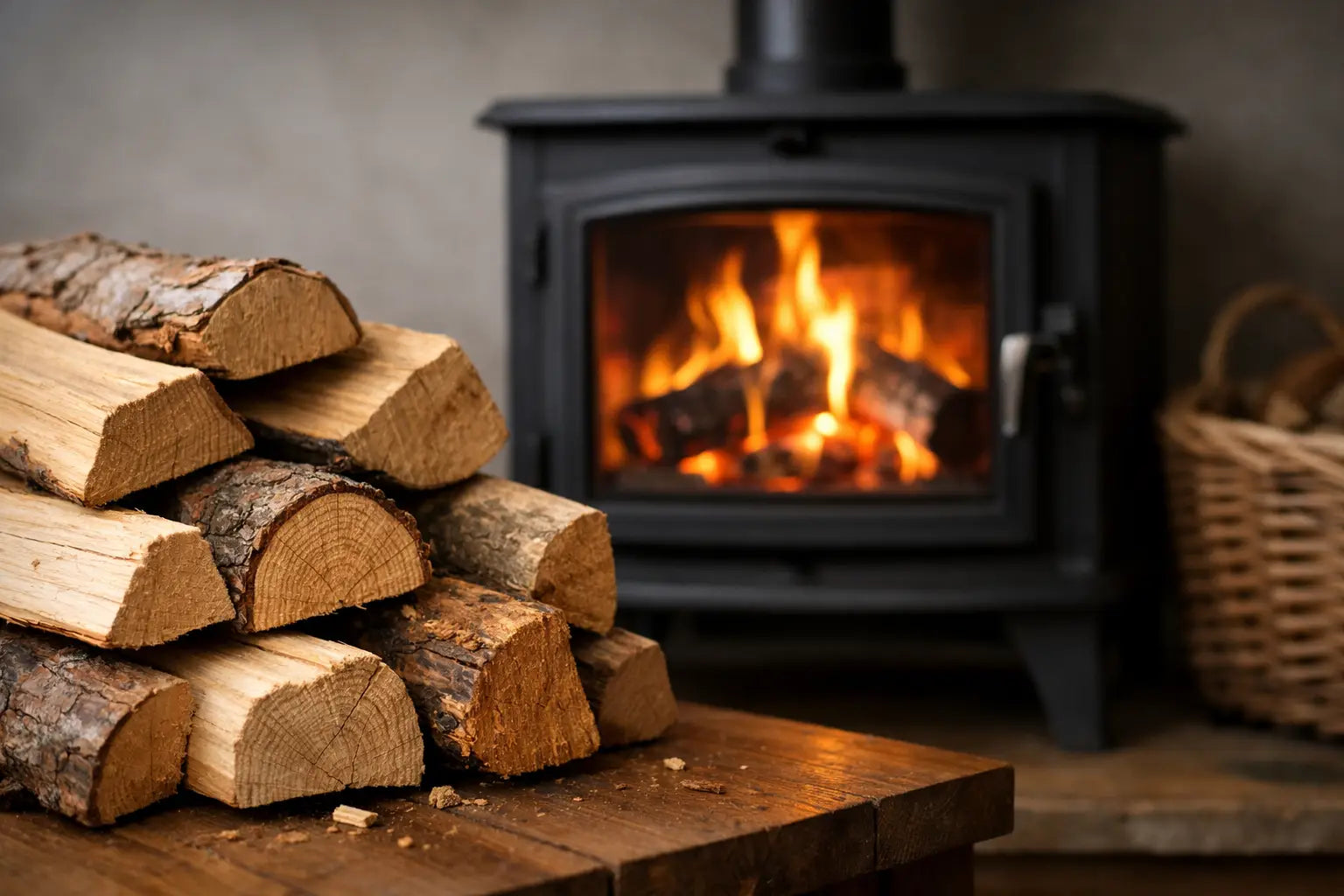
A log burner can only perform as well as the fuel inside it. Choosing the right firewood for log burner use means easier lighting, steadier heat, a cleaner stove glass and less ash to clear away. It also helps protect your flue from excessive soot and tar deposits. The difference is not simply between hardwood and softwood - moisture content, log size, species and storage all affect the fire.
For most households, kiln-dried, Ready to Burn certified logs are the dependable option. They arrive dry enough to use, remove the uncertainty of seasoning, and give you a clearer idea of the value you are receiving from every bag, box or crate.
What makes good firewood for log burners?
The first figure to check is moisture content. Wood with a moisture content below 20% is classed as Ready to Burn and is suitable for efficient domestic use. Dry logs produce more usable heat because less energy is wasted driving water out of the wood. They catch more readily, burn with a brighter flame and create less smoke than wet or poorly seasoned logs.
Freshly cut wood can contain a large amount of water. Even logs described as seasoned may not be consistently dry, particularly where they have been stored outdoors in damp conditions or split too late. Buying kiln-dried logs removes much of that risk. The drying process brings moisture down to a controlled level, so the logs are ready for the burner rather than needing months of preparation at home.
This matters for both comfort and maintenance. Damp fuel tends to hiss and steam, gives off more smoke and leaves dark deposits on the stove window. It can also contribute to soot and creosote in the flue. A clean-burning fuel does not eliminate the need for regular chimney sweeping, but it makes responsible stove ownership much more straightforward.
Choose a wood species to suit how you heat
Different firewood species have different burning characteristics. There is no single best log for every home. The right choice depends on whether you want quick heat, a long evening burn or a flexible all-round supply.
Birch: quick to light and attractive in the stove
Birch is a popular choice for everyday fires. It lights easily, establishes a flame quickly and produces a lively, attractive burn. It is useful when you want to take the chill off a room without spending time building up a slow fire.
Because birch burns relatively quickly compared with denser hardwoods, it is often best used for shorter heating periods or alongside a slower-burning species. Its bark can be particularly helpful when getting a fire established, although dry kindling and a proper firelighter remain the most reliable starting point.
Ash: dependable all-round firewood
Ash is widely valued as an all-round hardwood. It produces reliable heat, burns steadily and is easy to manage in a log burner. For households using their stove regularly throughout autumn and winter, ash offers a good balance between straightforward lighting and useful burn time.
Its consistent performance makes it a sensible choice where you do not want to switch between several fuels. As with any species, the dryness of the log remains more important than the name on the label. Kiln-dried ash below 20% moisture will generally outperform damp logs from a denser species.
Oak and hornbeam: dense logs for longer burns
Oak and hornbeam are dense hardwoods that suit people looking for a longer, more sustained fire. They generally take a little more heat to get going than birch, but reward good fire-building with a slower burn and strong heat output.
These species can be a practical option for longer evenings at home or when maintaining warmth after the burner is already established. Pair them with a small amount of faster-lighting wood or kindling at the start, then add larger dense logs once there is a solid bed of embers.
Alder: lighter heat for regular use
Alder is a lighter-burning hardwood that lights readily and gives a pleasant, manageable flame. It can work well for milder days, smaller rooms or households that prefer to build and replenish a fire more frequently. It will not normally last as long as oak or hornbeam, but it is a useful and efficient fuel when supplied properly dried.
Log size matters as much as the species
Before ordering firewood, check your stove manufacturer’s recommended log length and the usable width of the firebox. A log that is too long is inconvenient at best and unsafe to force into the appliance. Leave enough room around each log for air to circulate and for the door to close securely.
Smaller logs expose more surface area and usually catch fire faster. Larger logs tend to burn for longer once the stove is hot. A mixed supply can be useful: smaller pieces for lighting and bringing the stove up to temperature, followed by medium or larger logs for maintaining heat.
Do not overload the burner in pursuit of a longer burn. Too much wood can restrict airflow and lead to inefficient combustion. Follow the appliance instructions, use the air controls as intended and add fuel little and often once the fire is established.
Buy by usable volume, not appearance alone
Firewood formats can look difficult to compare. Net bags, plastic bags, fire-box packs and crates all have their place, but the best value depends on how often you use your burner and how much storage you have available.
Smaller packs are convenient for occasional fires, limited storage or topping up an existing supply. Crated logs are usually more suitable for regular stove users because they offer a larger quantity in one delivery and make it easier to plan for the heating season. For an accurate comparison, look for clear loose-volume information and price per cubic metre rather than judging a pack by its outside dimensions.
A neatly stacked crate may look more compact than a loosely filled bag, even where the actual amount of wood differs significantly. Transparent volume details help you compare like for like and order enough fuel without filling the garage with more than you can store properly.
Candowe supplies kiln-dried, Ready to Burn logs in several formats, allowing households and trade customers to choose a quantity that matches their storage space and expected use.
Store logs dry after delivery
Even the best kiln-dried logs need protecting once they arrive. Store them outside or in a well-ventilated outbuilding, raised off the ground where possible. A log store with a solid roof, open sides and good airflow is ideal. Covering the top of a stack is helpful; wrapping the whole pile tightly in plastic is not, as trapped moisture can encourage the wood to deteriorate.
Bring a small amount indoors before use rather than storing your whole supply beside the stove. This keeps the main stock protected and avoids unnecessary mess, insects or excess heat in the room. A basket or log holder containing a day or two of fuel is usually enough.
If logs have been left in rain or snow, allow the surface moisture to dry before burning them. Kiln-dried wood is dry within the log, but it can still become wet on the outside when stored carelessly.
Build the fire for clean combustion
Good fuel needs the right conditions to burn well. Start with a clean grate or firebox, dry kindling and one or two small kiln-dried logs. Use a suitable firelighter and ensure the stove has enough airflow during lighting. Once the kindling is burning strongly, add larger logs gradually.
Avoid shutting the air supply down too early. A smouldering fire may appear economical, but it creates more smoke and deposits while delivering poorer heat. Let the appliance reach its normal operating temperature, then adjust the controls in line with the manufacturer’s guidance.
Never burn treated timber, painted wood, household waste, MDF, chipboard or old pallets. These materials can release harmful fumes and leave damaging residues in the stove and chimney. If your appliance is not approved for coal or smokeless fuel, do not assume it can burn them safely - check the manufacturer’s instructions first.
A reliable fire starts long before you strike a match. Dry, correctly sized logs, stored properly and chosen for the way you use your stove will give you more warmth from each load and make every winter evening easier to manage.