Skip to content
A Guide to Firewood Bag Sizes for UK Homes
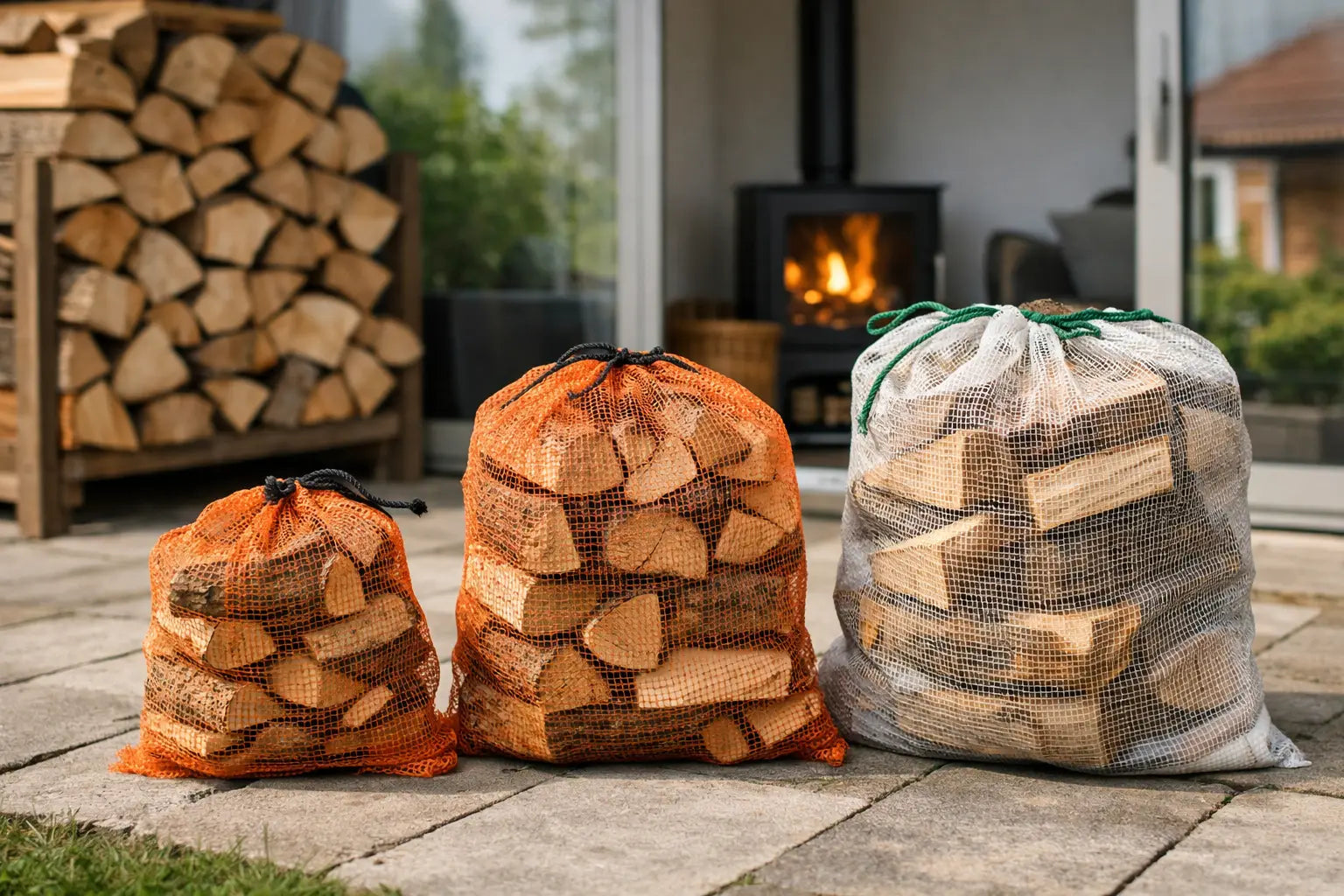
A bag of logs can look like a simple purchase until it is time to compare prices, find space by the stove or work out how long the supply will last. This guide to firewood bag sizes explains what you are actually buying, how bag formats differ and when it makes sense to move from convenient smaller packs to a larger delivery.
The best size is not always the biggest one. It depends on how often you light your stove, how much dry storage you have and whether firewood is your main heat source or an occasional comfort. What matters is choosing consistently dry, well-sized logs and comparing products by useful volume rather than the appearance of a full bag.
Why firewood bag size matters
Firewood is sold in several formats because households use it in different ways. A small bag is easy to carry, store and bring indoors. A larger bag or fire-box reduces the number of repeat purchases. Bulk crates and pallet deliveries usually offer better value for frequent burners, provided there is enough suitable storage.
The challenge is that two bags can look similar while containing different amounts of usable fuel. Log length, split size, species and how tightly the logs are packed all affect what fits inside. A bag filled with neatly stacked logs will not hold the same amount of wood as a loosely filled net, even if the outer dimensions appear close.
For this reason, look for the stated volume in litres or cubic metres, alongside the product weight where provided. The moisture level also matters. Wet wood is heavier because it contains more water, but it gives less useful heat and produces more smoke. Kiln-dried Ready to Burn firewood with a moisture content below 20% gives a fairer comparison because more of what you pay for is fuel rather than water.
Common firewood bag sizes explained
There is no single universal bag size across the UK market. Suppliers may use different net dimensions, log lengths and packing methods. The product description should always be the deciding factor, but most bagged firewood falls into the following practical categories.
Small net bags
Small net bags are designed for convenience. They suit an evening fire, a weekend away, a first test of a new stove or households that do not have an outdoor log store. They are also practical when you need to carry logs through the house without handling a large, heavy load.
Their main trade-off is value per unit of wood. Smaller bags require more packaging and handling, so they normally cost more per cubic metre than buying in volume. They remain a sensible option for occasional use, especially when dry storage space is limited.
Larger net bags and plastic bags
Larger bags provide a useful middle ground for regular stove users. They reduce the frequency of ordering while staying manageable for most households. Depending on the log size and the bag construction, these bags may be easier to stack in a shed, garage or covered store than loose logs.
Do not judge a larger bag by weight alone. Dense hardwood logs such as oak, ash and hornbeam can weigh more than lighter species, but a heavier bag is not automatically a larger bag. Compare the stated loose volume, wood type and moisture content before deciding which represents better value.
Fire-box packs
Fire-box packs are usually built for tidy storage and easy handling. Their solid shape makes them easier to stack than flexible nets, and they can be useful for keeping a modest reserve close to the house. They are particularly suited to households that use their log burner a few times a week rather than every day.
A fire-box can also make delivery and storage more straightforward, but it is still a compact format. If your stove is used as a significant source of heat through winter, several fire-boxes may become less economical than a crate or palletised order.
Bulk crates and palletised supplies
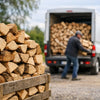
Although they are not bags, bulk formats are the natural next step when bagged firewood no longer meets your needs. They are suited to households with a covered log store, rural properties, frequent burners and small commercial settings such as holiday lets or workshops with solid-fuel heating.
Bulk supplies are generally easier to compare because the volume is stated more clearly. They also reduce packaging and can offer a lower cost per cubic metre. The trade-off is planning: make sure the delivery point is accessible and that the logs can be kept off the ground, covered from rain and open to airflow at the sides.
Loose volume, stacked volume and weight
Understanding these terms prevents disappointing comparisons.
Loose volume means the space occupied by logs tipped or placed into a container with natural gaps between them. This is often the clearest way to assess bagged logs, because it reflects the quantity supplied in the bag rather than an idealised stack.
Stacked volume refers to logs arranged closely and neatly. A stacked cubic metre contains more wood than a loose cubic metre because there are fewer air gaps. Neither measurement is wrong, but they are not interchangeable. Check which one a supplier uses before comparing prices.
Weight can help, but only with context. Wood species have different densities, and moisture adds weight without improving burn performance. A dry bag of dense hardwood may be noticeably heavier than a bag of dry birch, even where the two bags hold a similar volume. For reliable home heating, dry fuel and stated volume are usually more informative than weight on its own.
How much firewood do you need?
Start with your real pattern of use rather than a broad estimate. If you light the stove once or twice a week, one or two convenient bags may cover a reasonable period. If it is lit most evenings through autumn and winter, a small bag supply can disappear quickly.
A useful approach is to keep track of how many bags you use over two weeks in typical cold weather. Multiply that by the number of heating weeks you expect, then add a modest reserve for colder spells. This gives you a practical basis for deciding whether regular bags, fire-boxes or a bulk delivery are right for your household.
Your appliance also changes the calculation. A modern, efficient stove needs less fuel than an open fire for the same level of warmth. Larger rooms, poor insulation, long burn times and frequent reloading all increase consumption. Species matter too: hardwoods generally provide a longer burn, while birch is valued for an easy, bright flame and reliable lighting.
Choosing the right bag size for your storage
Do not buy more logs than you can store properly. Even premium kiln-dried firewood needs protecting from prolonged rain and ground moisture. A covered log store, ventilated shed or dry garage is preferable. Avoid sealing logs in an unventilated space where moisture can be trapped.
For smaller properties, a few bags stored in a dry, raised area may be the most practical choice. Keep only a day or two of fuel indoors, positioned safely away from the stove and clear of walkways. For larger orders, plan the storage area before delivery and allow enough room to access the wood without restacking the whole supply.
At Candowe, clear product specifications make it easier to compare bag formats, loose volume and fuel type before ordering. This is especially useful when choosing between an easy-to-carry top-up supply and a larger quantity intended to last through the heating season.
What to check before you buy
Bag size should be considered alongside fuel quality. A low price can be misleading if the logs are damp, poorly sized for your stove or supplied in an unclear quantity. Look for Ready to Burn certification, moisture content below 20%, stated volume, suitable log length and sustainably sourced wood.
Also consider the delivery arrangement. Small bags are easy to place wherever you need them, while bulk fuel requires a clear, accessible drop-off point. Free delivery can improve the value of a larger order, but only if the format suits your storage and expected use.
The right firewood bag size is the one that keeps dry logs ready when you need them, without filling your garden or forcing you into frequent top-up orders. Begin with your stove use and storage space, then buy the format that gives you dependable heat with the least waste and effort.