Skip to content
How to Choose Firewood for Outdoor Firepits
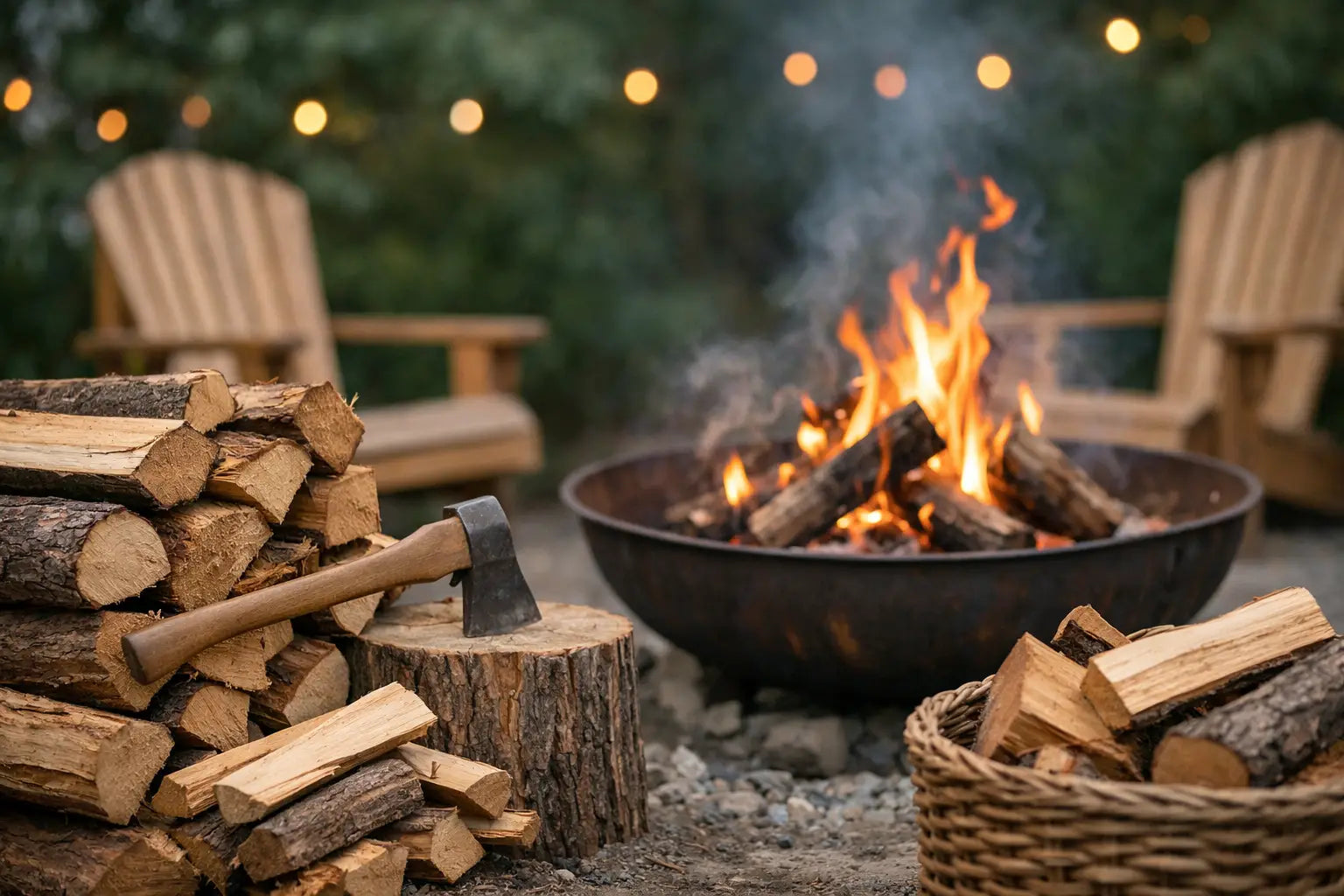
A firepit can be ready for guests, the seating arranged and the weather finally dry, yet poor logs can still spoil the evening in minutes. Damp wood hisses, produces excessive smoke and gives far less useful heat. Choosing the right firewood for outdoor firepit use means less time tending a struggling flame and more time enjoying a steady, clean-burning fire.
For most UK households, kiln-dried hardwood logs are the dependable choice. They light more easily, burn consistently and avoid the uncertainty of buying unseasoned wood that may have been stored outside for months. The best option still depends on the size of your firepit, how long you plan to sit outside and whether you value a quick bright flame or longer-lasting heat.
Start with dry, ready-to-burn logs
Moisture content is the first specification to check. Wood with a high moisture level uses much of its energy simply boiling off water before it can produce real heat. It burns cooler and creates more smoke, which is unwelcome around a patio, neighbours and outdoor furniture.
Look for kiln-dried logs with moisture below 20%. Ready to Burn certified wood gives useful reassurance that the fuel meets the recognised UK standard for dry domestic firewood. Although a firepit is outdoors, the same principle applies: dry logs provide a more efficient flame, less visible smoke and less soot on the inside of the bowl or chimney.
Do not assume that wood is dry because it feels light or has cracks at the ends. Those signs can help, but they do not confirm the moisture level throughout the log. Kiln drying is a controlled process, making it a more reliable choice than wood described only as seasoned. If you are buying fuel for a planned gathering, that certainty is worth having.
Which firewood is best for an outdoor firepit?
Hardwoods are generally better suited to firepits than softwoods because their denser structure gives a slower, longer burn. They cost more per load in many cases, but can offer better value over an evening because you need fewer logs to maintain useful heat.
Birch for a quick, attractive fire
Birch lights readily and produces a lively flame, making it an excellent starting log for an outdoor fire. Its bark is naturally flammable, so dry birch can help establish a fire without relying on excessive firelighters. It has a pleasant bright burn and is well suited to shorter evenings or smaller firepits.
The trade-off is burn time. Birch tends to burn faster than denser species such as oak or hornbeam. Use it with kindling to get the fire established, then add longer-burning hardwood as the evening continues.
Ash for dependable all-round performance
Ash is a popular all-round firewood because it lights well, burns steadily and gives reliable heat. For a firepit used regularly through spring, autumn and cooler summer nights, kiln-dried ash offers a practical balance of flame, heat output and burn duration.
It is a good choice when you do not want to manage several different log types. Start with kindling and smaller splits, then add medium-sized ash logs once there is a stable bed of embers.
Oak and hornbeam for longer evenings
Oak and hornbeam are dense hardwoods that burn slowly and produce substantial heat. They are well suited to larger firepits, particularly when the aim is to keep people comfortable outdoors for several hours rather than create a short visual flame.
Because dense logs can take longer to catch, they perform best when added to an already established fire. Do not overload the pit with large oak or hornbeam logs at the start. Build heat with kindling and smaller dry logs first, then introduce one or two larger pieces to maintain the burn.
Alder when a lighter burn suits the setting
Alder is lighter than oak, hornbeam and ash, and it can be a useful choice for a shorter, more relaxed fire. It lights easily and gives a pleasant flame, though it will need topping up more often. It can work well where a very high, long-lasting heat output is not required.
Match log size to your firepit
A log that is ideal for a wood burner is not automatically right for an outdoor firepit. Check the internal diameter and depth of your pit before ordering. Logs should sit comfortably within the bowl without protruding over the edge or forcing you to stack them too high.
For compact firepits, shorter logs and smaller splits are easier to arrange and control. Medium and larger pits can take standard-length logs, but avoid making a dense pile. Fire needs airflow around the wood. A loose criss-cross or small log-cabin arrangement lets oxygen reach the flame and reduces the temptation to use accelerants.
If you are purchasing in volume, a mix is often the most practical approach: kindling for lighting, smaller logs for building the fire and larger hardwood logs for keeping it going. Fire-box packs and net bags can be convenient for occasional use, while crates provide clearer value for households that use a firepit often and have suitable storage.
Build a cleaner outdoor fire
Good fuel helps, but how you light it matters too. Begin with dry kindling and a natural firelighter in the centre of the firepit. Add a small number of thin logs with gaps between them. Once these are burning strongly, introduce larger pieces gradually.
Avoid adding too much wood at once. A firepit packed full of logs is more likely to smoke as the fire struggles for oxygen. It can also create flames that are harder to manage. One or two logs added at the right time will normally keep a bed of embers going more effectively than repeated large loads.
Never burn painted, varnished, treated, glued or reclaimed timber. Pallets, old fencing, chipboard and construction offcuts may release harmful fumes and produce unpredictable sparks. Household rubbish, paper with coatings and plastic have no place in a firepit. Use clean, untreated firewood only.
Softwood is not always unsuitable, but it needs sensible use. Dry softwood can be useful as kindling or for a quick flame, yet it burns faster and may spark more than hardwood. Resinous wood is particularly unsuitable for open fires where guests are sitting close by. For a calmer, longer burn, make hardwood your main fuel.
Store firepit logs properly
Even premium kiln-dried logs can lose their advantage if they are left exposed to rain. Store your wood above ground level, with protection from rainfall and airflow around the sides. A log store, covered rack or sheltered area beside a wall can work well, provided the wood is not sealed into a damp, unventilated space.
Cover the top rather than wrapping the entire stack in a tarpaulin. Fully covered piles can trap moisture and encourage mould. Keep a smaller supply close to the house or patio in a dry log basket or box, especially if you use the firepit at short notice.
Buy only the amount you can store properly. Bulk crates usually offer strong value per cubic metre, but a smaller format may be the better decision for an occasional user with limited covered space. Transparent volume information makes it easier to compare formats fairly rather than judging by the apparent size of a bag.
Plan for neighbours, weather and safety
Outdoor fires work best on a still, dry evening. Wind can push smoke towards seating areas or nearby properties, while damp weather makes it harder to keep the fire burning cleanly. Position the firepit on a stable, non-combustible surface, well away from fences, overhanging branches, sheds and drying washing.
Keep children and pets at a safe distance, and have water, sand or an appropriate extinguisher nearby before lighting. A spark guard is a sensible addition, particularly with an open bowl firepit. Let ash cool completely before disposal - embers can remain hot long after the visible flames have gone out.
If your area has local restrictions on outdoor burning, or conditions are especially dry, check the current advice before you light up. Considerate use protects your neighbours as well as your own evening outside.
Candowe kiln-dried hardwood logs give households a straightforward way to stock dependable fuel, with certified dry options, practical pack sizes and delivery for the occasions when a better fire is worth planning for. Choose wood that suits your pit, keep it dry after delivery and add logs gradually. The result is the kind of firepit flame people gather around, rather than one they move away from.