Skip to content
What to Expect From Firewood Pallet Delivery
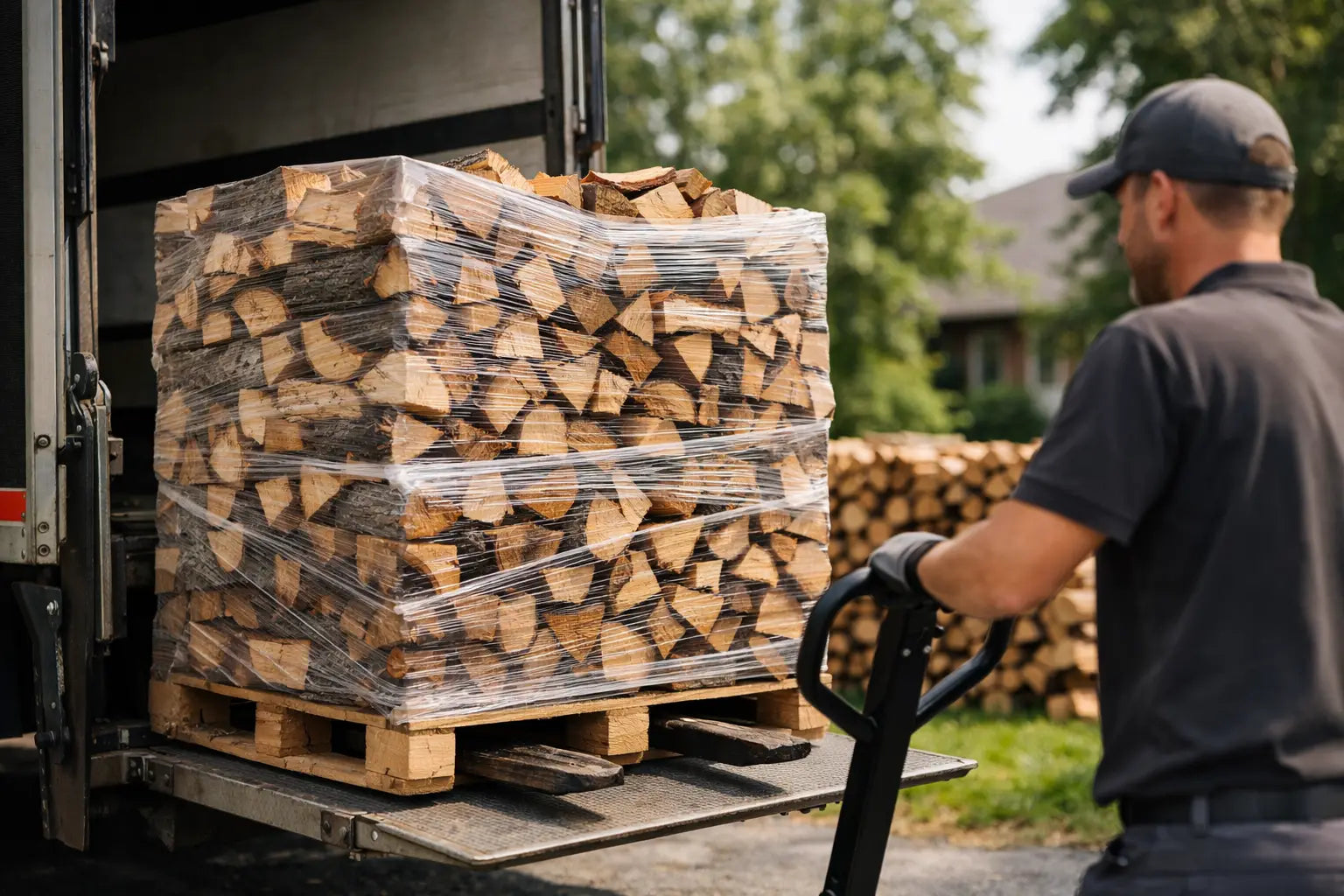
A full fuel store before cold weather arrives is one less household job to worry about. Firewood pallet delivery gives stove and fireplace owners a practical way to buy a substantial supply of dry logs at once, without repeated trips to a local supplier or uncertainty over what is being delivered.
For many homes, a pallet is the sensible middle ground between a few bags and a bulk loose load. The logs arrive packed in a defined format, the quantity is clear before you order, and properly kiln-dried fuel can go straight into suitable covered storage. The key is choosing the right volume, species and delivery arrangement for your property.
Why choose firewood pallet delivery?
Palletised firewood is designed for customers who burn logs regularly and want dependable stock on hand. It is especially useful if your stove contributes meaningfully to household heating, if you live in a rural area where local supplies vary, or if you simply prefer to buy ahead for the season.
The main benefit is certainty. A good supplier should state the crate dimensions or loose volume, log length, moisture standard and wood type. That makes it far easier to compare value than buying an unspecified "load" of logs. It also helps you plan storage properly, rather than finding that a delivery is smaller than expected or that wet wood needs months of drying before it is usable.
Kiln-dried logs with moisture below 20% burn more efficiently than unseasoned wood. They are easier to light, provide a more consistent flame and produce less smoke and residue. For domestic wood burners in England, choosing Ready to Burn certified firewood also provides reassurance that the fuel meets the required moisture standard for sale in small volumes.
A pallet is not automatically the cheapest option for every household. If you only use a stove occasionally, a smaller fire-box pack or several net bags may be easier to manage and store. But for regular burners, buying a pallet can reduce the cost per unit of fuel and prevent the inconvenience of running short during a cold spell.
Choosing the right pallet of logs
Start with how often you use your appliance, not simply the size of the space available outside. A stove used on most evenings through autumn and winter will use fuel very differently from an open fire lit a few times over Christmas. Your room size, stove efficiency, insulation and preferred indoor temperature all affect consumption.
Look closely at how volume is described. A crate may be sold by its external dimensions, stacked volume or loose cubic metre equivalent. These measurements are not interchangeable. Stacked logs have less air space between them than loose-filled logs, so transparent volumetric information matters when comparing products. Price alone is not a useful comparison unless the quantity and dryness are equally clear.
Log length also deserves attention. Measure your stove firebox and leave enough space for safe, comfortable loading. Many domestic stoves suit standard logs, but smaller appliances may need shorter lengths. Avoid assuming that any log will fit just because it is sold for wood burners.
Wood species and burning characteristics
Different species suit different priorities. Birch is popular because it lights readily and offers a bright, attractive flame. Alder is quick to establish and works well for regular fires. Ash is valued for its reliable heat output and ease of burning, while oak and hornbeam are dense hardwoods that can provide a longer-lasting fire once a good bed of embers is established.
There is no single best species for every burner. Dense hardwood is often a strong choice for longer evening heating, but it can benefit from kindling and a well-established fire. Birch can be particularly convenient when fast lighting is important. A mixed hardwood crate may suit households that want flexibility, while a single-species pallet gives more predictable burning behaviour.
Whatever you choose, dryness comes first. Dense logs that are not properly dried will still burn poorly. Certified kiln-dried wood provides much more dependable performance than wet logs marketed only by species.
Preparing for a pallet delivery
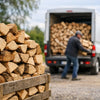
A firewood pallet delivery is normally made by lorry, often using a tail lift and pallet truck. This is efficient, but it means access needs consideration before ordering. The driver may be able to move the pallet on smooth, level ground close to the property, but a pallet truck cannot travel easily over loose gravel, grass, steep slopes, steps or narrow gates.
Check the route from the road to your chosen drop point. Consider parked cars, low branches, tight turns and whether there is enough safe space for the delivery vehicle to stop. If your road has access restrictions, is particularly narrow, or your home is difficult to reach with a larger vehicle, contact the supplier before placing the order rather than relying on delivery-day improvisation.
Kerbside delivery is common for palletised goods. The driver is responsible for making a safe delivery, but cannot usually carry crates through a house, up steps or into a rear garden. Plan for the pallet to be placed as close as reasonably possible, then move the logs into long-term storage yourself when convenient.
It is worth having gloves ready and allowing time to inspect the delivery. Check that the crate or pallet is intact, the fuel matches your order, and the wood remains protected from rain while you prepare your store. Taking a quick photograph on arrival can be useful if there is any issue to raise.
Store kiln-dried logs so they stay dry
Good logs can lose their advantage if they are left exposed to rain or resting directly on wet ground. The ideal log store has a solid roof, open sides or ventilation gaps, and a raised base. Airflow keeps the fuel in good condition, while a roof prevents the top layers becoming soaked.
A garage, shed or covered side passage can work well if there is enough ventilation. Avoid sealing logs in airtight plastic or stacking them against a damp wall. The aim is to protect the wood from weather without trapping moisture around it.
If the full crate is placed near the house temporarily, remove the packaging or open it as appropriate once it is under cover. Then move logs in manageable amounts to a basket or indoor log holder. Keeping only a small quantity indoors reduces mess and leaves the main stock in better storage conditions.
Do not place a large log store directly beside combustible walls, fences or outbuildings without considering fire safety. Keep the area orderly, stable and away from sources of ignition. A properly stacked pile is safer to use and much easier to monitor as supplies run down.
Getting better value from every load
The cheapest pallet on paper is not always the best-value purchase. Wet logs, vague volumes and inconsistent lengths can all increase the real cost of heating. You may use more fuel to achieve the same warmth, spend longer lighting the stove and create more soot in the appliance and flue.
Look for clear information on moisture content, source and volume. Sustainable sourcing matters too: responsibly sourced wood supports better forest management and provides a more considered choice for regular home heating. Suppliers that offer defined crate formats, Ready to Burn fuel and clear delivery terms make it easier to buy with confidence.
Candowe supplies kiln-dried firewood in practical crate and bag formats, alongside kindling and other solid fuels, so households can match their order to the way they heat their homes. Adding kindling to a pallet order can be useful where you are starting from cold regularly, while briquettes or smokeless fuel may suit appliances and situations where a different burn profile is needed.
Pay attention to when you order. Buying before the first prolonged cold period usually gives you more choice and avoids the pressure of needing fuel immediately. If storage is limited, a smaller pallet bought at the right time may be more practical than trying to fit an oversized order into a damp or exposed space.
A delivery that works for your home
The best pallet order is not simply the largest one you can buy. It is the one that fits your stove, your burn rate, your storage capacity and your delivery access. Once those details are sorted, palletised firewood removes much of the uncertainty from keeping a home warm.
Measure your storage area, check the approach for the delivery lorry, and choose dry logs with an honestly stated volume. A little preparation means your fuel can arrive ready for the first cold evening, rather than becoming another job to solve when the temperature drops.