Skip to content
Extra Dry Firewood for Cleaner More Efficient Fires
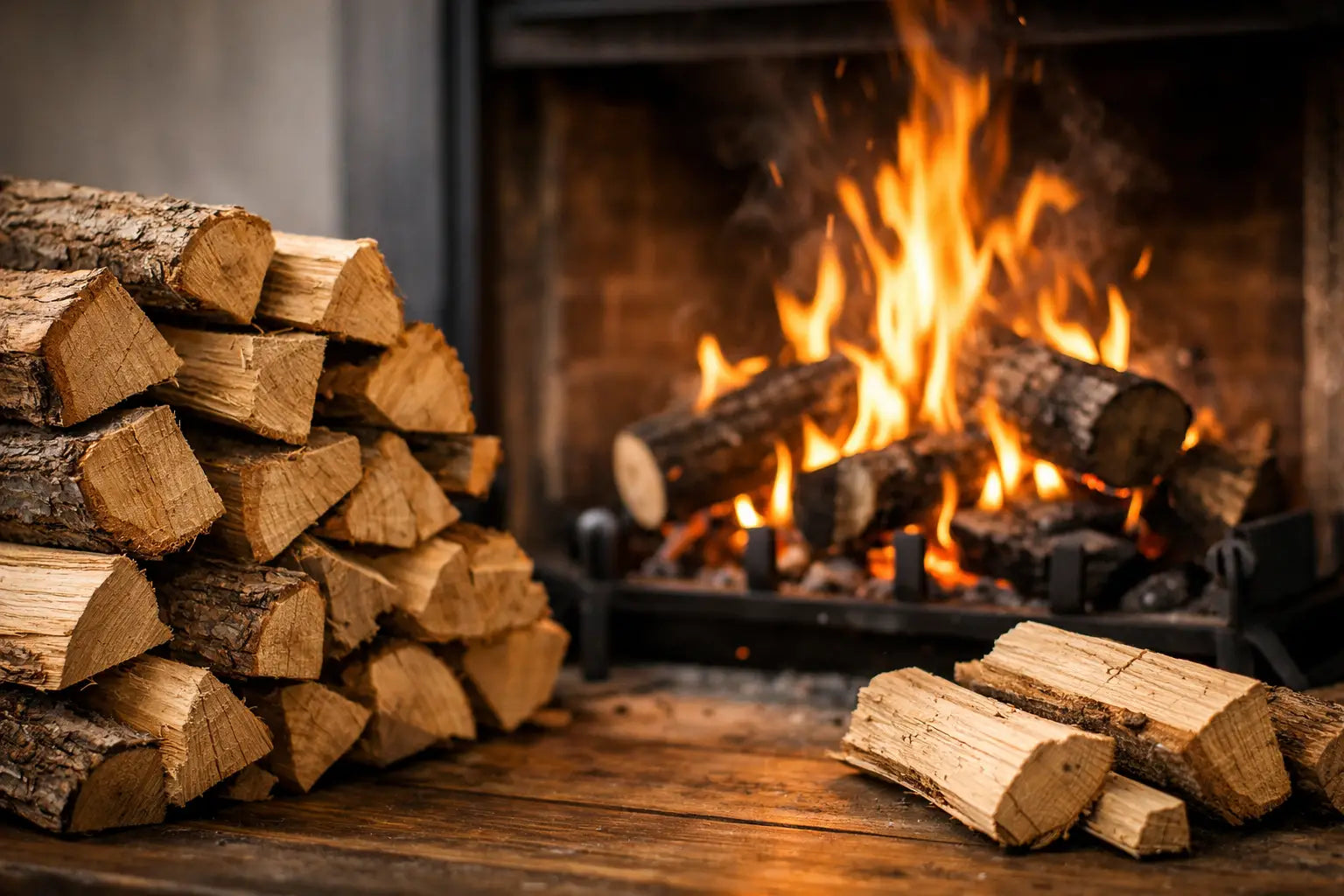
A stove that lights quickly, settles into a steady flame and leaves less soot on the glass usually starts with one decision made before the match is struck: choosing extra dry firewood. For householders who rely on a log burner or open fire, low-moisture logs remove much of the uncertainty around lighting, heat output and chimney cleanliness.
The term is often used to describe firewood dried beyond the point at which it is simply usable. It is not a separate legal grade, so the useful question is always the same: what moisture content can the supplier confirm? In England, Ready to Burn firewood sold in small volumes must have a moisture content of below 20%. This is the benchmark to look for when buying logs for immediate use.
What makes extra dry firewood different?
Freshly felled wood can contain a great deal of water. Before it can heat a room effectively, that water has to be driven off by the fire. Energy that should be warming your stove and living space is instead spent evaporating moisture, often producing a smoky, slow-burning fire in the process.
Extra dry firewood has been carefully seasoned or kiln dried to reduce that water content. Kiln drying uses controlled heat and airflow to dry split logs consistently, rather than relying on months or years of variable outdoor weather. The result is fuel that is ready to burn when delivered, rather than wood that may still need further drying at home.
This does not mean every very dry log will burn in exactly the same way. Wood species, log size, stove design and airflow settings all influence performance. However, dry logs give you a far more reliable starting point than unseasoned or poorly stored wood.
Why lower moisture improves your fire
The practical difference is most obvious at lighting. Dry kindling catches readily, and properly dried logs establish a flame without repeated opening of the stove door or piles of firelighters. Once the fire is established, less water in the wood means more of the fuel’s energy can be released as useful heat.
A cleaner burn also helps reduce visible smoke and residue. Damp wood tends to smoulder, creating more particulates and tarry deposits. In a wood-burning stove, this can blacken the glass faster. In the flue, regular use of wet wood can contribute to soot and creosote build-up, which is why suitable fuel and routine chimney sweeping should always go together.
There is a comfort benefit too. A fire that responds predictably is easier to manage. You can add a log, adjust the air controls and maintain an even temperature without constantly trying to revive a weak fire. For busy households, particularly during cold spells, that consistency matters.
Ready to Burn certification is worth checking
Ready to Burn certification gives buyers a clear sign that packaged wood meets the required moisture standard. It is particularly useful when comparing logs online, where a description such as “seasoned” does not automatically confirm the wood is dry enough to burn straight away.
Look for transparent information on moisture content, log dimensions and the volume supplied. A lower headline price can be misleading if the load contains wet wood, small offcuts or less usable fuel than expected. Clear volumetric pricing makes it easier to compare the real value of crates, nets, bags and fire-box packs.
Choosing the right dry logs for your stove
The best species depends on how you use your fire. Birch is popular because it lights easily and produces an attractive flame, making it a practical choice for regular domestic use. Alder is also easy to light and suits shorter, responsive fires.
For longer burn times, denser hardwoods are often preferred. Oak, hornbeam and ash generally provide a more sustained burn when they are properly dry. Their higher density means they can be especially useful for evening stove use, but they still need sufficient airflow and a well-established fire. A dense log placed onto a weak bed of embers may be slower to catch than a lighter species.
Log size matters as much as species. Check that the stated length fits your stove firebox comfortably, leaving space for airflow around the fuel. Overly large logs can restrict the burn, while very small pieces may be convenient for lighting but need topping up more often. Many households find that keeping a mix of kindling, smaller logs and standard-sized hardwood logs offers the most flexibility.
Candowe supplies kiln-dried, Ready to Burn certified logs in several species and formats, making it simpler to match the fuel to both your appliance and the storage space available at home.
Extra dry firewood needs sensible storage
Dry logs can absorb moisture again if they are left exposed to rain or stored directly on wet ground. Good storage protects the benefit you paid for.
Keep your main supply outside or in a well-ventilated shed, raised off the ground on a pallet, log store or solid base. Cover the top to protect it from rainfall, but do not seal the whole stack in an airtight cover. Air needs to move around the wood, particularly if the storage area is naturally damp.
Bringing a small quantity indoors a day or two before use can be helpful, especially in winter. Store it away from direct heat sources and do not build up a large log pile beside the stove. A modest basket or log holder is safer, tidier and gives the wood time to come up to room temperature.
Plastic bags and wrapped packs are convenient for delivery and handling, but they should not be treated as permanent outdoor storage. Once opened, move the logs into a dry, ventilated place. If you buy a larger crate or pallet load, make sure the storage area is ready before the delivery arrives.
How to get the best results from dry logs
Even excellent fuel needs a correctly operated appliance. Start with dry kindling and a small number of split logs, leaving enough space for air to circulate. Follow your stove manufacturer’s guidance for lighting and air controls, rather than shutting the air down too early. A bright, stable flame is generally preferable to a fire that is left to smoulder.
Avoid burning treated timber, painted wood, household waste or old furniture. These materials can release harmful fumes and damage your appliance or flue. They are not a substitute for properly prepared firewood.
If your stove glass is regularly blackening despite using dry fuel, check the basics. The airwash control may be closed too soon, the flue may need sweeping, or the stove may be oversized for the low heat setting being used. Fuel quality is central, but it is only one part of safe and efficient operation.
Is drier always better?
For domestic logs, fuel below 20% moisture is the key requirement. Extremely dry wood can light very quickly and burn fiercely if too much air is supplied, so stove control still matters. The aim is not simply to buy the lowest possible moisture figure. It is to buy consistently dry, responsibly sourced logs that suit your appliance and are stored properly.
A moisture meter can be useful if you have wood already stored at home, but test a freshly split surface rather than the outside of the log. The outer face may appear dry while the centre retains more moisture. When buying kiln-dried fuel from a reputable supplier, published moisture information and certification are usually the more useful indicators before delivery.
Buying enough without overfilling your store
Your annual requirement varies widely. A home using a stove as occasional evening heating may only need a few bags or fire-box packs at a time. A household using wood as a regular source of heat is likely to find a crate or larger pallet delivery better value, provided there is adequate dry storage.
It also depends on insulation, room size, stove efficiency, how long the fire runs and whether the logs are your main heat source or a supplement to central heating. Ordering in a format that matches your usage prevents damp storage, repeated last-minute purchases and unnecessary handling.
Extra dry firewood is not just about an easier first flame. It is a practical way to get dependable warmth, cleaner burning and better value from every load of logs. Choose certified low-moisture fuel, allow room for airflow in storage and keep your stove maintained, and your next fire will have the best possible conditions to perform well.