Skip to content
Firewood for Sale With Free Delivery Across the UK
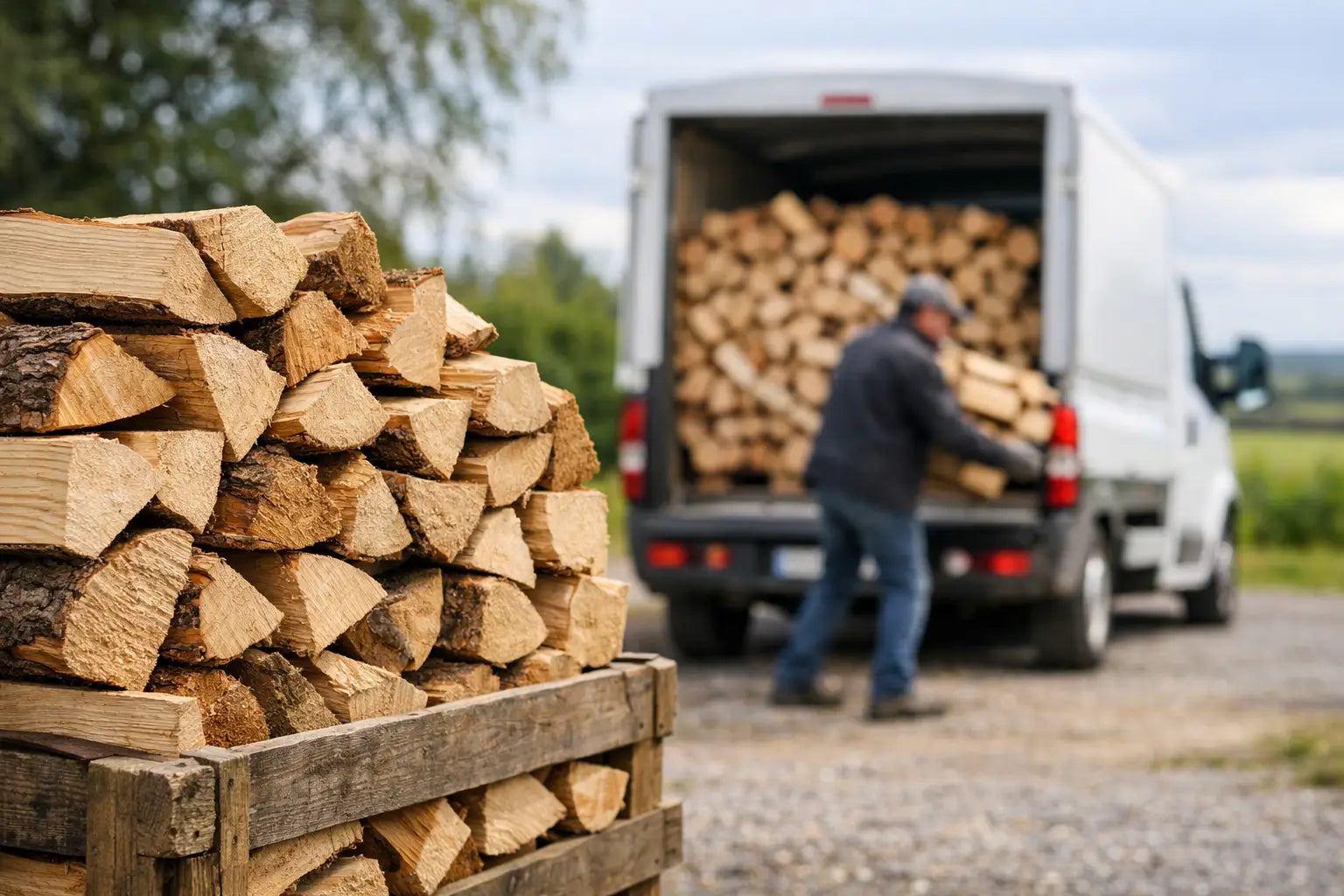
A cold evening is not the time to find that your log store is full of damp, slow-burning wood. When looking for firewood for sale with free delivery, the real value is fuel that arrives dry, correctly measured and ready to burn - without an unexpected delivery charge added at checkout.
For homes with a log burner, open fire or multi-fuel stove, ordering online can remove the uncertainty of local supplies. The right logs produce reliable heat, less smoke and less mess around the stove. The wrong logs can leave blackened glass, a struggling fire and more fuel used than expected.
What good delivered firewood should provide
Price matters, but it should not be the only figure you compare. A cheap bag of unseasoned logs may contain a great deal of water. You are then paying to store it, dry it and burn off that moisture before the wood can give meaningful heat.
Kiln-dried firewood with a moisture content below 20% is a practical choice for regular stove and fireplace use. It lights more easily, reaches a steady temperature sooner and burns more cleanly than wet wood. Ready to Burn certification gives householders a clear indication that wood meets the required moisture standard for sale in small quantities in England.
Dry fuel also makes day-to-day heating easier to manage. You need fewer firelighters, spend less time coaxing a flame into life and are less likely to deal with excessive smoke or tar deposits. No wood fuel is entirely maintenance-free, so stoves and flues still need appropriate care, but using dry logs is one of the simplest ways to support efficient operation.
Free delivery changes the comparison as well. Firewood is bulky and heavy, particularly when bought by the crate or pallet. A delivery charge can make an apparently lower product price less competitive. Always assess the complete delivered cost alongside the wood type, moisture level and stated volume.
Firewood for sale with free delivery by format
The best format depends on how often you burn fuel, where you can store it and how easily you can handle the delivery. A few nets may suit an occasional fireplace, while a hard crate can offer stronger value for a household relying on a stove through autumn and winter.
Crates for planned seasonal supplies
Crated logs are designed for customers who want to buy a meaningful quantity at once. They are a sensible option when there is clear, dry storage space and regular fuel use justifies a larger order. Because the volume is stated upfront, crates make it easier to compare like for like rather than guessing how much wood is contained in a loosely filled bag.
A crate is not automatically the best choice for every property. Consider where it will be placed, whether the access route is suitable for a pallet delivery, and how you will move logs to your indoor basket or store. Planning this before the order arrives avoids a rushed rearrangement on delivery day.
Nets, bags and fire-box packs for flexibility
Net bags and plastic bags are straightforward to carry, stack and use in smaller stores. They work well for households that burn a few evenings each week, have limited storage or want to test a particular species before committing to a bulk purchase.
Fire-box packs are particularly convenient when tidiness matters. They can help keep a porch, garage or utility area organised, while providing a manageable amount of dry fuel for immediate use. Smaller formats can cost more per cubic metre than a bulk crate, but that trade-off may be worthwhile if space is tight or usage is occasional.
Choose a log species for the way you heat
Different hardwoods have different burning characteristics. The best choice is less about finding one universally superior log and more about matching the wood to your stove, fire and routine.
Birch is popular because it lights readily and gives a bright, attractive flame. It is useful when you want a fire established without delay, although it can burn more quickly than denser hardwoods. Alder is another easy-burning option that can suit shorter fires and regular top-ups.
Oak, ash and hornbeam are denser hardwoods that are often chosen for a longer, more sustained burn. They can be well suited to stove owners who want dependable heat over an evening. Dense logs may take a little longer to establish, so good kindling and a proper lighting method remain worthwhile.
Many households choose more than one product. Easy-lighting birch or kindling can help start the fire, with oak, ash or hornbeam added once a hot bed of embers is established. That approach balances convenience with longer-lasting heat without forcing you to use the same log for every stage of the fire.
Compare value by volume, not by appearance
Firewood is often sold in formats that are difficult to judge at a glance. A large bag can look generous but contain loosely packed, short or irregular logs. Transparent volumetric information is more useful than visual impressions alone.
When comparing products, check the loose volume or crate volume, the log length where stated, the wood species, and whether kindling is included as part of an offer. Then compare the final price per cubic metre or per usable volume. This gives a clearer picture of value than comparing the number of bags alone.
It is also worth considering how quickly you use wood. Buying a large quantity generally improves the unit price, but only if you can keep it in suitable conditions. Kiln-dried logs should be protected from rain and standing damp while still allowing airflow. A covered log store with open sides is usually better than sealing wood in an airtight shed or stacking it directly on wet ground.
Delivery should be convenient, not vague
Free delivery is most useful when the terms are clear. Check that your postcode is within the supplier's free-delivery area, as some remote locations, islands and non-mainland addresses may have different arrangements. For most mainland UK deliveries, knowing this before ordering makes budgeting much simpler.
Think about access too. Larger orders may arrive on a pallet, so a clear, accessible drop-off point is helpful. Gravel drives, narrow lanes, steep slopes and steps can limit how close a pallet can be placed to a log store. The delivery team can bring the order to the available kerbside or accessible point, but moving individual logs into their final position is normally part of the customer's preparation.
A dependable supplier should also communicate expected fulfilment times. Fast dispatch is useful, but a realistic estimate is better than a promise that leaves you waiting without information. Candowe aims to fulfil orders within 3-4 business days, helping customers replenish fuel before their existing supply runs too low.
Do not overlook the fuel around the logs
A good fire begins with the right setup. Dry kindling makes lighting quicker and reduces the temptation to overload a cold stove with larger logs. Wood briquettes can be useful where compact, consistent fuel is preferred, while wood pellets are made for compatible pellet appliances rather than conventional log burners.
If you own a multi-fuel stove, smokeless coal or anthracite may also have a place in your fuel store. These are different products with different burning behaviour, storage needs and appliance suitability. Follow your stove manufacturer's guidance and any local smoke-control requirements before choosing a fuel. Never assume that every solid fuel is appropriate for every appliance.
Order with the season in mind
The best time to buy is usually before the first prolonged cold spell. Ordering early gives you a wider choice of formats, time to organise storage and less pressure to accept whatever is available locally. It also means you can assess your usage across the season and place a top-up order before the store runs low.
For regular stove users, keep a simple note of how long a crate, bundle or bag supply lasts. After one winter, you will have a much better estimate of whether your household needs a few smaller deliveries or one larger order. That small amount of planning turns firewood from a last-minute purchase into a dependable part of home heating.
Choose dry, certified logs in a format you can store properly, confirm that delivery works for your postcode and access point, then order before the cold settles in. A well-stocked log store gives you one less thing to think about when the temperature drops.