Skip to content
Which Firewood for a Chiminea Burns Best?
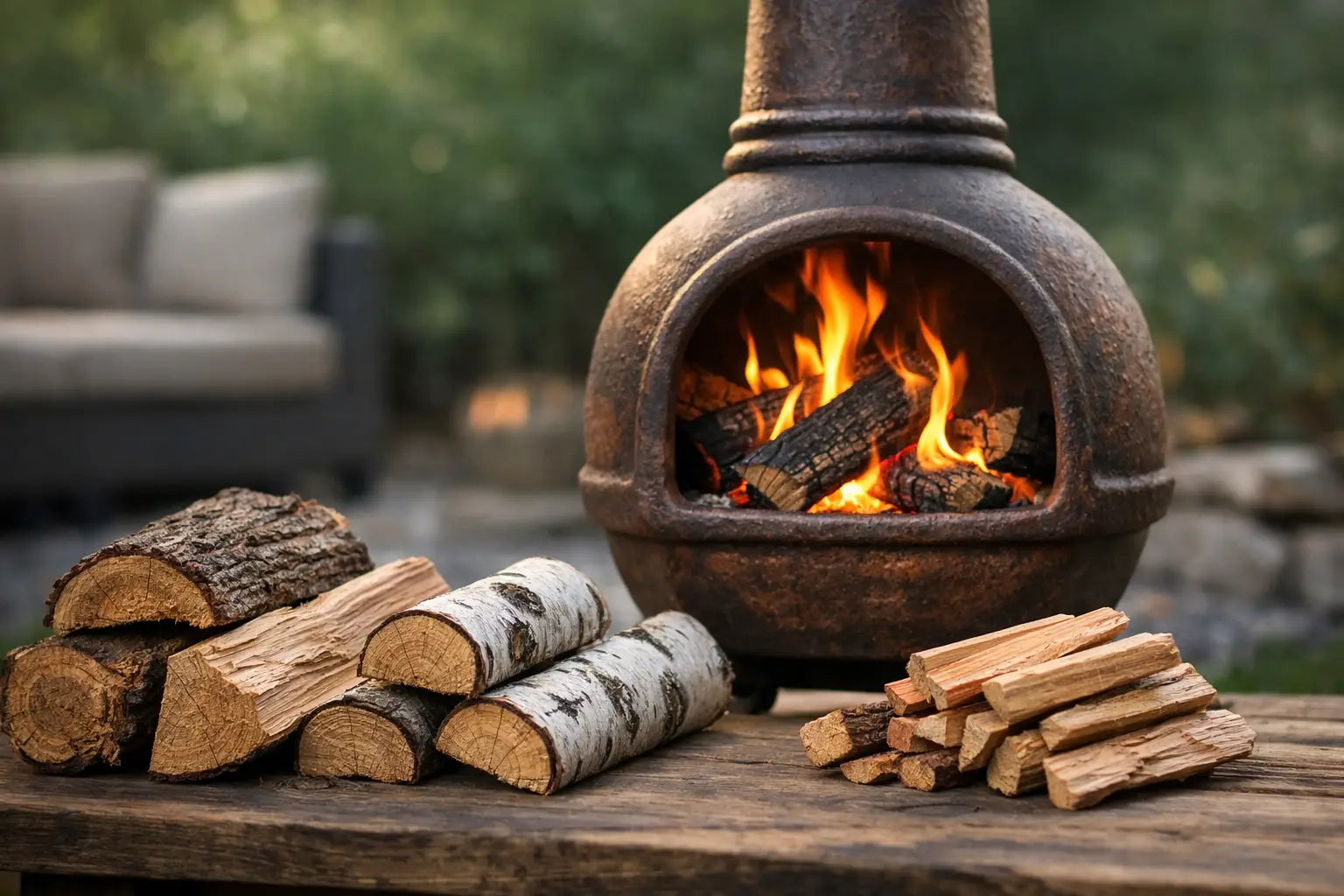
A chiminea that fills the patio with smoke usually has one simple problem: the wood is too wet, too soft, or both. Choosing suitable firewood for chiminea use makes lighting easier, keeps smoke to a minimum and gives you a warmer, more enjoyable fire without constantly tending it.
The best choice for most chimineas is clean, untreated, kiln-dried hardwood with a moisture content below 20%. It burns steadily, produces good heat and is far less likely to blacken the chimney or leave guests moving their chairs to escape the smoke. The wood matters just as much as the chiminea itself.
Why dry wood matters in a chiminea
A chiminea has a smaller, more enclosed fire chamber than an open fire pit. That design directs heat and smoke upwards through the chimney, but it also means damp logs can quickly restrict airflow and create a smoky, sluggish flame.
Freshly cut or poorly stored wood contains a high level of water. Before it can provide useful heat, the fire has to boil that moisture away. The result is energy wasted as steam, a lower flame temperature and more visible smoke. Damp fuel also leaves soot and tar deposits inside the chiminea, making cleaning more difficult over time.
Kiln-dried logs are ready to burn when delivered. With moisture content below 20%, they light more reliably and burn more efficiently than unseasoned wood. For occasional garden fires, this is particularly useful: you can store a manageable supply and use it when the weather is right, rather than hoping a pile of logs has dried sufficiently.
The best firewood for a chiminea
Hardwood is generally the most dependable option because it is denser than softwood. Dense logs tend to burn for longer, create a more stable bed of embers and need less frequent refuelling. The right species depends on whether you want an easy-starting fire, a long evening burn or a balance of both.
Ash: dependable and easy to light
Ash is a popular all-round firewood. It lights readily when properly dried, burns with a bright, consistent flame and produces useful heat without excessive smoke. Its dependable performance makes it a sensible choice for a chiminea, especially if you want a straightforward fire that does not require constant attention.
Birch: fast warmth and a lively flame
Birch catches well and produces an attractive, lively flame, making it well suited to getting a chiminea going quickly. It burns faster than denser woods such as oak or hornbeam, so it works well at the start of a fire or for shorter garden gatherings. Use kiln-dried birch and add logs little and often rather than overfilling the fire chamber.
Alder: a clean, gentle burner
Alder is lighter than oak and hornbeam but remains a practical hardwood for outdoor fires. It lights easily, burns cleanly when dry and is a good option for relaxed evening use. It may not last as long as the densest hardwoods, but its predictable burn makes it useful for smaller chimineas.
Oak and hornbeam: long-lasting heat
Oak and hornbeam are dense hardwoods with a slower, longer burn. Once the fire is established, they are excellent for maintaining heat and reducing the need to add logs frequently. They do need a strong, hot start, so begin with dry kindling and smaller logs before adding larger pieces.
For many households, a mix works best. Start with kindling and smaller birch, ash or alder logs, then add oak or hornbeam once there is a proper ember bed. This gives you quick ignition without sacrificing a longer-lasting fire later in the evening.
What size logs should you use?
Before ordering fuel, measure the internal width of your chiminea’s fire bowl. Logs should sit comfortably inside without sticking out of the opening or pressing against the sides. A log that is too large can restrict airflow, burn poorly and make refuelling awkward.
Smaller logs are usually more practical for compact clay and cast-iron chimineas. They catch more easily and allow you to build the fire gradually. Large logs are not automatically better value if you have to split them before use or cannot position them safely in the bowl.
Fire-box packs and netted logs can be convenient for occasional users, while crates offer better value for households that use their chiminea regularly as well as a stove or fireplace. When comparing options, check the stated volume and log length rather than relying on the size of the outer packaging alone.
Wood to avoid burning
Not every piece of timber belongs in a chiminea. Avoid burning wet logs, painted or varnished timber, treated fence panels, MDF, chipboard and household rubbish. These materials can release unpleasant or harmful fumes and may leave corrosive residues inside the appliance.
Pallet wood should also be treated with caution. Some pallets are untreated, but it can be difficult to confirm their history, whether they have been contaminated during transport or whether they contain nails and staples. Purpose-supplied firewood is the safer, cleaner choice.
Softwood, such as pine or spruce, is not always unsuitable, but it is best used sparingly and only when properly dried. It burns quickly and can throw sparks because of its resin content. In an open garden setting, this may be manageable, but it is less ideal for a long, controlled chiminea fire, particularly near furniture, fences or dry planting.
Charcoal, smokeless coal and briquettes should only be used if the manufacturer specifically states they are suitable for your model. Clay chimineas in particular can be damaged by excessive heat. Wood-burning instructions are there to protect both the appliance and the people around it.
How to light a chiminea with less smoke
Start with a small amount of dry kindling and one or two small kiln-dried logs. Leave space between the pieces so air can move through the fire. Light the kindling using a suitable firelighter, then allow the first logs to catch properly before adding more fuel.
Do not fill the chiminea to the top. A crowded fire struggles for oxygen and sends more smoke through the opening. Add one log at a time once the previous fuel has formed glowing embers and the flame is established.
If the fire begins to smoke heavily, resist the temptation to add more wood. Check that the logs are dry, reduce the amount of fuel and allow the fire to regain heat. A smoky chiminea is often asking for less fuel and better airflow, not a bigger flame.
Storage keeps good logs good
Even premium kiln-dried logs can lose their advantage if they are left uncovered in rain. Store your firewood off the ground, with a waterproof cover over the top and open sides for ventilation. A log store, covered rack or dry shed with airflow is ideal.
Avoid wrapping logs completely in plastic outdoors. Trapped moisture can encourage condensation and mould. If you buy bagged logs, open or loosen the packaging once stored under cover so the wood can breathe.
Keep a small quantity close to the house for convenience, but never store a large pile directly beside the chiminea. Sparks, radiant heat and an untidy fuel area are an avoidable combination. Bring out only what you expect to burn that evening.
Choose quality fuel for safer garden fires
A chiminea is at its best when it provides warmth without the fuss of smoke, difficult lighting or constantly replacing poor-quality logs. Clean, dry hardwood gives you control over the fire and helps protect your appliance from soot and unnecessary stress.
Candowe supplies Ready to Burn certified kiln-dried logs in practical packs and larger formats, making it easier to match the fuel you buy to how often you use your outdoor space. Choose logs that fit your chiminea, build the fire slowly and let dry wood do the hard work.