Skip to content
Are Large Crate Kiln Dried Logs Worth It?
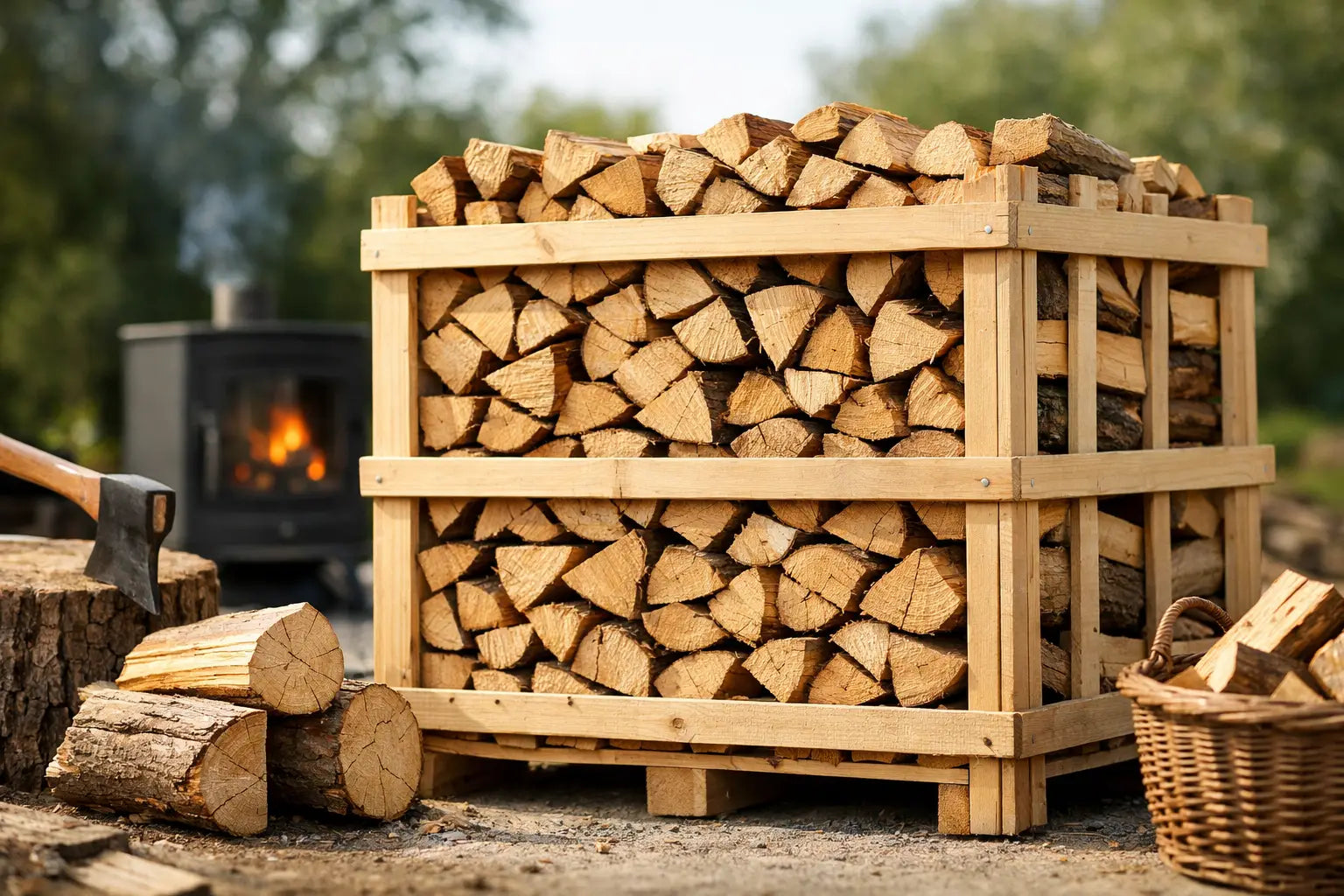
A few wet bags of wood can turn an evening by the stove into a frustrating job: slow lighting, darkened glass and more smoke than heat. Large crate kiln dried logs are designed to remove that uncertainty. They provide a substantial, consistent supply of dry firewood, delivered in a format that makes it easier to plan ahead for regular stove or fireplace use.
For households that burn wood through autumn and winter, buying by the crate can offer better value and less hassle than repeated small purchases. The right choice still depends on your appliance, storage space, preferred wood species and how often you light a fire.
What a large crate of kiln dried logs gives you
A large crate is a palletised load of firewood, usually supplied in a rigid wooden crate for transport and storage. It is intended for customers who need more than a few nets or fire-box packs at a time. Rather than estimating how many bags will see you through a cold spell, you have a clearly presented bulk supply ready for use.
The key advantage is not simply the quantity. Proper kiln drying brings the moisture content of the logs below 20%, allowing the wood to light more readily and burn more efficiently than unseasoned or poorly stored firewood. In England, wood sold in volumes under two cubic metres must meet the Ready to Burn standard when supplied for domestic use. Choosing certified fuel gives you a straightforward assurance that the wood is suitable for clean, efficient burning.
Dry logs produce more useful heat because less energy is spent driving moisture out of the wood. They also tend to create less smoke and leave less residue on stove glass and within the flue. That does not mean every dry log burns in exactly the same way - species, log size, airflow and appliance settings all matter - but starting with consistently dry fuel puts you in a far better position.
Is a large crate the right amount for your home?
A large crate suits regular burners particularly well. If your stove is used most evenings during the heating season, a bulk order can reduce the time spent sourcing and carrying smaller bags. It can also be a sensible option for rural homes, holiday lets, small hospitality businesses and anyone who wants a dependable reserve before colder weather arrives.
It is less suitable if you only light an occasional weekend fire or have nowhere dry to keep the logs. Bulk buying is good value only when the fuel remains in good condition. A crate left exposed on a damp patio for months will not perform as intended, even if the logs were dry when delivered.
Before ordering, consider how quickly you burn through fuel. Think about the number of fires you light each week, the size of your stove and whether wood is your main heat source or a supplementary one. A larger crate can be cost-effective per cubic metre, but it is better to buy a quantity you can store properly and use within a reasonable period.
Check the volume, not just the crate size
Crates can look similar while containing different usable volumes. Compare the stated volume carefully and check whether it refers to stacked volume, loose volume or the external dimensions of the crate. These are not interchangeable measurements.
A transparent supplier should make the product volume clear, along with the log length and wood type. This lets you compare like for like rather than assuming that the tallest-looking crate represents the best value. Price per cubic metre is often the most useful figure when comparing bulk firewood.
Make sure the logs fit your appliance
Log length matters. A log that is too long for your stove is inconvenient at best and unusable at worst. Measure the firebox and leave enough room for airflow around the fuel. If you have a compact stove, a crate containing shorter logs may be more practical than a larger format of oversized pieces.
A mixed selection of log diameters can also be useful. Smaller pieces help establish the fire, while larger logs can provide a longer, steadier burn once the stove is up to temperature. Good fire management is still essential: avoid overloading the appliance and follow the manufacturer’s guidance on fuel and air controls.
Choosing the best wood species for bulk delivery
There is no single best firewood for every household. The ideal species depends on whether you value a quick, bright flame, a slower burn or a balance of both.
Birch is popular because it lights easily and gives a lively flame, making it a practical choice for regular home use. Alder is another easy-burning option that can work well for shorter fires and stove lighting. Ash is widely valued for its dependable heat output and straightforward burning characteristics.
Denser hardwoods such as oak and hornbeam can burn for longer and provide strong heat, provided they are properly kiln dried. Their density often makes them appealing to households seeking a sustained evening fire. They may take a little more time to establish than lighter woods, so many stove owners use kindling and smaller logs first, then add denser pieces once there is a good bed of embers.
The most practical choice may be a mixed approach. A crate of hardwood logs, supported by dry kindling and natural firelighters, gives you the control to light efficiently and maintain heat without relying on damp, awkward fuel. For households with more than one appliance, it can also make sense to choose log sizes and species around the stove used most often.
How to store a large crate of kiln dried logs
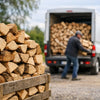
Delivery day is not the end of the job. Keep the crate somewhere accessible for the driver while allowing enough space to move logs safely into storage. Palletised deliveries are normally made to a suitable kerbside location, so consider access, slopes, narrow lanes and the distance to your log store before placing an order.
The best storage arrangement keeps rain off the logs while allowing air to circulate. A purpose-built log store, covered side passage or well-ventilated shed can all work. Raise the logs off bare ground where possible, as moisture can travel upwards from paving, soil or grass. Cover the top rather than wrapping the entire stack in an airtight sheet, which can trap condensation.
You can leave logs in their crate temporarily, but a crate is not always a complete long-term weatherproof store. If it is positioned outdoors, protect it from direct rain and check that air can still move around the wood. Moving part of the supply into a smaller log basket or indoor store is convenient, but avoid keeping large quantities immediately beside the stove. Fire safety and clear access always come first.
Getting more heat from every log
Kiln dried fuel performs best when the fire is run well. Start with dry kindling and a small number of split logs, with sufficient airflow to establish a clean flame. Once the stove is hot, add logs gradually rather than filling the firebox too early. This helps combustion stay cleaner and reduces the chance of the fire smouldering.
A stove thermometer can be helpful where suitable for your appliance. It gives a clearer indication of whether the stove is being operated too cool or too hot. Regular sweeping and servicing also matter. Even quality dry wood needs a clean, correctly maintained flue to burn safely and efficiently.
It is worth keeping an eye on your actual usage during the first crate. Some households find that their wood lasts longer once they move from variable local firewood to reliably dry logs. Others may use more than expected during a particularly cold spell or when heating a larger, older property. Your first bulk order is useful information for planning the next one.
A practical way to buy with confidence
When comparing large crates, look beyond the headline price. Confirm the moisture standard, species, stated volume, log length and delivery terms. Check whether kindling is included, whether delivery covers your postcode and how the pallet will be delivered. These details affect the real value and how easily the order will fit into your routine.
Candowe supplies premium kiln-dried firewood in clear, practical formats, with Ready to Burn certified options and delivery across most mainland UK postcodes. For regular burners, ordering a crate before stocks run low can turn winter fuel from a last-minute chore into one less thing to think about.
A dry, covered place to store your fuel and a crate sized around your real usage are usually the two decisions that matter most. Get those right, and each fire can begin with logs that are ready when you are.