Skip to content
Bulk Firewood Delivery That Actually Works
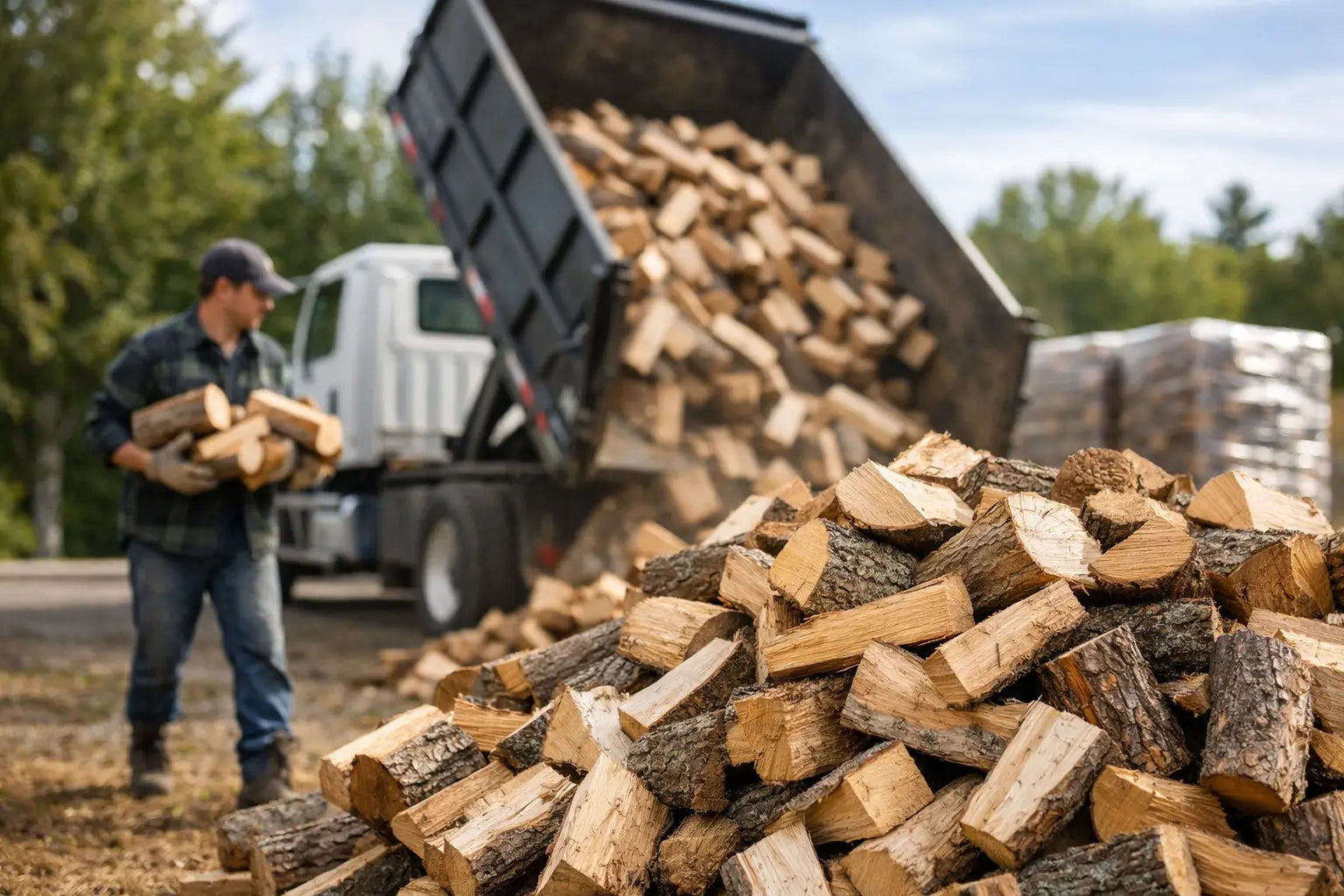
Running out of logs on a cold evening is usually the moment people stop buying firewood a few bags at a time. Bulk firewood delivery makes more sense when you rely on a stove, fireplace or log burner regularly, because it gives you a steadier supply, better value per unit and less guesswork over whether the next load will actually burn well.
For many UK households, the issue is not just quantity. It is quality, consistency and convenience. If logs arrive wet, mixed badly or packed in a way that is difficult to store, a bigger order quickly stops feeling like a saving. That is why bulk buying works best when the firewood is properly dried, clearly measured and delivered in a format that suits how you heat your home.
Why bulk firewood delivery appeals to regular burners
If you use wood fuel through autumn and winter, buying in bulk usually lowers the cost per cubic metre compared with smaller retail quantities. It also reduces the number of repeat orders you need to place, which matters if you live somewhere rural or do not want to keep searching for local stock when demand spikes.
There is also a practical benefit that often gets overlooked. A single organised delivery is easier to plan around than multiple smaller drop-offs. You can prepare storage space once, stack properly and know what you have on hand. For households using a stove as a meaningful part of their heating rather than occasional ambience, that reliability matters.
Business users often see the same advantage. Holiday lets, workshops, pubs with solid-fuel heating and small commercial sites tend to need fuel that arrives predictably and in a format that is easy to handle. In those cases, palletised or crate-based supply is often more manageable than sourcing ad hoc loads from different sellers.
What good bulk firewood delivery should include
The word bulk can mean different things depending on the supplier. Sometimes it means a large loose load. Sometimes it means stacked crates, netted bags, plastic bags or boxed firewood on a pallet. The right option depends on your storage, access and how quickly you expect to use the fuel.
What should stay consistent is the standard of the wood itself. For domestic stoves and wood burners, logs should be properly seasoned or kiln-dried and ideally below 20% moisture content. Ready to Burn certified firewood removes much of the uncertainty because it confirms the wood is suitable for immediate use in appliances designed for dry fuel.
Species also affect performance. Birch and ash are popular for easy lighting and steady heat. Oak and hornbeam tend to be denser and can burn longer, though they often suit users who want a stronger sustained output. Alder can be a practical choice for everyday burning where a clean, reliable flame matters more than maximum burn time. The best option depends on your appliance, how often you refuel and whether you prioritise quick heat, longer burn or easier handling.
Bulk firewood delivery and the real value question
Price matters, but bulk orders should not be judged on headline cost alone. The cheapest load is not necessarily the best value if the wood is damp, loosely described or delivered in a volume that is hard to compare with other sellers.
A clearer way to judge value is to look at measurable details such as loose volume, stacked volume, crate size, moisture content and species. If a supplier is transparent about cubic metre pricing or equivalent volume, you are in a much better position to compare one product with another.
Packaging format affects value too. Loose tipped loads may appear cheaper, but they can be less convenient if you need tidy storage, clean handling or easier movement around the property. Crated or bagged products can cost more upfront while saving time, reducing mess and making stock control simpler. For many customers, especially those with limited storage space or regular usage, that trade-off is worth it.
Choosing the right format for your property
Not every home is suited to the same type of delivery. A rural property with outbuildings and wide access can often take larger palletised quantities without issue. A suburban home with a narrower drive, limited side access or restricted storage may need a more structured format.
Crates work well for customers who want a neater delivery and easier stacking. Net bags and smaller packs can be useful if you need to move logs in stages rather than all at once. Fire-box style packs appeal to households that want dry logs stored in a manageable unit near the house, especially in winter when convenience matters.
The best approach is to think backwards from where the logs will live. If you know your storage area, how far the delivery has to travel from kerbside and how often you will use the fuel, the right product format becomes much easier to choose.
Storage still matters after delivery
Even kiln-dried logs need sensible storage. Bulk firewood delivery solves the supply problem, but it does not remove the need to keep logs dry and ventilated once they arrive. If the fuel sits on wet ground or under a fully sealed sheet with no airflow, performance can suffer.
A covered log store with open sides is usually the safest option. If you are storing bags or crates outdoors, keep them raised off the ground where possible and protect the top from direct rain without trapping moisture. If you are buying enough to last months rather than weeks, this becomes even more important.
It is also worth planning how much fuel you want close to the house for daily use and how much can stay in longer-term storage. A simple rotation system helps preserve quality and keeps wet weather handling to a minimum.
Delivery practicalities that are easy to miss
The success of bulk firewood delivery often comes down to details people only think about after ordering. Access is one of the main ones. If your property has a steep drive, gravel, tight turning space or restricted entrance, it is sensible to check delivery assumptions before the load arrives.
Kerbside pallet delivery is common for larger orders, and that generally works well on firm, level ground. But it may not suit every location equally. A dependable supplier should be clear about what delivery includes, typical lead times and any postcode limitations.
Fast fulfilment matters as well, especially during colder months when demand rises. If you are ordering to avoid running short, a supplier with a clear delivery window gives you much more confidence than one relying on vague availability. Free delivery across most mainland UK postcodes can also make a meaningful difference to total cost when buying at volume.
Why dry, certified logs make bulk buying safer
When you buy more firewood at once, the downside of poor quality gets bigger. That is why low moisture content and certification matter more with bulk orders, not less. Wet logs are harder to light, produce less useful heat and create more smoke and residue. Over time, that can affect appliance efficiency and chimney cleanliness.
Certified dry firewood reduces that risk. You know the logs are intended for immediate burning rather than extra seasoning at home, which is especially useful if you do not have the time or space to manage that yourself. For households trying to heat efficiently and keep maintenance sensible, buying ready-to-burn fuel is often the more practical route.
This is where a specialist supplier has an advantage over inconsistent local loads. A structured catalogue, clear product information and reliable moisture standards help customers buy with confidence rather than hoping a vague "seasoned" claim proves true.
Who benefits most from bulk firewood delivery
Regular stove users are the obvious fit, but they are not the only ones. Households in rural areas often buy in larger quantities because supply is less convenient to replace at short notice. Customers who want to budget heating costs more carefully may also prefer a single larger purchase rather than a series of smaller ones through winter.
Then there are buyers who simply want less hassle. If you are tired of poor local availability, uneven log sizes or fuel that arrives too damp to burn properly, bulk ordering from an established online supplier can remove much of that friction. Candowe is built around that kind of practicality, with kiln-dried options, transparent formats and free delivery across most mainland UK postcodes.
The same applies to small commercial users. If fuel is part of your day-to-day operation, consistency is usually more important than chasing the lowest possible upfront figure.
Making the order worth it
Bulk buying works best when you match the load to your actual usage. Ordering far too little defeats the point, but ordering far too much without proper storage can create avoidable problems. A sensible estimate based on your previous winter use, appliance size and how much of your home heating depends on solid fuel will usually point you in the right direction.
It also helps to think in terms of the full fuel setup. Kindling, briquettes, pellets or smokeless fuels may all play a part depending on your appliance and routine. Buying strategically rather than reactively tends to give better results, particularly when colder weather arrives and supply pressure increases.
Good bulk firewood delivery should leave you with one less household concern, not another. If the logs are dry, the volume is clear and the delivery is dependable, you spend less time managing fuel and more time getting proper heat from it. That is usually the difference between just buying more wood and buying well.