Skip to content
Crated Logs vs Bagged Logs for Your Home
A full log store can be reassuring when colder weather arrives, but buying more wood than you can store properly soon creates a different problem. When comparing crated logs vs bagged logs, the best option is not simply the largest quantity or lowest headline price. It depends on how often you light your stove, the space available outside and whether you want to manage one larger delivery or smaller, easier loads.
Both formats can provide clean, reliable heat when the wood is properly kiln dried and stored well after delivery. The practical difference is in volume, handling, storage and how easily you can judge the value you are receiving.
Crated Logs vs Bagged Logs: The Main Difference
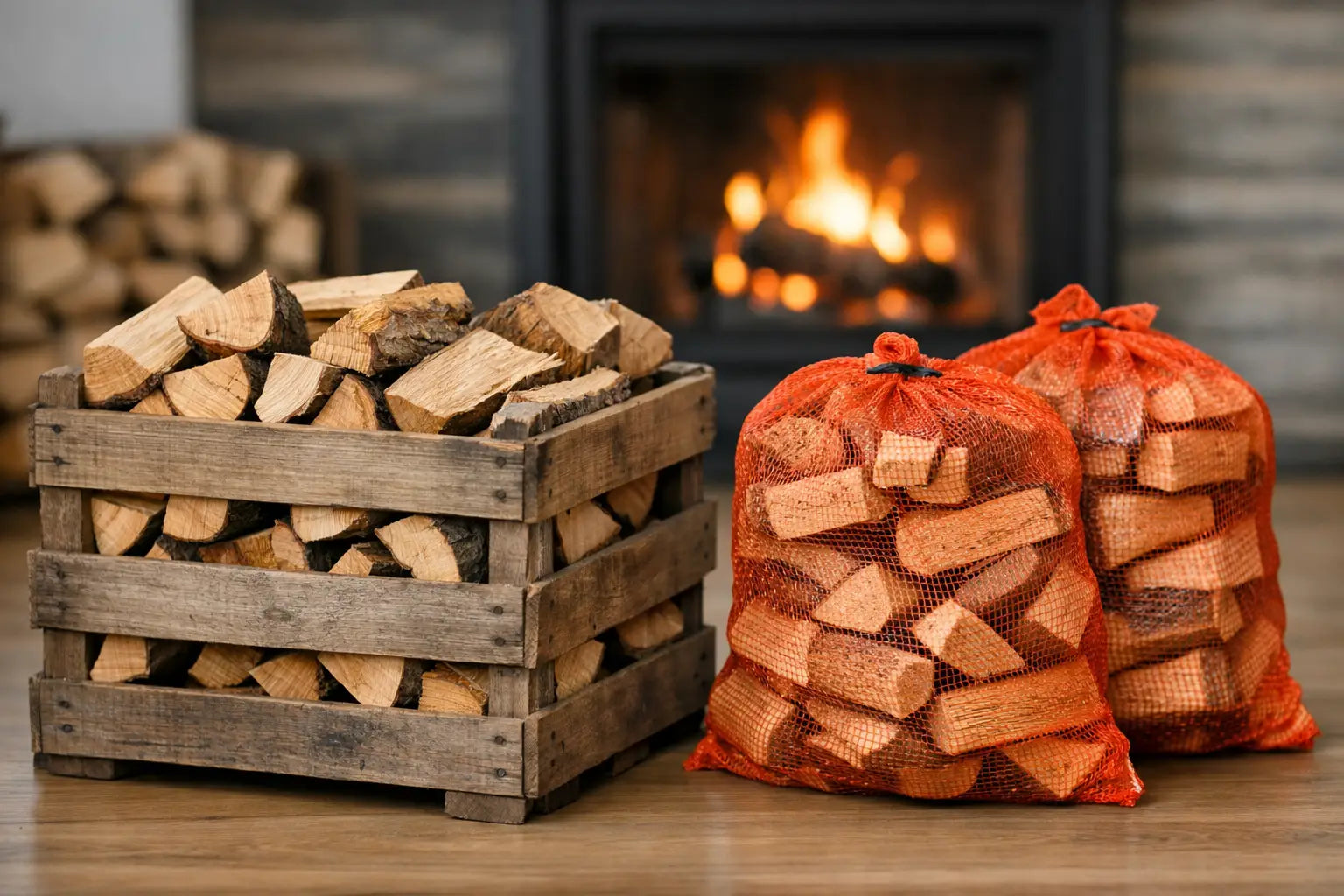
Crated logs are supplied in a rigid crate, usually delivered on a pallet. They are designed for customers who use their stove or fireplace regularly and want to stock up for weeks or months at a time. Because the logs are packed into a defined crate size, this format makes it easier to compare volume and calculate a price per cubic metre.
Bagged logs come in individual nets or larger bags. They suit households that use wood occasionally, have limited storage, or prefer to carry fuel from the delivery point to the log store in manageable amounts. A bag is also useful for topping up an existing supply without committing to a pallet delivery.
The wood itself matters more than the packaging. Look for Ready to Burn certified logs with a moisture content below 20%. Dry wood lights more easily, produces more usable heat and creates less smoke and residue than damp, unseasoned firewood. Once that standard is met, choosing between crates and bags becomes a question of everyday practicality.
When Crated Logs Offer Better Value
For frequent stove users, a crate is often the more economical route. Buying a larger volume generally reduces the packaging and handling involved per load, which can improve the price per cubic metre. It also means fewer repeat orders during the heating season.
A crate gives you a clearer sense of what you are buying. Product specifications should state whether the advertised volume is loose or stacked, as these measures are not interchangeable. Logs stacked neatly in a crate naturally contain less air space than the same logs tipped loosely into a container. Comparing like for like is the fairest way to assess value.
Crated firewood is particularly suitable if you heat a main living area with a wood burner most evenings, use a boiler stove, or want a dependable reserve for winter. A palletised delivery keeps the order together on arrival, rather than leaving multiple smaller bags to move individually from a kerbside drop-off.
There are, however, a few conditions to consider. You need enough clear access for the delivery vehicle and pallet equipment, plus a dry, ventilated place to store the quantity. The crate itself is not a substitute for a proper log store. If it sits directly on wet ground or is covered tightly with plastic, the wood can pick up moisture after delivery.
Why Bagged Logs Can Be the Smarter Choice
Bagged logs are about flexibility. If you light your fire at weekends, during cold snaps or mainly for atmosphere, several bags may be all you need. You can order the amount that fits your immediate storage space and avoid having a large stockpile taking over the garden or garage.
They are also simpler to handle. A net bag can be carried to a shed, side passage or covered store without breaking down a crate or moving logs by the armful. For homes with restricted access, steps, narrow paths or no suitable pallet-drop location, bags can remove a practical barrier to buying quality kiln-dried fuel.
The trade-off is that bags usually cost more per unit of wood than bulk formats. They also require more packaging and can make volume comparisons less straightforward. A bag size alone does not tell the whole story, as log length, split size and how tightly the bag is filled can affect what it contains. Check the stated loose volume, weight where relevant, and the price per cubic metre where it is available.
Bagged logs are a sensible choice when convenience matters more than maximum bulk value. They are also useful alongside a crate: a larger delivery can cover regular use, while a few bags can be kept near the house for easy access in poor weather.
Storage Matters as Much as the Format
Kiln-dried logs arrive ready to burn, but they still need protecting from rain and ground moisture. Whether you choose crates or bags, move the wood into a covered, well-aired storage area as soon as practical. A log store with a roof, open sides and a raised base is ideal.
Do not seal logs in an airtight shed or wrap them fully in a tarpaulin. Air needs to circulate around the fuel. Covering the top while leaving the sides open gives protection without trapping condensation.
With bagged logs, avoid leaving bags directly on soil, paving that holds standing water, or a damp garage floor. With crated logs, consider whether the whole crate can be positioned under cover before delivery. If not, transfer the logs steadily into the store and keep the crate raised and protected in the meantime.
Storage capacity is a useful way to make the decision. Before ordering, measure the width, height and depth of your log store, then leave some room for airflow and access. It is better to order a quantity you can store correctly than to buy a larger load that must sit exposed outdoors.
Match the Wood Type to How You Use Your Fire
Format is only one part of the choice. Different kiln-dried species suit different burning preferences. Birch lights readily and provides a bright, lively flame, making it popular for everyday fires. Alder is easy to light and works well for shorter, responsive burns. Denser hardwoods such as oak, ash and hornbeam generally offer a longer-lasting fire, although they benefit from a well-established bed of embers.
If you use your stove daily, a crate of dense hardwood logs may make sense because you will work through the volume consistently. If you use the fire occasionally, bags of easy-lighting birch or alder may be more convenient. Many households keep kindling and firelighters on hand too, so the stove can be lit efficiently without relying on newspaper or damp garden sticks.
Always follow the appliance manufacturer’s guidance on log length and fuel type. Oversized logs can restrict airflow and make lighting harder, while very small pieces may burn through faster than expected. Selecting logs that fit your firebox properly makes more difference to day-to-day performance than choosing packaging on price alone.
A Practical Way to Decide
Start with how much wood you genuinely use. If you normally buy several bags throughout autumn and winter, a crate may reduce your cost and ordering time. If a few bags last you for weeks, bulk fuel could be inconvenient rather than good value.
Before placing an order, check four practical points:
- your available covered storage space
- access for a palletised delivery
- the stated volume and whether it is loose or stacked
- the moisture standard and Ready to Burn certification
The right choice should make heating easier, not create extra work. Choose crated logs when regular burning, secure storage and long-term value are the priority; choose bagged logs when access, flexibility and smaller quantities matter most. Whatever format you select, dry certified wood stored off the ground and under cover will give your stove the best chance of delivering clean, dependable warmth when you need it.