Skip to content
Best Firewood for Your Wood Burning Stove at Home
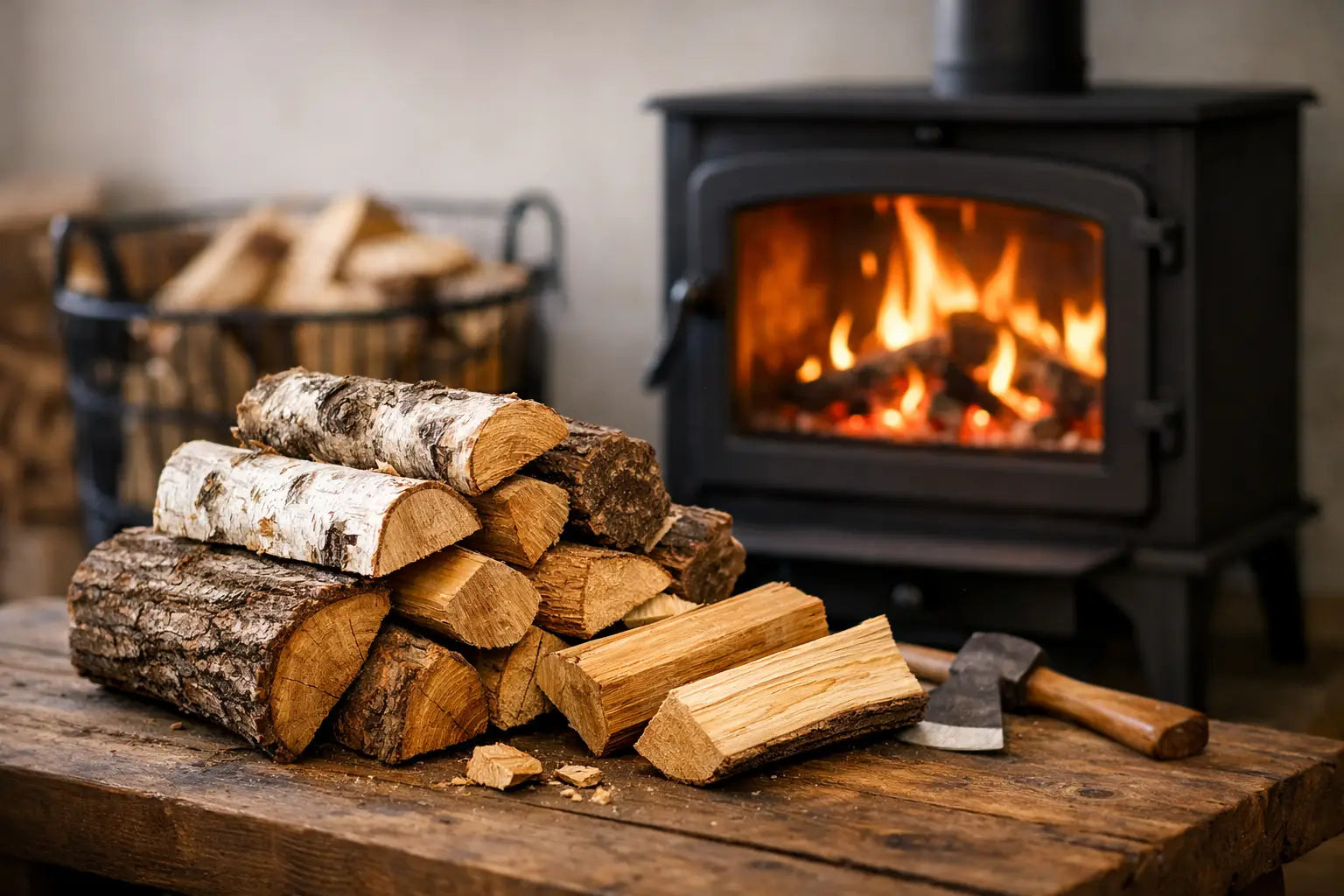
A stove can only perform as well as the fuel you put in it. The best firewood for wood burning stove use is dry, correctly sized for your appliance and suited to the type of heat you want - whether that is a fast, bright evening fire or steady warmth through a cold night. Species matters, but moisture content matters first.
For UK stove owners, kiln-dried hardwood logs with a moisture content below 20% are the dependable choice. They light more easily, produce more usable heat and create less smoke, soot and residue than wet or poorly seasoned wood. Choosing Ready to Burn certified logs also gives you confidence that your fuel meets the required standard for domestic use.
Start with dry, Ready to Burn firewood
Freshly cut wood contains a high amount of water. When it is burned too soon, much of the fire's energy is spent boiling off that moisture instead of heating your room. The result is a sluggish fire, darker stove glass, more smoke from the chimney and noticeably less heat from every log.
Kiln-dried logs are dried in controlled conditions to reduce their moisture content consistently. This makes them a practical option for households that do not have the time, space or certainty needed to season logs themselves. They arrive ready to stack and burn, rather than requiring months or years of storage before use.
Dry logs also make stove operation easier. You will usually need less kindling to establish the fire, air controls are easier to manage and the flames burn cleaner. No firewood is completely maintenance-free, but using properly dried fuel is one of the simplest ways to look after your stove and flue.
The best firewood for a wood burning stove by species
There is no single best log for every household. A small stove in a well-insulated sitting room has different needs from a large log burner heating an open-plan kitchen. The most useful approach is to choose a species based on burn time, heat output and how easily it gets going.
Ash: reliable all-round stove fuel
Ash is widely regarded as one of the best all-round hardwoods for wood burners. It lights readily when dry, produces strong heat and burns at a steady pace. Its balanced performance makes it a sensible choice for regular daytime and evening use, particularly if you want a dependable fire without constantly adjusting the stove.
Ash is often a good starting point for customers buying firewood for the first time. It gives a clean, controlled burn and works well on its own or alongside denser logs used to extend burn time.
Birch: quick lighting and bright heat
Birch is an excellent choice when you want to get the stove warm quickly. It catches fire easily, gives attractive flames and produces good heat soon after lighting. The bark can also help a fire establish, although the logs should still be properly dry.
Because birch burns more quickly than very dense hardwoods, it may not be the best option if your main priority is the longest possible burn. It is particularly useful for lighting a fire, for shorter evening use or mixed with oak or hornbeam to combine quick warmth with longer-lasting heat.
Oak: dense logs for longer burns
Oak is a dense hardwood that burns slowly and delivers substantial heat once the fire is established. It is a strong option for larger stoves, colder days and households that want fewer refuelling intervals. Its slow burn can offer very good value because each log lasts longer in the firebox.
The trade-off is that oak can be slower to light than ash or birch. It performs best when placed onto a bed of glowing embers rather than used as the first log on a new fire. A practical arrangement is to light with kindling and birch or ash, then add oak once the stove is properly hot.
Hornbeam: high heat and excellent longevity
Hornbeam is among the densest firewood options commonly used in domestic stoves. It burns hot, slowly and with lasting embers, making it particularly effective when you want sustained heat over several hours. It is well suited to colder weather and users who value a long, efficient burn.
Like oak, hornbeam benefits from a well-established fire. Its density is its advantage, but it also means that a few logs can produce considerable heat. Avoid overfilling a smaller stove and follow your appliance manufacturer's guidance on loading and air control.
Alder: practical for milder days
Alder is a lighter hardwood that lights easily and burns cleanly. It is useful for spring and autumn, when you want to take the chill off a room without producing the intense, long-duration heat of oak or hornbeam.
It burns faster than the denser hardwoods, so it is not usually the first choice for an all-night fire. However, it remains a practical, efficient fuel when bought kiln-dried and used for the right purpose. Many households find that keeping more than one species gives them better control through the heating season.
Match the log to the way you use your stove
The best buying decision is rarely about choosing one species forever. It is about matching your fuel to your routine. If you light the stove after work for a few hours, birch or ash can offer easy lighting and prompt warmth. If the stove is a key source of heating throughout the day, ash combined with oak or hornbeam gives a useful balance of responsiveness and burn duration.
For weekend use or occasional fires, convenience is often more important than maximum density. Smaller packs of dry logs and kindling make lighting straightforward and prevent unused fuel taking up unnecessary space. For frequent stove users, crates and larger-volume deliveries can offer clearer value per cubic metre, as long as you have a dry place to store them.
Log size matters too. Wood that is too long for the firebox restricts airflow and can lead to inefficient burning. Before ordering, measure the usable internal width of your stove and allow room around each log. Shorter logs are generally easier to arrange and manage, while larger logs can be useful in bigger appliances designed for them.
Why hardwood is usually the better choice
Both hardwood and softwood can heat a stove when properly dry, but hardwood is usually preferred for regular domestic heating. Dense hardwood logs tend to burn more slowly and provide longer-lasting heat, which means fewer trips to the log store and more controlled refuelling.
Softwood can light quickly and is useful as kindling or for getting a fire established, but it generally burns faster. The concern is not that softwood is automatically unsuitable, but that wet wood of any type creates problems. If you use softwood, it should be clean, untreated and properly dried, just like hardwood.
Never burn painted, varnished, treated or manufactured waste wood in a domestic stove. These materials can release harmful fumes and leave damaging deposits in your appliance and chimney. Purpose-made kiln-dried logs, kindling and approved solid fuels are the safer, more predictable choice.
Store firewood properly after delivery
Even premium kiln-dried logs need sensible storage. Keep them off the ground where possible, protected from rain but exposed to airflow. A covered log store, ventilated shed or sheltered area against an external wall can work well. Avoid wrapping logs tightly in plastic once opened, as trapped moisture can affect their condition.
Bring a small supply indoors a day or two before use if you have space. Room-temperature logs are easier to handle and help prevent carrying surface damp from outdoors into the stove area. Do not stack large quantities directly beside the stove, however, as this can create a fire risk.
A clean burn also depends on good stove practice. Use dry kindling, establish a lively flame before reducing the air supply, and avoid shutting the appliance down so far that logs smoulder. Regular sweeping by a qualified chimney sweep remains essential, even when you use high-quality dry fuel.
Buy for consistent heat, not just the lowest price
A cheap bag of uncertain logs can become expensive if it burns quickly, struggles to light or leaves your stove glass blackened. Compare firewood by usable volume, moisture content and species, not simply by the headline price or number of bags. Transparent volumetric pricing makes it easier to judge what you are actually receiving.
Candowe supplies Ready to Burn kiln-dried logs in practical formats for occasional fires, regular home heating and larger-volume orders. Choosing a reliable supply means you can stock up before colder weather, rather than relying on last-minute fuel with unknown moisture content.
A well-run wood burner should feel straightforward: dry logs, a clean flame and heat you can rely on. Keep a mix of easy-lighting ash or birch and slower-burning oak or hornbeam, and you can adjust your fire to suit the weather rather than making do with whatever wood is available.