Skip to content
How to Stack Firewood Crates Safely at Home
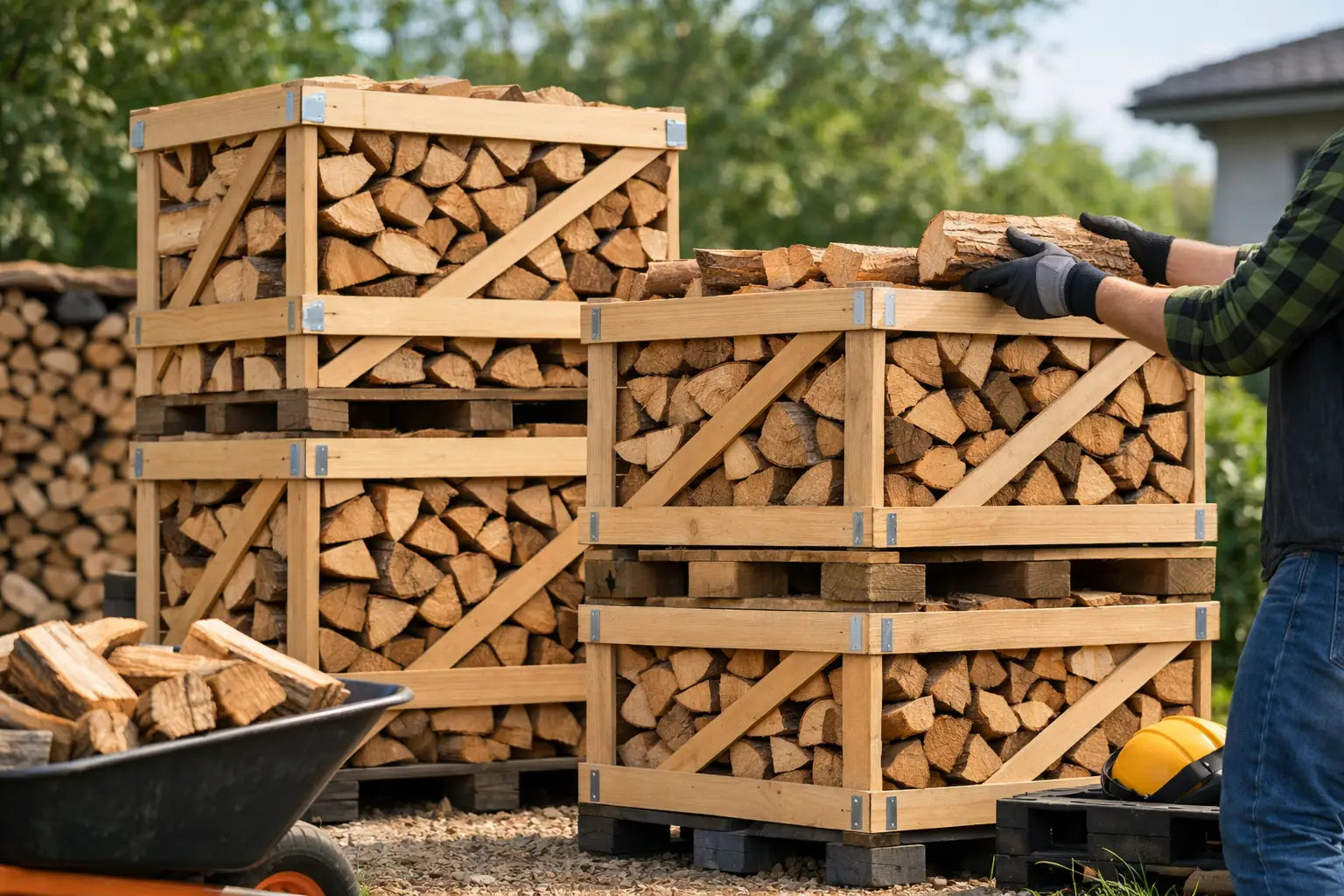
A crate of kiln-dried logs is a practical way to buy fuel in volume, but its value can quickly be lost if it is left on wet ground, covered badly or stacked unsafely. Knowing how to stack firewood crates helps protect dry fuel from the British weather, keeps your store tidy and makes refilling the log basket easier when temperatures drop.
The first rule is simple: treat a full crate as a heavy, load-bearing delivery unit, not as a piece of garden furniture. Whether crates can be stacked at all depends on their construction, the condition of the timber and the supplier’s handling guidance. If there is any doubt, keep them in a single layer.
Start with a dry, level base
Choose the storage position before delivery day. A full crate is difficult to move by hand and should not be dragged across a patio or lawn once it has been placed. The ideal spot is level, firm and close enough to the house that bringing in logs remains manageable in poor weather.
Avoid bare soil, grass and uneven gravel. Moisture rises from the ground, and a crate that sits directly on a damp surface can draw in water at its base. Use solid paving, concrete or a properly supported timber base. If the crate needs lifting, place it on sound treated bearers, pallets or blocks that support the full width of the load. Do not balance it on a couple of loose bricks or narrow offcuts.
Leave a small gap between the crate and a wall or fence. This allows air to circulate and stops trapped moisture building up behind the logs. It also gives you room to inspect the store for signs of damp, damage or movement.
Check whether your firewood crates are stackable
Not every wooden log crate is designed to carry another full crate. The slats may hold logs securely for transport, yet not have the strength, corner protection or bracing required for vertical storage. A crate can also weaken after exposure to rain or repeated handling.
Before considering a second level, check the supplier’s product information or ask directly whether stacking is approved. Look for intact corner posts, no split rails, no bowed base and no missing fasteners. The bottom crate must be completely level and fully supported. If it rocks, leans or has softened timber, do not place another crate on it.
Even with suitable crates, keep the stack modest. A low, stable store is safer than an impressive but awkward tower. Think about who will use the logs, how close the stack is to paths, gates and parked cars, and what could happen in high winds or icy conditions. Never stack where a fall could block an exit or damage property.
How to stack firewood crates safely
If your crates are specifically approved for stacking, prepare the lower crate first. Position it squarely on the base, checking it is level from side to side and front to back. A slight slope may not look serious when the crate is empty, but becomes a problem once the load is carrying hundreds of kilos of logs.
The upper crate should sit directly above the lower one, with its weight transferred through the designed corner points. Do not offset it, bridge it across two crates or use loose timber as improvised spacers. Uneven loads put pressure on slats and can cause the crate to shift unexpectedly.
Use appropriate lifting equipment and trained help to position a full crate. Do not attempt to lift or manoeuvre it with a domestic trolley, and keep children and pets away during placement. Once stacked, give the structure a visual check from every side. It should be square, still and free from any visible bowing.
As you use the logs, take them evenly from the stack where practical. Removing a large section from one side of a loosely packed crate can alter how the remaining logs settle. If the crate begins to lean, stop using it as a stacked unit and restack the remaining wood at ground level.
Give kiln-dried logs shelter without sealing them in
Kiln-dried firewood arrives ready to burn, generally with a moisture content below 20% when certified to the Ready to Burn standard. Proper storage helps it stay that way. The aim is to keep rain off while allowing the wood to breathe.
A purpose-built log store, open-sided shelter or roof overhang works well. The roof should extend beyond the front of the crate so that rain does not blow straight onto the logs. Position the more exposed side away from the prevailing weather where possible, but do not close every gap around the crate.
A waterproof cover can help if it is fixed above the load like a roof. It should cover the top and shed water away from the sides, while leaving the front and lower areas open to airflow. Avoid wrapping the whole crate tightly in a tarpaulin or plastic sheet. Condensation can become trapped inside, leaving logs damp on the surface and encouraging mould on the crate itself.
If you must keep a crate outside temporarily, prioritise overhead cover and ground clearance. Check it after heavy rain and windy weather, especially where the cover is tied down. A loose sheet can funnel water into the logs rather than protect them.
Keep the store useful as well as safe
Place your main fuel store where delivery access and daily use both make sense. A spot at the far end of the garden may be convenient for a pallet delivery, but less appealing when you need logs on a dark January evening. Many households keep the bulk crate outdoors and use a small, ventilated indoor log holder for a day or two of fuel.
Do not store large quantities of logs immediately beside a stove, open fire or boiler. Keep firewood away from direct heat sources and follow the appliance manufacturer’s clearance requirements. A clean, dry route from the crate to the house also reduces bark, debris and wet footprints indoors.
It is worth rotating your stock too. Use the oldest delivered wood first and keep newly delivered crates behind or beside the current supply where space allows. This is particularly helpful if you buy in bulk for the heating season. Although quality kiln-dried logs do not need seasoning, orderly rotation makes it easier to spot a damaged cover or a crate that has been exposed to water.
Common storage mistakes to avoid
The most frequent mistake is assuming that dry logs can simply be left outside uncovered because they arrived dry. Rain, ground moisture and poor ventilation can all affect their condition. Another is placing a crate on a soft lawn, where it gradually sinks and starts to lean.
Avoid overloading the top of a crate with plant pots, tools or spare bags of fuel. The roof of a log crate is not a shelf, and extra weight can distort the structure. Similarly, do not cut away supporting slats to make access easier while the crate is stacked.
Be realistic about space before ordering. Measure the storage area, allowing room for airflow, a cover and safe access at the front. Crate dimensions and loose volume should be checked against the product details, rather than judged from a photograph. This helps you choose a format that suits both your fuel use and the space available.
For households buying kiln-dried logs in quantity, a sound base, sensible cover and a single stable layer will usually provide the simplest solution. Candowe’s crate formats make it easier to plan a larger fuel store, but the condition of the site should always determine whether stacking is appropriate.
A well-positioned crate should make winter heating feel straightforward: dry logs within reach, a clear path to the stove and no need to worry about an unstable pile after the next spell of rain.