Skip to content
Best Kiln Dried Hardwoods for UK Log Burners
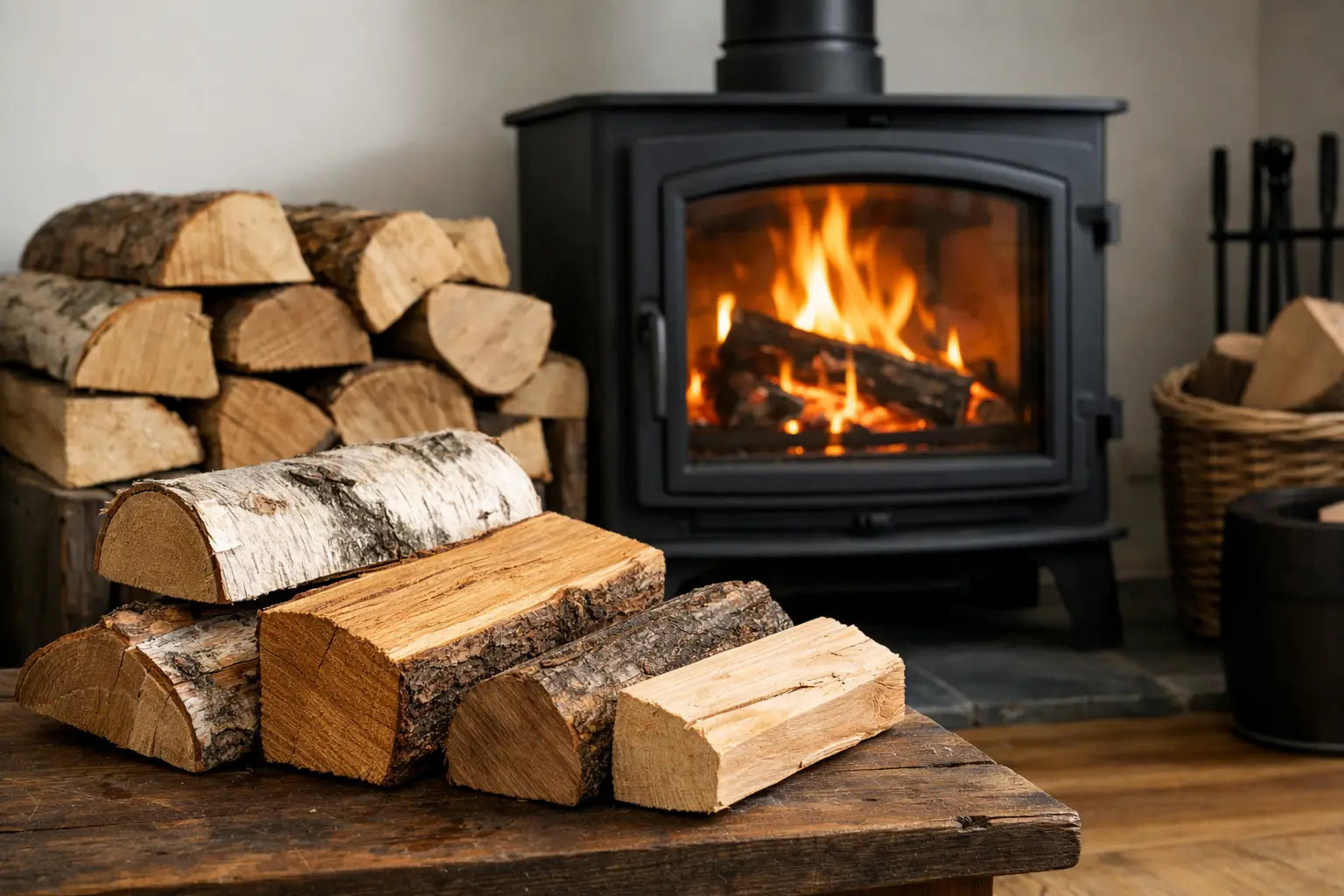
A fire that struggles to light, hisses in the stove or leaves dark deposits on the glass is often a fuel problem, not a stove problem. The best kiln dried hardwoods burn with less moisture, more predictable heat and far less fuss than unseasoned logs. For UK households relying on a log burner, open fire or multi-fuel stove, choosing the right species helps make every delivery work harder.
Kiln drying removes moisture from timber in a controlled process, producing logs that are ready to burn rather than needing months of storage before use. Look for wood with a moisture content below 20% and, where applicable, Ready to Burn certification. This gives you a clear standard for cleaner, more efficient home heating.
What makes the best kiln dried hardwoods?
There is no single hardwood that is right for every fire. The best choice depends on how you use your stove, the heat you want, how quickly you need the fire to respond and the format that suits your storage space.
A good kiln-dried hardwood should light reliably with kindling, produce strong heat for its size and burn without excessive smoke or spitting. Dryness is the starting point. Wet wood wastes energy boiling off water before it can heat the room, creates more smoke and can contribute to soot and tar deposits in the flue.
Species matters too. Dense woods generally burn more slowly and provide longer-lasting heat, while lighter hardwoods tend to catch quickly and give a bright, responsive flame. Neither is automatically better. Many households get the most practical result by using a faster-lighting wood to establish the fire, then adding denser logs to maintain it.
Log size is equally worth checking. Logs that are too long for the firebox are inconvenient and inefficient, while very small logs burn through quickly. Measure your stove before ordering, particularly if you are buying crates or larger quantities for the season.
Ash: the dependable everyday hardwood
Ash is widely regarded as one of the most balanced firewoods for domestic stoves. It lights well when kiln dried, produces a steady flame and gives strong, consistent heat. It is a sensible choice for households that want one reliable log for regular evening use without having to manage different species.
Its burn is generally clean and controlled, making it suitable for both closed appliances and open fires. Ash is not always the slowest-burning option, but it offers an excellent balance of convenience, heat output and ease of lighting. If you are new to wood heating, kiln-dried ash is a straightforward place to start.
Birch: quick heat and a bright flame
Birch is a popular choice when you want warmth quickly. It catches readily, burns with an attractive lively flame and is particularly useful for getting a stove up to operating temperature. Its bark can help it light well, but the wood still needs to be properly kiln dried before burning.
Because birch is less dense than oak or hornbeam, it usually burns faster. That is not a drawback if you are lighting a fire for a shorter period, using it alongside a denser hardwood or simply value an easy, responsive fire. For long overnight burns, however, birch alone may mean topping up the stove more often.
Oak: slow-burning heat for longer fires
Oak is dense, weighty and well suited to longer, slower fires. Once the stove is properly established, kiln-dried oak can provide sustained heat with fewer refills. It is often chosen by customers looking to make a crate or bulk delivery last through regular winter use.
The trade-off is that oak generally benefits from a good hot base of embers. It is not usually the first log to reach for when lighting from cold. Start with kindling and an easier-lighting hardwood such as birch or ash, then add oak once the fire is burning strongly. Used this way, it is an efficient option for evening heating and heat retention.
Hornbeam: dense logs for serious warmth
Hornbeam is among the densest commonly available hardwoods and is valued for a long, hot burn. For larger rooms, well-insulated stoves or households that use wood as a meaningful part of their heating routine, it can be an excellent fuel choice.
Its density means hornbeam is often slower to ignite than lighter species, so it works best on an established fire. In return, it provides a durable bed of embers and dependable heat over time. Customers who prefer fewer interruptions during a long winter evening often find hornbeam particularly good value by volume.
As with any dense hardwood, ensure adequate airflow while the fire is getting established. Reducing the air supply too early can lead to a dull, smoky burn rather than the clean combustion your stove is designed to deliver.
Alder: an easy-going option for everyday fires
Alder is lighter than oak, ash and hornbeam, but it remains a useful kiln-dried hardwood for domestic heating. It lights easily and burns pleasantly, making it well suited to smaller stoves, open fires and occasions when you want a comfortable fire without the intense, prolonged output of the densest logs.
It will normally burn through sooner than oak or hornbeam, so it is best for shorter fires or as part of a mixed fuel approach. Alder can be a practical choice where fast lighting, manageable logs and a clear flame matter more than maximum burn duration.
Choosing the right logs for your stove
For quick, easy fires, birch or alder are usually the most convenient choices. For an all-round household fuel, ash offers dependable performance. If your priority is long-lasting heat, oak and hornbeam are stronger contenders once the fire is established.
Your appliance also changes the answer. A modern, efficient wood-burning stove can make excellent use of dense hardwoods, provided the logs fit the firebox and the air controls are used correctly. An open fire loses more heat up the chimney, so easy-lighting logs and regular refuelling may be more practical than relying only on very dense pieces.
It can be worthwhile to keep two types of logs on hand. Use kindling and birch or ash to create a hot, stable base, then add oak or hornbeam for endurance. This approach gives you easier lighting without sacrificing a longer burn later in the evening.
Why moisture content matters more than a species name
A bag labelled as a premium hardwood is not automatically ready for efficient use. If it is still damp, even excellent oak or ash will disappoint. Kiln drying is valuable because it gives a consistent, measured moisture level rather than leaving you to judge whether wood has seasoned sufficiently in a shed or stack.
Dry logs burn more efficiently because more of their energy goes into heating your room rather than drying themselves out in the fire. They also tend to produce less visible smoke, are easier to light and help keep stove glass clearer when the appliance is operated correctly.
For most domestic use in England, Ready to Burn certified wood is the clearest assurance when buying small volumes. It confirms the fuel meets the required moisture standard for sale. For larger crate or pallet orders, ask for the stated moisture content and store the logs properly after delivery.
Storage after delivery
Even the best kiln dried hardwoods need protecting once they arrive. Keep logs raised off the ground where possible, covered from rain and open at the sides so air can circulate. A log store, ventilated garage or sheltered outdoor rack is ideal. Avoid sealing wood in an airtight space, as trapped moisture can undo the benefit of kiln drying.
Bring a small supply indoors a day or two before use if space allows. This helps keep the logs dry and ready to light, but do not stack a large quantity directly against a stove or heat source. Safe storage matters as much as dry storage.
Choosing quality fuel is a practical way to make a stove easier to live with. Whether you favour the quick flame of birch, the everyday reliability of ash or the lasting heat of oak and hornbeam, buy logs that are genuinely dry, correctly sized and suited to how you heat your home. With dependable kiln-dried fuel stored well, lighting the fire becomes the simple part of a colder day.