Skip to content
Firewood Crates: Are They Worth It?
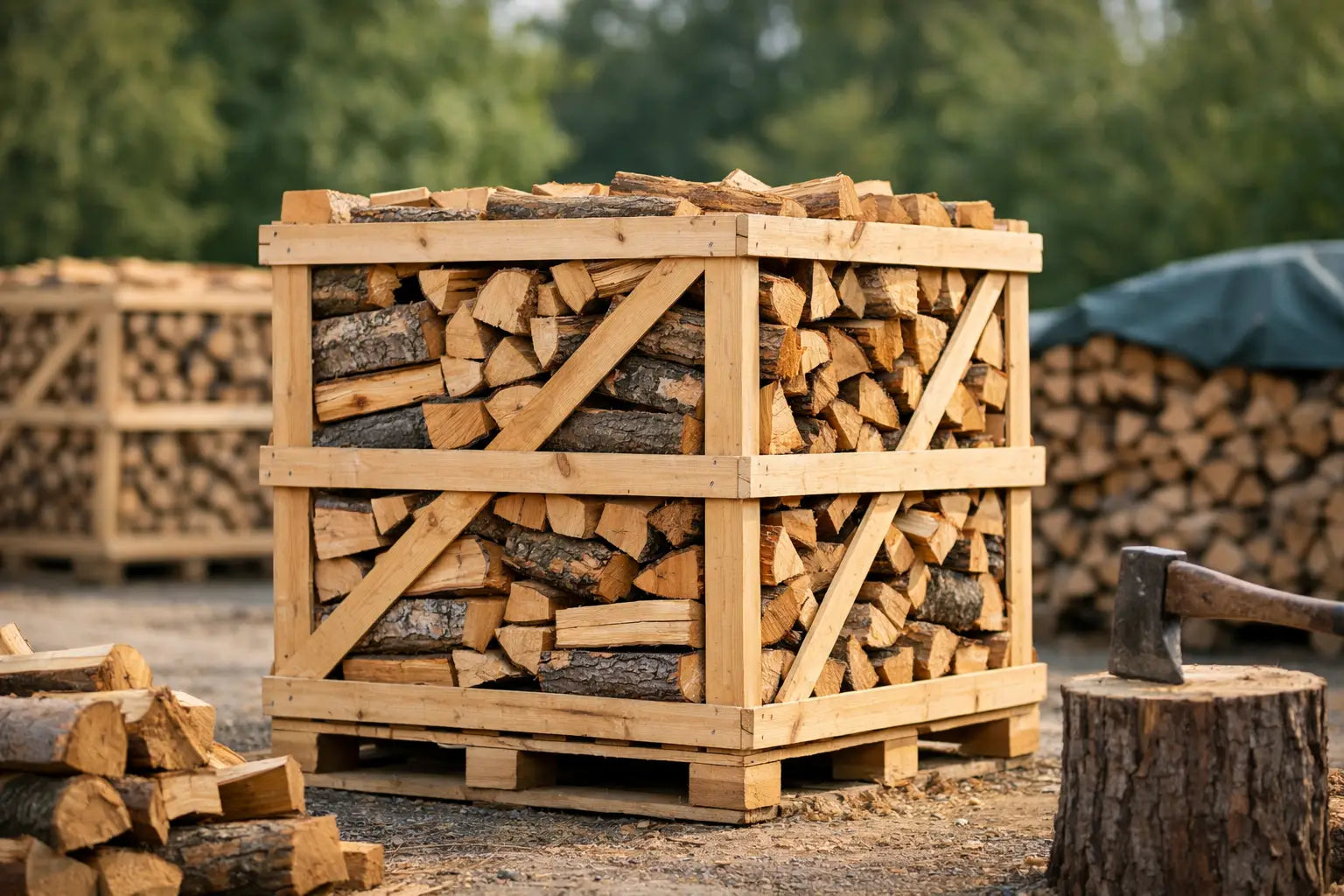
When a cold spell hits, the difference between a straightforward evening fire and a frustrating one often comes down to what turned up on the pallet. Firewood crates appeal because they solve several problems at once - storage, volume, dryness and convenience - but they are not the right choice for every home. If you are weighing up cost, space and burn quality, it helps to know what you are really paying for.
Why firewood crates are popular
A crate gives structure to a purchase that can otherwise feel vague. Loose tipped loads vary in how they are measured, small bags can work out expensive for regular use, and locally sourced logs are not always as dry as claimed. With firewood crates, buyers tend to get a clearer picture of volume, product type and expected performance before ordering.
That matters if you use a wood burner as a regular heat source rather than an occasional extra. You want logs that arrive ready to burn, stack neatly and last well in storage. A crate format also suits households that prefer to buy ahead for winter instead of making repeated smaller purchases when demand rises.
For many UK customers, the appeal is practical rather than cosmetic. A crate is easier to unload in a controlled way, easier to store tidily, and easier to compare on value when the supplier provides transparent volumetric pricing.
What to look for in firewood crates
The first thing to check is moisture content. Kiln-dried logs should be below 20% moisture if they are to burn cleanly and meet Ready to Burn expectations. That affects more than convenience. Drier wood lights more easily, produces better heat output and creates less smoke and soot than wet or poorly seasoned logs.
Species also matters, although not always in the way people expect. Birch is easy to light and burns with a lively flame, which makes it popular for domestic stoves and open fires. Oak and hornbeam are denser and can give a longer, steadier burn, but they may suit users who already know how they like to run their appliance. Ash is often valued for a dependable balance between ease of use and burn time. Alder can be a sensible option where buyers want a reliable, clean-burning hardwood at a competitive price.
Then there is crate size. A larger crate can improve value per cubic metre, but only if you have enough dry, accessible storage space and use enough fuel to justify the order. A smaller household with occasional weekend fires may be better served by a modest quantity in a more manageable format. A home heated heavily by a stove through autumn and winter may benefit from buying by the crate and reducing repeat delivery costs.
Storage matters more than many buyers think
One of the advantages of firewood crates is that they make storage simpler, but simple does not mean careless. Even kiln-dried logs need to be kept in conditions that protect their low moisture content. If the crate is left uncovered in heavy rain or pressed against a damp wall, the logs can absorb moisture and lose some of the benefit you paid for.
The best approach is to keep the crate in a well-ventilated area, off standing water and under cover if possible. An open-sided garage, log store or sheltered outbuilding usually works well. If you need to keep it outside, a top cover helps, but air still needs to circulate around the sides. Fully wrapping dry wood can trap moisture rather than protect it.
This is where the crate format helps again. Because the logs are already contained, it is easier to keep the stack orderly and monitor how much fuel you have left. You are not dealing with loose piles collapsing in poor weather or bags split across the garden.
Are crates better value than bags?
It depends on how you use firewood. For occasional use, bags can be convenient because they take up less room and involve a lower upfront spend. If you light a stove a few times a month, that may be enough. But for regular users, bagged logs often become less economical over time.
Crates usually make more sense when you want consistent supply and clearer value. You can compare volume more easily, estimate how long the stock will last and avoid paying a premium for repeated small orders. This is especially relevant for households in rural areas or for customers who prefer to order in one go and avoid the risk of local shortages during cold periods.
There is also the issue of quality consistency. Small ad hoc purchases from mixed sources can vary from one batch to the next. One delivery burns well, the next hisses in the stove and leaves the glass blackened. Buying kiln-dried logs in a structured crate format from a dependable supplier reduces that uncertainty.
Firewood crates for homes and business users
Domestic buyers are not the only people who benefit from crates. Small commercial sites, holiday lets, pubs with fireplaces and other businesses that rely on a steady fuel supply often need a format that is easy to order, easy to store and easy to account for. A palletised crate suits that requirement better than informal local collection.
For households, the benefit is usually convenience and burn performance. For business users, it is often about reliability and planning. If guests expect a stove to be ready to use, or if a venue depends on solid fuel heating during colder months, inconsistent moisture content becomes more than an annoyance. It becomes an operational problem.
That is why details such as certified dryness, species information, delivery lead times and clear product measurements matter. They help buyers make decisions based on expected use rather than guesswork.
Delivery and access considerations
Before ordering firewood crates, it is worth thinking about where the pallet will go once it arrives. Most deliveries are made kerbside, and access can be limited by steep drives, gravel surfaces or narrow approaches. If your property has any obvious constraints, planning ahead avoids disappointment on delivery day.
This is not a reason to avoid crates. It is simply part of ordering sensibly. In many cases, the convenience still outweighs the limitation, especially if you have a suitable space near the front of the property or can move logs into a storage area over time.
For many buyers, nationwide delivery is one of the strongest arguments in favour of ordering online. Instead of relying on whatever a local seller has available that week, you can choose the species and format that fit your appliance and buying pattern. That level of consistency is often worth more than a small saving on paper.
When firewood crates may not be the best fit
Crates are not always the right answer. If storage space is tight, if access for pallet delivery is poor, or if you burn very little wood each year, smaller formats may be more practical. There is no value in buying a large quantity if it creates a storage problem or sits unused for too long in poor conditions.
Equally, if you are testing a new stove and still working out which species you prefer, a smaller first purchase can make sense. Some buyers like the fast, bright flame of birch. Others want the denser, slower-burning character of oak or hornbeam. Usage habits differ, and the best format depends on that pattern.
The key is to match the purchase to your actual fuel demand, not the idea of what seems economical. Bulk buying works well when the product quality is right and the storage conditions are ready for it.
Choosing a supplier with confidence
A good crate of logs is not just about the wood itself. It is also about how clearly the supplier explains what you are buying. Moisture content, species, crate size, delivery times and any extras should be easy to understand before you place the order.
That transparency is often what separates dependable online suppliers from vague local listings. If the pricing is based on volume, the product is clearly described, and the logs are sold as ready to burn, you are in a far better position to compare value properly. Candowe’s approach reflects that practical standard - clear formats, certified dry fuel and delivery built around convenience rather than guesswork.
If you rely on a stove or fire as part of your regular heating, buying better fuel usually saves hassle faster than it saves money. The room warms up more quickly, the appliance stays cleaner, and you spend less time compensating for poor-quality logs. Firewood crates are worth it when they give you dependable stock, honest value and one less problem to solve when the weather turns.