Skip to content
Firewood That Burns Better and Lasts Longer
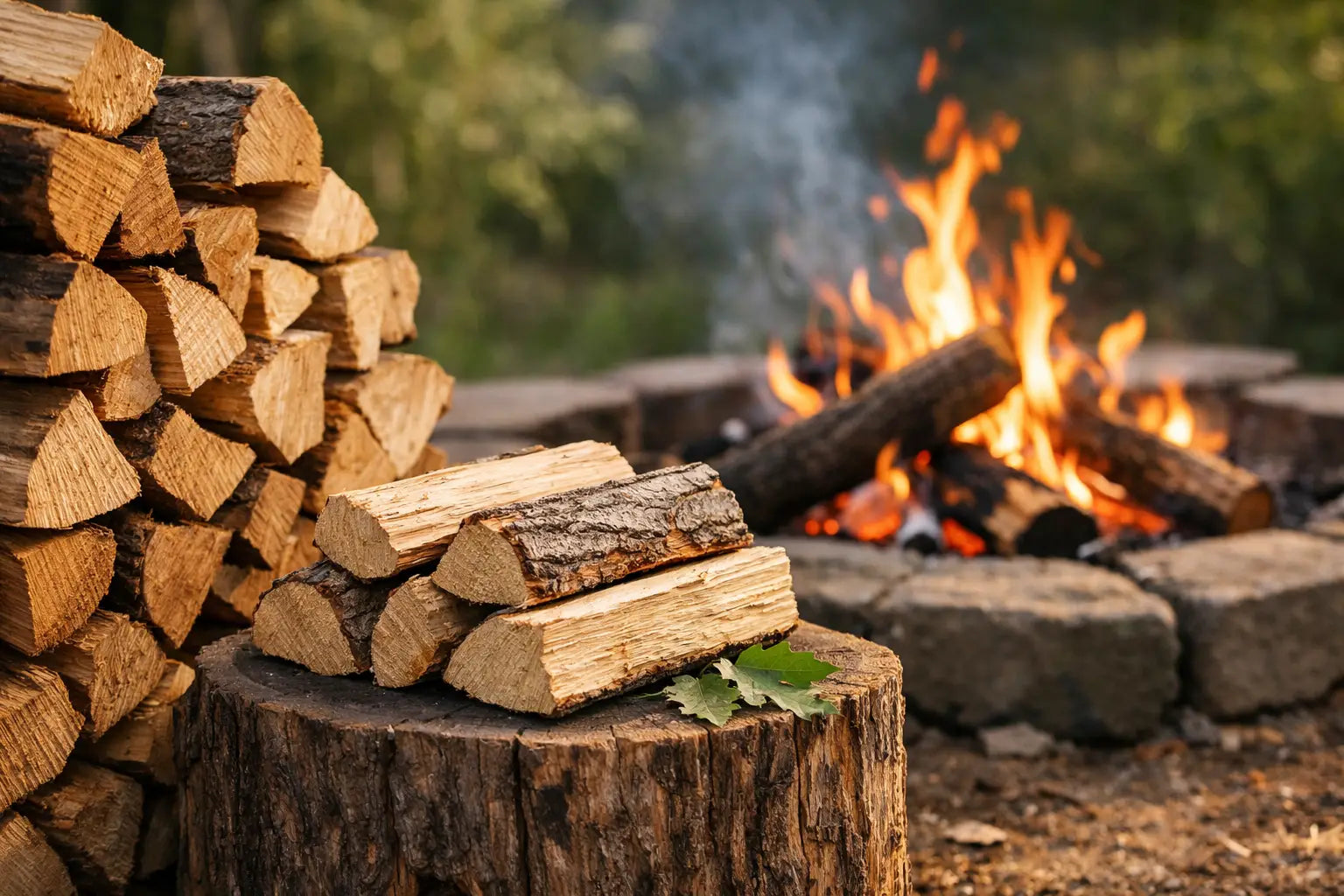
A fire that struggles to light, blackens the stove glass and disappears faster than expected is rarely an appliance problem. More often, it starts with the firewood. Logs that are genuinely dry, correctly sized and suited to your stove produce more useful heat, less smoke and far less mess around the hearth.
For UK households, buying firewood is not simply a question of choosing the cheapest bag or crate. The moisture level, timber species, pack format and storage plan all affect how much heat you receive from every load. Choosing well means your logs arrive ready to burn, stack neatly and perform consistently when the temperature drops.
Why dry firewood makes such a difference
The first job of any log is to heat the water trapped inside it before the wood itself can burn efficiently. Wet logs waste energy doing this, which is why they hiss, smoke and give off disappointing heat. They can also contribute to soot deposits on stove glass, flue liners and chimneys.
Ready to Burn certified logs have a moisture content below 20%. This is the practical benchmark for domestic wood-burning stoves, fireplaces and log burners. At this level, logs light more easily, burn with a clearer flame and release more of their potential heat into the room rather than up the flue.
It is tempting to buy cheaper unseasoned wood and dry it at home. That can work if you have a well-ventilated, covered log store and enough time - often a year or more, depending on the wood and conditions. For most households, kiln-dried logs remove that uncertainty. They are supplied dry and ready to use, rather than leaving you to judge whether a pile has seasoned properly through a damp British winter.
Dry wood is also the responsible choice in smoke control areas, where using appropriate authorised fuel and operating your appliance correctly matters. Always follow your stove manufacturer's guidance and have chimneys or flues swept at suitable intervals.
Choosing firewood by species
There is no single best species for every home. Denser hardwoods generally burn for longer and are well suited to maintaining steady heat, while lighter logs can be useful when lighting a fire or when you want a quicker burst of warmth. The right choice depends on your appliance, room size and how you use it.
Birch for an easy, bright fire
Birch is a popular choice because it lights readily and produces an attractive, lively flame. Its bark can be particularly helpful when starting a fire, although good kindling and natural firelighters remain the most reliable way to establish it. Birch is ideal for an evening fire or for getting a stove up to temperature without too much effort.
Because it is less dense than some other hardwoods, birch may burn through more quickly than oak or hornbeam. It is a good option for households that value easy lighting and a responsive fire, especially when paired with a denser log later in the burn.
Ash for dependable everyday heat
Ash is valued as a versatile, consistent firewood. It burns well, gives a good flame and offers a useful balance between ease of lighting and burn duration. For many stove owners, it is a practical all-round choice for regular winter use.
Oak and hornbeam for longer burn times
Oak is dense and slow-burning when properly kiln-dried. It is well suited to maintaining heat over a longer period, but it benefits from a well-established fire and sufficient airflow. Starting a cold stove with large oak logs alone can be slower than beginning with kindling and smaller, quicker-burning pieces.
Hornbeam is another high-density hardwood, often chosen by customers looking for long-lasting heat and fewer refuelling trips through the evening. Both oak and hornbeam can offer excellent value per burn, even when their upfront price is higher than lighter species. Compare the useful heat and duration, not only the price of a single bag.
Alder when you want a quicker burn
Alder is lighter and generally burns faster than dense hardwoods. It can be a sensible option for shorter fires, milder weather or customers who prefer not to keep a stove running for extended periods. The trade-off is simple: quicker warmth usually means more frequent refuelling.
Match log size to your stove
A log should fit comfortably inside your firebox with space for air to circulate. Overly long logs are inconvenient and can encourage customers to force the stove door shut or stack wood too tightly, both of which affect combustion.
Before ordering, check your appliance manual or measure the usable depth of the firebox. Allow a little clearance rather than choosing logs that exactly match the stated maximum length. Smaller logs are useful for lighting and quicker heat, while larger logs are better once a strong bed of embers is established.
If you use an open fire, the same principle applies, although fuel consumption is usually higher than with a modern closed stove. Open fires need careful loading and a good chimney draw to burn cleanly. A quality log cannot compensate for a poorly maintained chimney or restricted airflow.
Compare firewood formats by volume, not appearance
A small bag can look generous because of the gaps between logs, while a crate gives a clearer picture of the quantity you are receiving. When comparing products, look for stated loose volume, dimensions or price per cubic metre. These figures make it easier to compare genuine value across nets, bags, fire-box packs and larger crates.
Net bags and smaller packs are convenient if storage is limited, if you use your stove occasionally, or if you want to try a species before ordering in volume. They are easy to carry from a shed or log store to the house, but the cost per cubic metre is often higher.
Crates are usually the more practical option for regular stove users and bulk buyers. They reduce the frequency of reordering, make stock planning easier and can offer better value per unit of wood. For a household relying on a log burner throughout autumn and winter, a larger delivery is often more economical than repeated small purchases.
Candowe supplies kiln-dried, Ready to Burn certified logs in formats ranging from convenient bags to larger crates, helping households and trade buyers choose a quantity that matches their storage space and expected use.
Store logs properly after delivery
Kiln-dried wood can absorb moisture again if it is left exposed to rain or placed directly on wet ground. A good storage area protects logs from above while allowing air to move around the sides. A purpose-built log store, covered lean-to or dry shed with ventilation can all work well.
Keep logs raised off the ground on a pallet, rack or stable base. This reduces contact with damp surfaces and helps air circulate beneath the stack. Avoid wrapping the wood tightly in plastic, as trapped moisture and poor airflow can undo the benefit of buying dry fuel.
Bring a small supply indoors only when you are ready to use it. A basket or log holder near the stove is useful for a day or two of fuel, but storing a large amount beside a heat source can create unnecessary dust, clutter and fire risk.
Get more heat from every load
Good fire management matters as much as the logs themselves. Start with dry kindling and small pieces, keeping the air controls open enough to establish a strong flame. Once the fire is burning well, add larger logs gradually rather than filling the firebox to the top.
A stove that is starved of air can smoulder, producing smoke and dirty glass. One that is run with excessive airflow may burn through logs too quickly and send heat up the flue. The right setting varies by appliance, wood species and chimney draw, so use the manufacturer's instructions as your starting point and adjust based on how the flame behaves.
Check the ash bed too. A modest layer can help retain heat in some stoves, but excessive ash can restrict airflow. Empty ash safely into a non-combustible container only when it is fully cold, as embers can remain live longer than expected.
Plan your fuel before the cold weather arrives
Demand rises quickly when temperatures fall, and waiting until the first cold spell can leave you with limited storage time and fewer delivery options. Ordering earlier gives you time to prepare the log store, check your appliance and make sure you have kindling on hand.
Estimate usage from last winter if possible. Occasional weekend fires may only require a few smaller packs, whereas a stove used most evenings can justify a crate or palletised order. Homes differ widely based on insulation, room size, appliance efficiency and how warm occupants prefer the house, so a first order is also a useful way to learn your real consumption.
The best firewood is the wood you can rely on: dry enough to burn cleanly, sized for your appliance, stored correctly and available when you need it. Make those checks before placing an order, and each load will do the job it was bought for - dependable heat at the turn of a match.