Skip to content
Are Kiln Dried Logs Worth It for UK Homes?
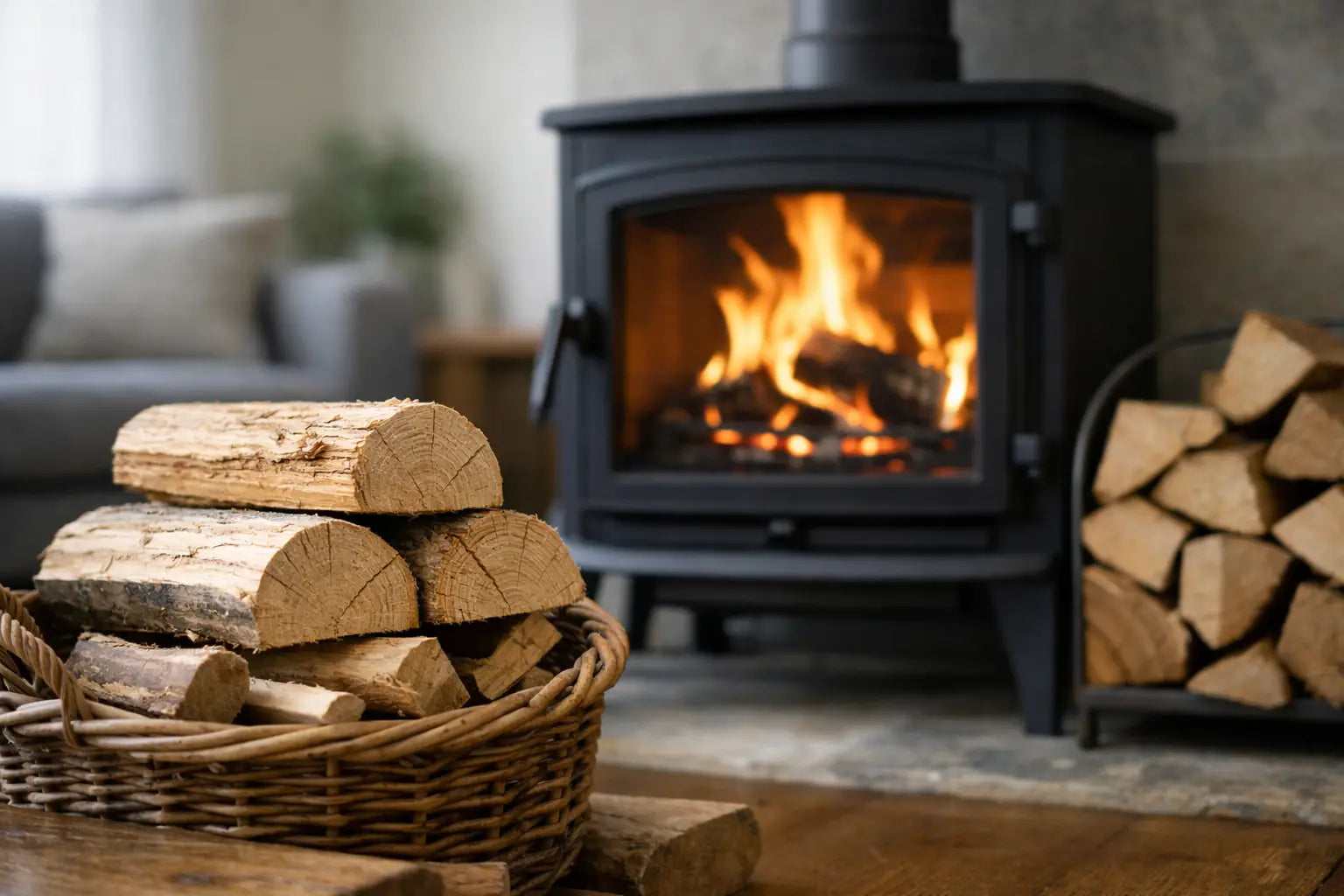
A stove can look perfectly clean, the flue can be sound and the kindling can be dry, yet a fire may still struggle to get going. Often, the problem is the logs. If you are asking, are kiln dried logs worth it, the practical answer is usually yes when you value reliable heat, less mess and fuel that is ready to burn as delivered.
The higher upfront price can be noticeable beside a pile of unseasoned or loosely described ‘seasoned’ firewood. But price per bag is only part of the calculation. The moisture in a log affects how easily it lights, how much useful heat reaches the room, how much smoke it produces and how cleanly your stove operates. For most households using a log burner regularly, quality kiln-dried wood offers better value over the heating season.
What makes kiln-dried logs different?
Freshly cut wood contains a great deal of water. Before it can burn efficiently, that water has to be driven off. Air seasoning can achieve this, but it requires the right wood store, plenty of airflow and enough time - often far longer than people expect in the UK climate.
Kiln drying uses controlled heat and airflow to reduce the moisture content of the wood quickly and consistently. Proper kiln-dried logs are normally supplied below 20% moisture content and, when sold in small volumes for domestic use, should carry the Ready to Burn certification. This gives buyers a clear standard rather than relying on a supplier’s description alone.
Dry logs do not need to spend the first part of the fire hissing, steaming and using energy to evaporate water. More of the heat produced is available to warm your room. They also tend to light more readily, establish a good flame faster and burn with a cleaner, more predictable flame.
Are kiln dried logs worth it when they cost more?
They can be, because cheaper wet wood is not necessarily cheaper heat. A log with high moisture content is heavier partly because you are paying for water. Once on the fire, that water lowers combustion temperature and reduces the useful output from each load.
With dry logs, you generally use less fuel to achieve the same comfortable room temperature. A fire that lights quickly also means less time spent adding kindling, adjusting vents and trying to revive a smoky load. That convenience matters on a cold evening, but it also makes a difference across months of regular use.
The comparison is not simply kiln dried versus all other firewood. Properly stored, genuinely well-seasoned logs below 20% moisture can also burn effectively. The difficulty is certainty. Unless you have seasoned the wood yourself for long enough and checked it with a moisture meter on a freshly split face, it can be hard to know what you are getting. Kiln-dried, Ready to Burn logs remove much of that uncertainty.
For occasional fires, such as a few evenings over Christmas, the savings from buying in bulk may be less important than purchasing a few convenient nets or fire-box packs. For a household that relies on a stove through autumn and winter, buying a larger volume of certified dry logs is usually the more sensible approach.
Better burning means a cleaner stove and chimney
Wet wood creates more smoke and can contribute to tar and soot deposits inside the appliance and flue. No fuel can remove the need for regular sweeping and sensible stove operation, but dry wood supports cleaner combustion.
This matters for safety as well as appearance. A cleaner-burning fire can help reduce the build-up associated with poor fuel, while less smoke makes the room and surrounding area more pleasant. If your stove glass blackens quickly, damp wood may be part of the issue, alongside restricted airflow or an appliance that is being slumbered for too long.
Using dry fuel is also a responsible choice in built-up areas. Wood burners should be operated carefully to limit smoke, particularly where homes are close together. Ready to Burn logs give you a reliable starting point, although local smoke control requirements and your appliance manufacturer’s guidance should always be followed.
The wood species still matters
Kiln drying improves consistency, but it does not make every species behave in exactly the same way. The best choice depends on how you use your fire.
Birch lights easily and produces a bright, attractive flame, making it useful for getting a fire established. Alder is also easy to light and suits everyday fires. Ash is widely valued for its dependable burn, while oak and hornbeam are denser hardwoods that can provide a longer-lasting fire once a good bed of embers is established.
Dense hardwood logs are often a strong choice for stove owners seeking longer burn times and steady heat. They may take a little more effort to light than lighter species, so it is sensible to use good kindling and begin with smaller logs. A mixed crate or a combination of easy-lighting and dense logs can give households both convenience and duration.
Do not judge logs only by their weight. Denser wood naturally weighs more, but moisture content is still the key factor in whether it burns well. The useful question is whether the logs are dry, correctly sized for your appliance and supplied in a format that makes sense for your usage.
When kiln-dried logs may not be the cheapest option
There are situations where kiln-dried logs are not the lowest-cost route. If you have access to responsibly sourced green wood, a dry and ventilated store, and the patience to season it properly, self-seasoning can reduce your cash outlay. It does, however, require space, planning and regular checking.
You also need to account for waste. Wood left directly on the ground, exposed to driving rain or packed without airflow can deteriorate rather than season. A damp store can undo the benefit of otherwise good logs. For many homeowners, the time, storage and uncertainty involved outweigh the apparent saving.
Kiln-dried logs are also not a licence to overfire a stove. Very dry, dense fuel can burn fiercely if the appliance is overloaded or airflow is left wide open. Follow the stove manufacturer’s loading guidance and use the air controls to maintain a lively, efficient flame rather than a roaring fire.
How to get full value from kiln-dried firewood
Delivery is only the first step. Even premium logs need protection from rain and ground moisture after they arrive. Store them under cover, with airflow around the stack. A log store with a roof, open sides and a raised base works well. Bringing a small supply indoors a day or two before use can help keep it at its best, but avoid stacking large quantities right beside the stove.
Choose the format around your space and burn rate. Nets and bags are easy to move and suit smaller stores. Fire-box packs are convenient for occasional use. Crates and palletised volumes can offer clearer value for regular stove users, provided there is safe access for delivery and sufficient covered storage. Comparing loose volume, log length and price per cubic metre makes the decision far more meaningful than comparing the number of bags alone.
At Candowe, Ready to Burn kiln-dried logs are available in a choice of species and practical formats, helping households buy the quantity that suits their stove, storage and heating routine. Consistent moisture content and transparent volume information make it easier to plan ahead rather than run short when temperatures drop.
A worthwhile upgrade for regular stove users
Kiln-dried logs are worth paying for when you want dependable fuel rather than a weekend project. They provide a more straightforward route to quick lighting, useful heat and a cleaner-burning fire, with no need to guess whether a seller’s ‘seasoned’ wood has actually had time to dry.
The best purchase is not always the largest or the cheapest advertised bundle. Select certified dry logs in a species and volume that suit your appliance, keep them properly stored, and buy before your existing stack is nearly gone. A well-stocked fuel store turns a cold evening into a simple routine: lay the fire, light it, and enjoy the heat.