Skip to content
When Is Firewood Delivered in Bulk Worth It?
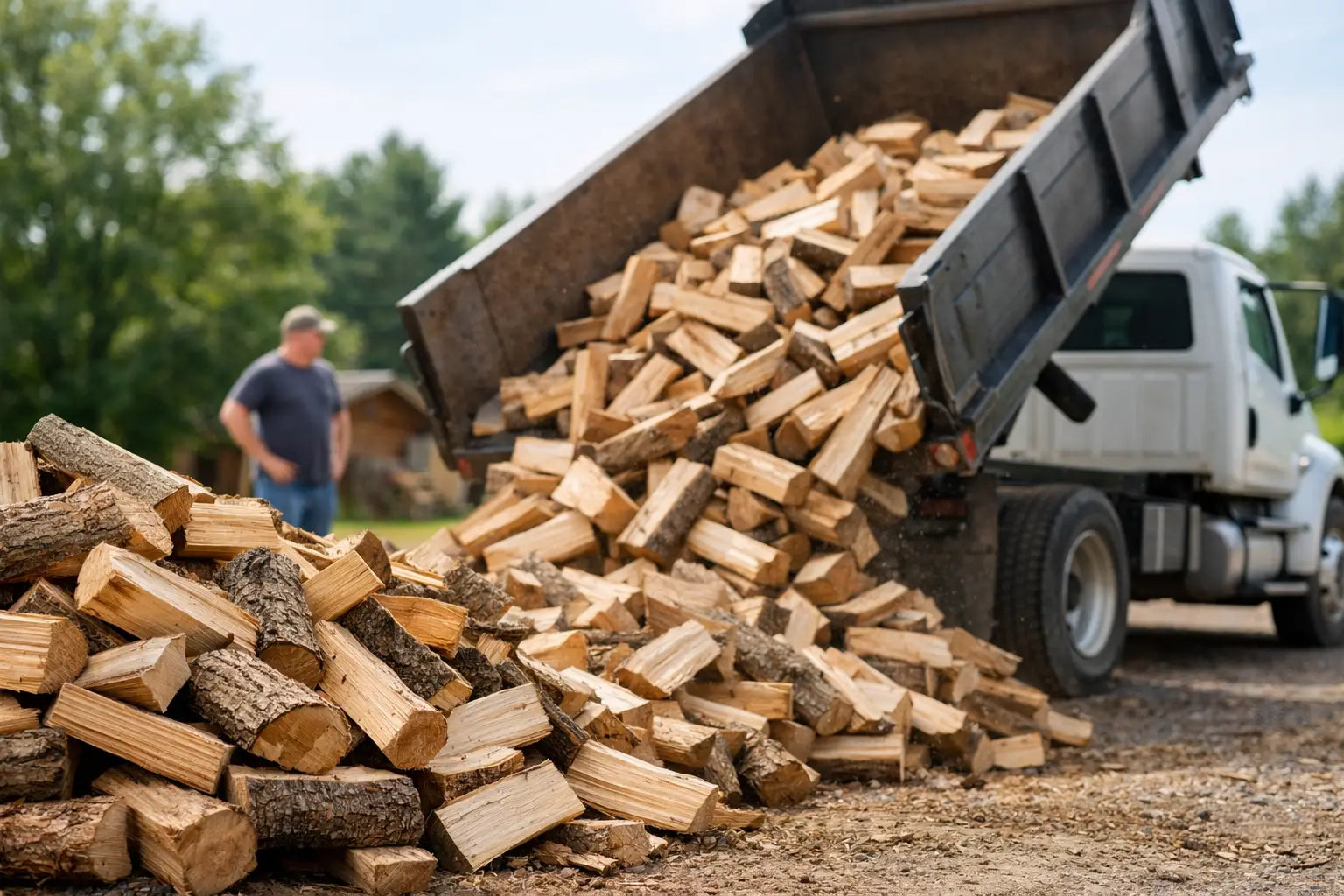
A cold evening is not the time to discover that the log store is nearly empty, the local supplier has sold out, or the wood you bought is too damp to burn well. For households that rely on a stove or open fire regularly, firewood delivered in bulk can remove that uncertainty. It gives you a known quantity of dry fuel, delivered to your home, ready to stack and use when you need it.
Bulk buying is not automatically the right choice for every property. The best order size depends on how often you light your fire, the storage you have available and the type of logs you prefer. When those practical details are covered, buying more at once is often the simplest way to secure reliable heat and better value through the colder months.
What counts as firewood delivered in bulk?
Bulk firewood usually means a larger-format order rather than a few individual bags collected from a shop. This may be a hard crate, a palletised load, several nets or bags ordered together, or a larger quantity for a trade or small commercial setting.
The key point is that bulk should be measured clearly. A low price can be misleading if it is unclear whether it relates to stacked volume, loose volume, bag size or weight. Before ordering, check the stated product format and volume so you can compare like for like. A well-structured supplier will make this information easy to see, allowing you to calculate the cost per cubic metre or per bag rather than relying on a photograph alone.
For many homes, a crate is a practical middle ground. It contains substantially more fuel than a handful of bags, arrives in a manageable format and can be stacked into a prepared store over time. Larger palletised quantities suit frequent stove users, rural properties and customers who want to minimise repeat deliveries.
The value of buying logs in larger quantities
The main advantage of bulk ordering is consistency. Instead of mixing bags from different sources and hoping each one burns in the same way, you receive a larger supply from one specified product range. This makes it easier to plan your fuel use, maintain an even store and avoid rushed purchases when demand is high.
There can also be a genuine cost benefit. Delivery, handling and packaging all carry a cost, so a larger order often represents better value per unit than buying small quantities repeatedly. The saving varies by format and species, but the wider benefit is convenience: one planned delivery can cover weeks or months of evening fires.
Bulk buying also reduces unnecessary journeys. For customers in rural areas or places without a dependable nearby fuel merchant, having logs brought to the property is more convenient than filling a car with loose bags. With free delivery across most mainland UK postcodes, a planned online order can make stocking up far more straightforward.
That said, the lowest price is not the only measure of value. Damp logs may appear cheaper, but they produce less useful heat, create more smoke and can leave more deposits in the appliance and flue. Dry, properly specified fuel is normally the better purchase when burn performance and cleanliness matter.
Why Ready to Burn quality matters
For domestic wood-burning appliances in England, firewood sold in volumes under two cubic metres must meet the Ready to Burn standard unless it is sold with appropriate seasoning advice. Ready to Burn certified logs have a moisture content of 20% or below, giving customers confidence that the wood is suitable for efficient domestic burning.
Dry wood lights more readily and burns with a stronger, steadier flame. It also produces less visible smoke than unseasoned wood because less energy is wasted evaporating water from the log. This supports better stove performance and helps protect air quality in your local area.
If you are ordering kiln-dried firewood in bulk, look for clear confirmation of moisture content and certification. Kiln drying provides a controlled process that brings logs to a low moisture level before delivery. It removes the uncertainty of buying freshly cut or poorly stored wood and then waiting months, sometimes years, for it to season at home.
Species still make a difference. Birch is popular because it lights easily and gives an attractive flame, while alder is a dependable, quick-lighting choice. Denser hardwoods such as oak, hornbeam and ash generally offer a longer burn, making them well suited to stoves used for extended periods. There is no single best option for every household: a mix of easy-lighting logs and longer-burning hardwoods can be particularly useful.
How much bulk firewood should you order?
Start with your actual use, not an idealised estimate. A stove lit at weekends for atmosphere consumes far less wood than a primary heating source used every day from autumn to spring. Think about how many evenings each week you light it, how long it runs and whether you tend to burn through logs quickly or keep a lower, slower fire.
A household using a stove occasionally may find a crate or a multi-bag order sufficient for a season. Regular users often benefit from ordering a larger quantity before winter, then topping up later if necessary. Homes with more than one appliance, holiday lets and small commercial premises may need a palletised supply to avoid frequent reordering.
Storage capacity should set a sensible limit. It is better to order an amount you can keep dry and accessible than to overfill a garage, leave logs exposed to rain or block a route around the property. If your available space is limited, smaller fire-box packs or bagged logs may be easier to handle, even if the per-unit cost is higher.
When comparing products, consider log length too. Logs should fit comfortably inside your stove with room for air to circulate. Forcing oversized logs into an appliance is inconvenient and can affect how well the fire burns.
Preparing for a bulk firewood delivery
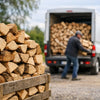
A little preparation makes delivery day easier. Choose a storage area before placing the order and make sure there is a clear, safe route from the delivery point to the log store. A pallet delivery is typically left at the most suitable accessible point, but exact placement depends on access, ground conditions and the delivery vehicle.
Hard, level ground is helpful for palletised orders. Gravel, deep slopes, narrow gates and soft ground can limit where a pallet can be placed. If you live on a difficult-to-access road, it is sensible to consider how far you are willing to move the logs after delivery and choose the format accordingly.
You will also need a dry place to stack the wood. An outdoor log store with a roof, open sides and a raised base is ideal. Air can circulate around the stack while rain is kept off the top. A shed or garage can work well if it is dry and ventilated, although logs should not be packed tightly against walls where airflow is poor.
Storing kiln-dried logs correctly
Kiln-dried logs arrive dry, but poor storage can undo that benefit. Keep them off the ground, protect them from direct rain and allow air to move around the stack. Covering the top is useful; wrapping the entire stack in a non-breathable sheet is not, as trapped moisture can create a damp environment.
Bring only a small supply indoors at a time. A log basket or fireside store keeps fuel convenient for the next few burns, while the main stock remains outside or in a suitable outbuilding. This also helps keep bark, dust and insects away from your living space.
Avoid storing a large quantity immediately beside the stove. Logs should be kept at a safe distance from any heat source, following the appliance manufacturer's instructions. Fuel storage is straightforward, but fire safety should always come first.
Choosing the right format for your home
A hard crate offers a clear, convenient bulk option for many households. It keeps logs contained for transport and provides an easily understood quantity, though you will still need to transfer the wood into your own store. Nets and bags are easier to carry and can suit smaller spaces, while fire-box packs are particularly useful for tidy top-ups or occasional fires.
For regular users, a larger palletised order may make the most financial sense, provided access and storage are suitable. It is also worth adding kindling at the same time. Having dry kindling ready means you are less likely to struggle with lighting or use unsuitable materials to start a fire.
Candowe supplies a range of Ready to Burn kiln-dried logs, kindling and complementary solid fuels in clearly defined formats, helping customers choose a quantity that matches both their appliance and their storage space. Payment flexibility can also make a larger seasonal order easier to budget for.
A well-planned bulk order is not simply a bigger pile of logs. It is a reliable reserve of dry fuel, chosen for your stove and stored properly, so the next cold evening begins with an easy light and dependable heat.