Skip to content
Choosing Sustainable Kiln Dried Logs in the UK
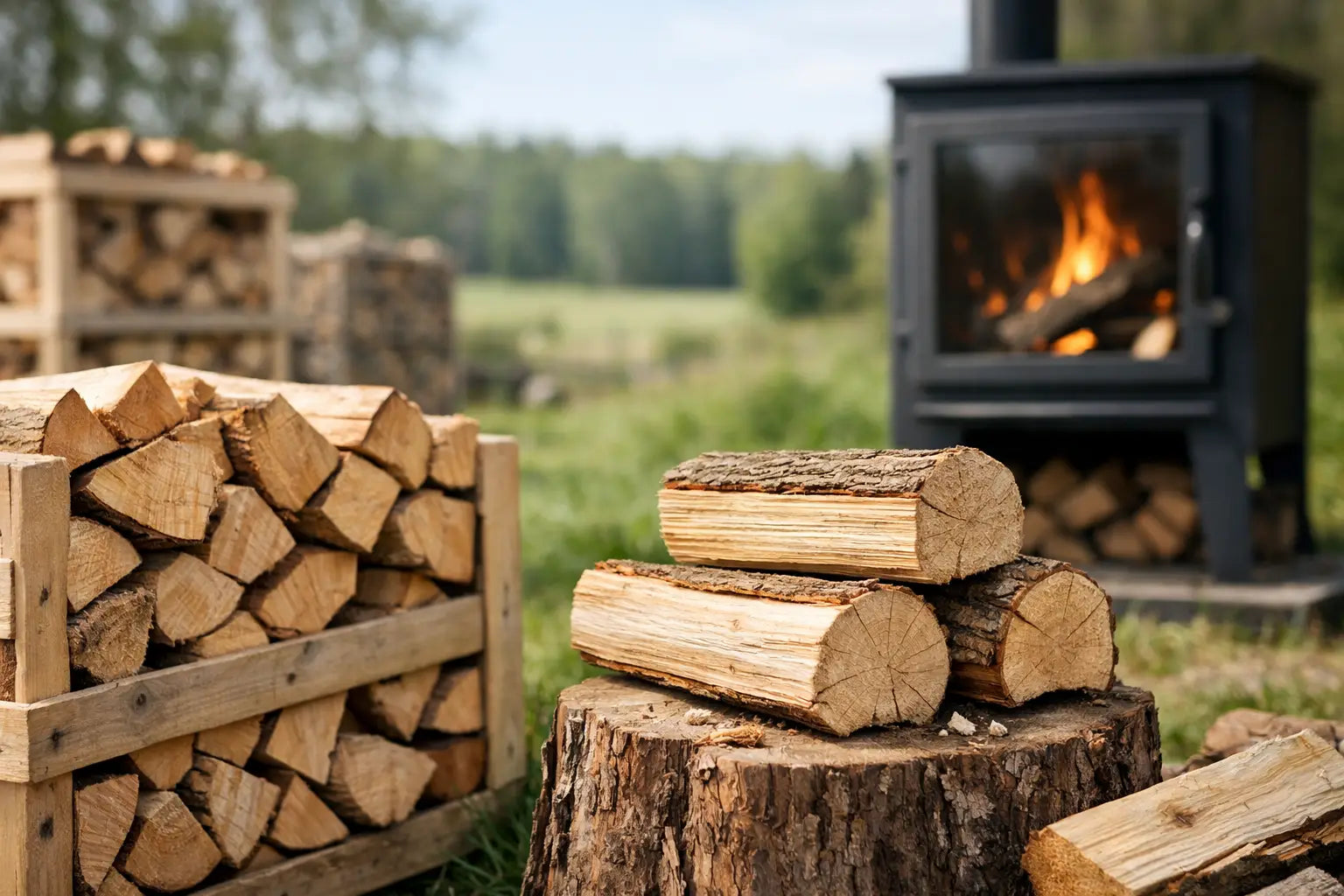
A warm fire should not mean guessing what is in the log basket. The search for sustainable kiln-dried logs UK households can rely on is really about three practical questions: where the wood came from, how dry it is, and whether it will burn cleanly in your stove or fireplace.
Cheap logs that arrive damp, loosely measured or with no clear sourcing information rarely represent good value. They can be harder to light, produce more smoke, blacken stove glass and leave more deposits in the flue. Properly prepared firewood costs more to produce, but it gives you a more predictable fire, less waste and a clearer picture of what you are buying.
What sustainable kiln-dried logs mean in the UK
Sustainable firewood starts with responsible woodland management. Trees should be grown and harvested in a way that allows woodland to regenerate, protects its long-term health and makes sensible use of timber that is not needed for higher-value purposes. Reputable suppliers should be able to explain their sourcing clearly rather than relying on vague environmental claims.
It also means using the wood efficiently. Kiln drying reduces the moisture inside a log to a level that supports cleaner, more effective combustion. For domestic wood fuel, the key benchmark is a moisture content below 20 per cent. This is why the Ready to Burn certification matters. It gives customers a clear, recognised indication that logs sold in smaller volumes meet the required standard for dry wood fuel.
Sustainability is not simply about the tree species or the country of origin. Transport, processing, packaging and the energy used in drying all have an impact. A kiln requires energy, so kiln-dried wood is not impact-free. The benefit is that dry logs burn more efficiently than wet logs, helping you get useful heat from the fuel you have paid for while reducing avoidable smoke.
The most sensible choice is therefore traceable, properly dried wood supplied in a format that you can use and store well. Buying a product that lasts, burns consistently and avoids unnecessary repeat trips for emergency fuel is often more practical than chasing the lowest headline price.
Why moisture content changes the fire
Freshly cut timber holds a high proportion of water. Before that wood can burn properly, the heat from the fire must first drive out the remaining moisture. This wastes energy and lowers the temperature of the fire.
Kiln-dried logs with moisture below 20 per cent light more readily and burn with a steadier flame. They produce more usable heat for their volume than damp logs, while supporting cleaner combustion when used in a suitable appliance. That matters whether you are heating one room on a cold evening or using a stove regularly through winter.
Dry fuel is not a substitute for good stove practice. Use the correct fuel for your appliance, keep air controls open enough during lighting and refuelling, and arrange regular chimney sweeping. Even excellent logs can smoke if they are starved of air or burned in an unsuitable fire.
How to choose sustainable kiln-dried logs UK homes need
Start with certification and specifications, not photographs. Look for Ready to Burn certified logs and a stated moisture content below 20 per cent. If the listing does not tell you the moisture level, wood type or volume, it is difficult to compare its real value with another product.
Next, check how the quantity is measured. Net weight can be useful, but logs are often best compared by loose volume because wood naturally varies in density and shape. A clearly stated crate size, bag volume or loose cubic metre figure helps you understand how much fuel will actually arrive. This is particularly useful when comparing bulk deliveries with supermarket nets, which may look convenient but can be expensive per cubic metre.
Log length is another detail worth checking. Measure your stove before ordering, allowing enough space for air to circulate around the fuel. Standard logs suit many appliances, but a compact stove may need shorter pieces. It is easier to select the right format in advance than to split logs yourself at home.
Finally, consider what you can store. A full crate can offer strong value for households that burn wood frequently, while net bags and fire-box packs suit smaller storage areas or occasional use. Whichever format you choose, do not leave kiln-dried logs exposed to rain. They may be dry on delivery, but poor storage can quickly undo that advantage.
Choosing a species for your stove or fire
There is no single best log for every household. The right choice depends on your appliance, how quickly you want heat and whether you prefer an easy-lighting fire or a longer, slower burn.
Birch is popular because it lights readily and produces a bright flame, making it useful for getting a fire established. Alder also lights easily and suits shorter burns. Ash is valued for reliable, straightforward burning, while oak and hornbeam are denser hardwoods that can provide a longer-lasting fire once it is properly established.
Denser logs are not automatically better. They can take longer to light and may be less convenient if you only want a brief evening fire. Mixing easy-lighting logs with longer-burning hardwood can be a practical approach, provided every log is dry, certified and suitable for your appliance.
Buy for the way you actually use fuel
A household using a log burner most evenings will usually benefit from buying in larger quantities. A crate or pallet delivery reduces the risk of running low in the middle of a cold spell, and transparent volume pricing makes it easier to plan seasonal spend. It also cuts down the time spent collecting smaller loads from multiple outlets.
For lighter use, smaller bags may be the better choice. They are easier to move, easier to store and help keep fuel dry indoors or in a covered store. The price per unit may be higher, but convenience has a genuine value when storage is limited.
Remember that wood fuel works best as part of a planned setup. Keep kindling and firelighters ready for lighting, and consider briquettes or other approved solid fuels only where they are suitable for your appliance. Never assume every fuel is interchangeable. Follow the manufacturer’s guidance for your stove, especially if it is designed for specific fuel types.
Candowe supplies Ready to Burn certified kiln-dried logs in practical formats, including crates, nets and fire-box packs, so customers can choose a quantity that fits both their burn rate and available storage. Clear product information, free delivery across most mainland UK postcodes and dependable fulfilment help make bulk fuel buying less uncertain.
Store kiln-dried logs so they stay dry
The best delivery can still become poor fuel if it is stored badly. A log store should keep rain off the wood while allowing air to move around it. A roof, open sides and a raised base are a sound combination. Avoid placing logs directly on soil or paving where moisture can rise into the bottom layer.
Do not wrap a whole stack tightly in plastic. This can trap condensation and restrict airflow. If you need temporary weather protection, cover the top while leaving the sides open. Bring a small quantity indoors before use, but avoid stacking large amounts against a hot stove or blocking escape routes.
If your logs hiss, struggle to maintain a flame or leave excessive moisture on the stove glass, check storage as well as the fuel. A moisture meter can be useful, but test a freshly split face in the centre of the log rather than the outside surface, which may give a misleading reading.
A better standard for everyday firewood
Sustainable wood fuel is not about buying the most expensive species or the largest crate. It is about choosing certified dry logs from a supplier that states what it sells, measuring the quantity properly and matching the order to your home, appliance and storage.
Before the next cold spell, check your log store, measure your stove and order enough dry fuel to avoid last-minute compromises. A well-chosen supply of kiln-dried logs makes lighting easier, keeps the fire more consistent and gives you confidence in every load you burn.