Skip to content
Firewood Logs Near Me: What to Check First
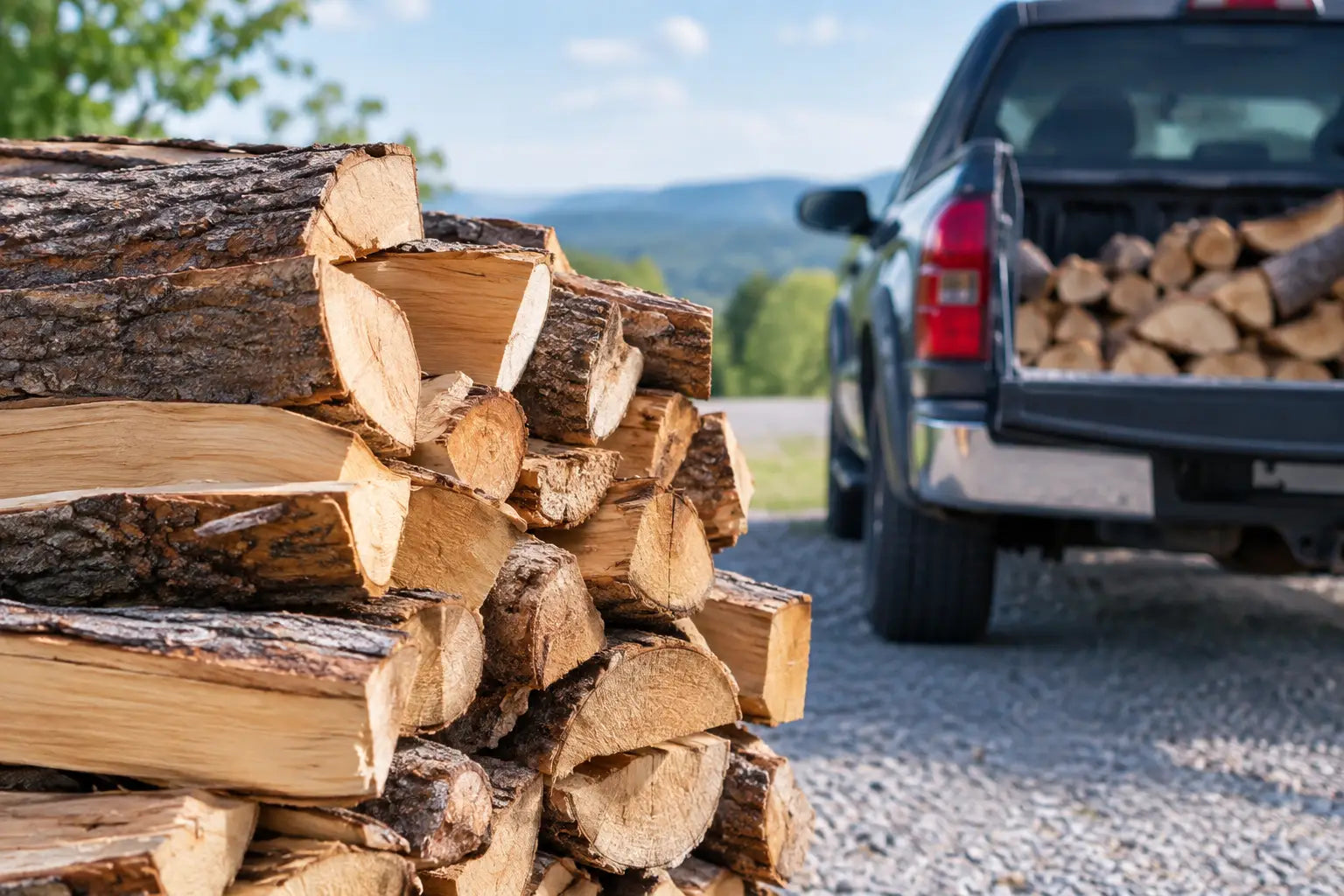
A search for firewood logs near me often starts when the log basket is low and the weather has turned. The nearest seller is not always the best choice, though. Wet logs, unclear quantities and missed delivery windows can turn a simple household purchase into a frustrating one.
For a stove or fireplace that lights easily and burns efficiently, focus on the fuel specification before distance alone. Properly dried logs delivered to your door can be a more dependable option than collecting an unknown load locally, particularly when you need to stock up for the colder months.
Firewood logs near me: look beyond the postcode
Local collection can suit households with suitable transport, dry storage and a supplier they know well. It may also be useful when only a small amount of fuel is needed immediately. But a nearby listing does not tell you whether the logs are dry enough to burn cleanly, how much wood you are receiving or whether the load has been stored outdoors in poor conditions.
When comparing suppliers, ask three practical questions: what is the moisture content, what volume is included, and when will it arrive? The answers have a direct effect on heat output, chimney cleanliness and value for money.
For domestic wood burners in England, Ready to Burn certified wood is the straightforward choice. This certification confirms that packaged firewood has a moisture content of 20% or less. Dry logs produce more usable heat, are easier to light and create less smoke than unseasoned wood. They also reduce the temptation to keep adding fuel to a fire that is struggling because the logs are damp.
A supplier that states the wood type, moisture standard and pack size clearly makes comparison much easier. “Seasoned” on its own can be vague. Wood may have been left to dry, but unless its moisture content is measured and the logs are protected from rain, the result can still be inconsistent.
Choose logs for the way you heat your home
There is no single best firewood species for every appliance or routine. The right option depends on whether you want a quick, attractive flame, a long steady burn, or a balance of both.
Birch is popular because it lights readily and gives a bright flame, making it useful for getting a fire established. Alder is another easy-burning choice that works well for everyday use. Ash is valued for reliable heat and straightforward lighting, while oak and hornbeam are denser hardwoods that can offer a longer-lasting burn. Denser logs may take a little more care to establish, so many households use kindling and a few quicker-lighting pieces at the start before adding larger hardwood logs.
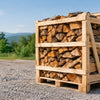
If you use a stove most evenings, it can make sense to keep more than one product on hand. A fire-box pack or net bags provide convenient fuel close to the appliance, while a crate offers a more economical way to build a larger reserve. Kindling should be dry too. Good kindling saves time at lighting stage and helps avoid the smoky, slow start caused by trying to ignite oversized logs directly.
Wood is not the only option for solid-fuel users. Wood pellets are made for compatible pellet appliances, while briquettes can offer a compact, consistent alternative for suitable stoves and fires. Smokeless coal and anthracite should only be used in appliances designed for them and in accordance with local smoke-control requirements. Check the appliance manufacturer’s guidance before changing fuel types.
Compare volume, not just the headline price
A cheap-looking bag is not necessarily good value. Firewood is sold in several formats, including nets, bags, boxes and crates, and the amount of wood in each can vary considerably. The clearest comparison is usually the loose volume supplied, together with the price per cubic metre where available.
A small bag may be ideal for a weekend fire or as a top-up between deliveries. It is easy to carry and requires little storage space, but the unit cost is commonly higher than a larger order. Crates and palletised quantities generally work better for regular stove users, rural homes and customers who prefer to buy ahead of winter. The trade-off is that you need an accessible delivery point and enough covered space to store the fuel properly.
Also consider log length. Logs that are too long for your firebox are inconvenient and should not be forced into a stove. Measure the internal firebox and allow room for airflow before ordering. A supplier’s product details should state typical log dimensions, though natural wood will always have some variation.
Transparent specifications matter. Look for the pack format, approximate loose volume, wood species, moisture content and whether kindling or other extras are included. That information helps you plan how long an order is likely to last rather than relying on photographs or broad descriptions such as “large load”.
Delivery can be more useful than local collection
Firewood is bulky, heavy and awkward to transport in a family car. A full crate can weigh far more than expected, especially once you account for packaging and the density of hardwood. Ordering online removes repeat trips to collect bags and gives you a clearer delivery schedule.
Before placing an order, check whether delivery is included for your postcode, how long fulfilment takes and where the driver can safely leave the goods. Most pallet deliveries are made to the nearest safe, accessible point, not carried through a house or down narrow side passages. If access is restricted by steep ground, loose gravel, tight gates or steps, contact the supplier beforehand or choose a smaller format that is easier to handle.
Candowe supplies Ready to Burn kiln-dried logs in a range of practical formats, with free delivery across most mainland UK postcodes and typical fulfilment within three to four business days. For households planning their fuel supply, that predictability can be more valuable than searching repeatedly for the closest available bag of logs.
Ordering before the first cold spell gives you more choice and avoids the pressure of buying whatever is available. It also gives you time to organise storage rather than leaving fuel exposed outside.
Store dry logs so they stay dry
Kiln-dried firewood arrives ready to use, but it still needs protection from rain and ground moisture. Keep logs off the ground on a pallet, rack or raised base. Store them beneath a roof or weatherproof cover, with open sides or a gap for airflow. A completely sealed plastic cover can trap condensation, which defeats the purpose of buying dry fuel.
Bring only a small quantity indoors at a time. A log basket near the stove is convenient, but large stacks against walls or beside heat sources can create unnecessary safety and housekeeping issues. For a regular user, rotating stock is sensible: use the oldest logs first and keep the newest delivery protected at the back of the store.
Avoid storing wood directly against the outside wall of the house if possible. A separate log store or a covered area with airflow helps keep the wood clean, dry and easier to inspect. If logs feel noticeably damp, look mouldy or have been left uncovered through prolonged rain, do not assume they will perform like the certified dry fuel you ordered.
Signs you have bought the right logs
Good kiln-dried logs should light without excessive effort when used with dry kindling and correct stove airflow. The flame should establish cleanly rather than smouldering for a long time, and the glass on your stove should stay clearer when the appliance is being operated correctly.
No fuel eliminates maintenance. Chimneys and flues still need regular sweeping, and every stove should be used in line with its manufacturer’s instructions. However, dry, approved fuel gives your appliance the best chance to work as intended. It provides dependable heat without the extra smoke, wasted energy and chimney deposits associated with burning wet wood.
When choosing between firewood logs near you and an online delivery, prioritise verified dryness, clear volume and a delivery arrangement that suits your property. A well-planned order, stored properly, means the next cold evening calls for a match and a few dry pieces of kindling, not another last-minute search.