Skip to content
Best Kindling for Quick Firelighting at Home
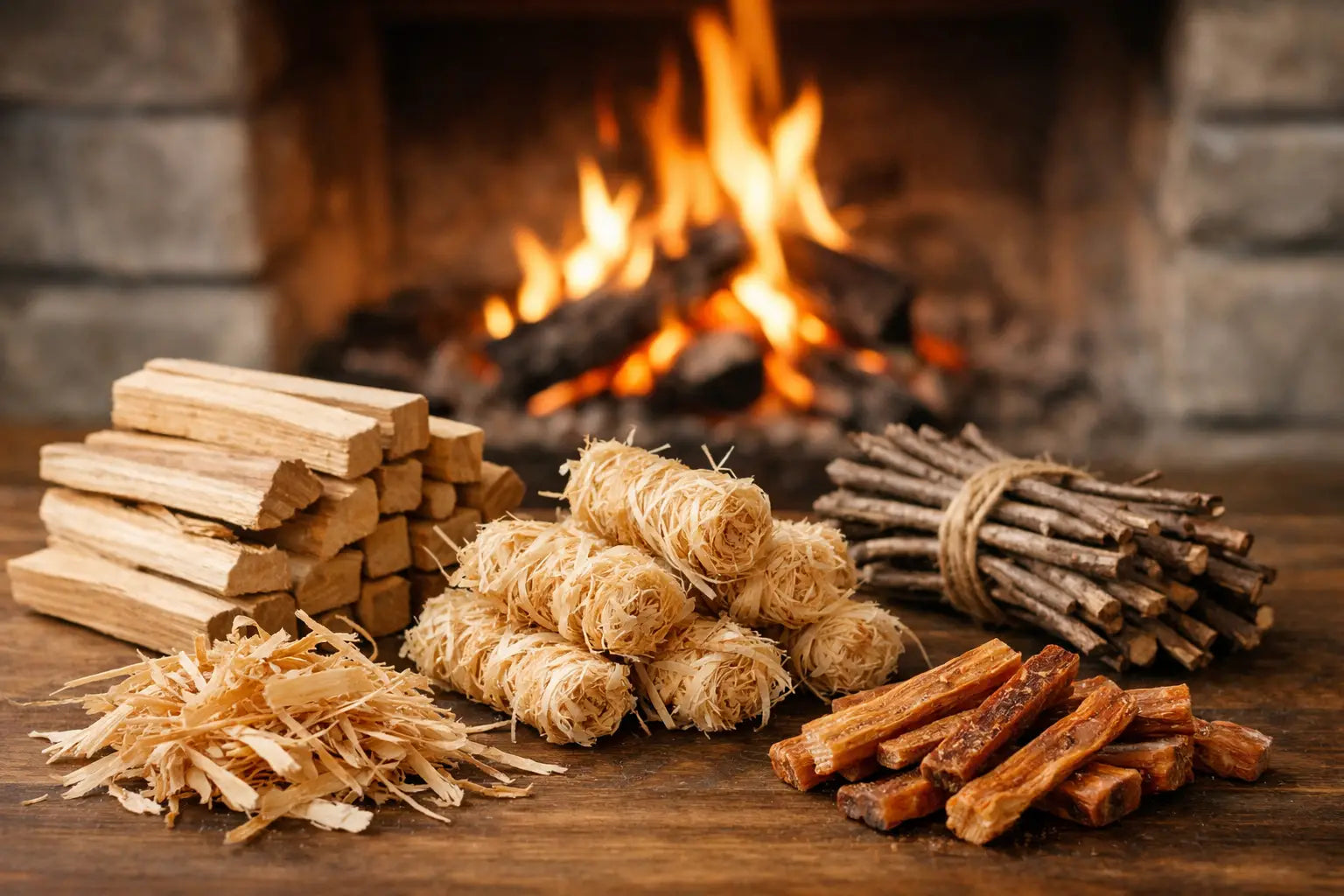
A fire that will not catch is rarely short of matches. More often, the problem is damp, oversized or poorly arranged starter fuel. The best kindling for quick firelighting is dry, clean-cut softwood in thin, consistent pieces, used with enough airflow to let the first flame grow rather than smoulder.
For a wood burner, open fire or stove, good kindling is not an afterthought. It is the bridge between a firelighter and your main logs. Choose it well and the fire establishes quickly, produces less smoke and gets your kiln-dried logs burning as intended. Choose poorly and even excellent firewood can seem difficult to light.
What Makes the Best Kindling for Quick Firelighting?
Kindling needs to ignite at a lower temperature than a log and burn long enough to transfer heat into the larger pieces above it. That sounds simple, but three practical details make a noticeable difference: moisture content, wood type and piece size.
Dryness comes first
Dry kindling lights faster because heat is used to create flame, not to boil off trapped water. If sticks feel cold and heavy, look dark at the ends or give off steam before they catch, they are likely too damp. They may eventually burn, but they will slow the whole process and create unnecessary smoke.
Look for properly dried kindling with a light feel and a clean, pale split surface. Kiln-dried kindling is especially dependable because it is prepared for immediate use and stored with firelighting in mind. Keep it dry after delivery, though. Even quality kindling will lose its advantage if it is left uncovered beside an open fireplace, in a damp shed or directly on a garage floor.
Softwood is usually the right choice
Softwoods such as pine and spruce are widely regarded as the best kindling woods because they split easily into fine sticks and catch readily. Their lower density means a flame can work through them quickly, creating the heat needed to light your logs.
Hardwood kindling can work, particularly when it is very dry and finely split, but it is generally slower to establish. Save denser hardwoods such as ash, birch, hornbeam and oak for the main fuel load, where their longer, steadier burn is an advantage. A fast-starting softwood kindling layer beneath well-seasoned or kiln-dried hardwood logs is a reliable combination.
Size and shape affect airflow
The most useful kindling is split into narrow sticks rather than chopped into chunky blocks. A mix of thin and medium pieces works better than sticks of one size: fine pieces catch from the firelighter, while slightly thicker sticks maintain the flame as it builds.
Very thin shavings burn quickly but can disappear before the logs warm through. Very thick pieces behave more like small logs and may struggle to light. Aim for dry sticks roughly finger-width or slimmer, with a few slightly larger pieces included for staying power.
Kindling Options Compared
Natural wood kindling remains the best all-round choice for most household stoves and fireplaces. It is straightforward to use, gives a visible flame and pairs well with natural firelighters. Other materials can help in specific circumstances, but they come with trade-offs.
| Firelighting material | How well it lights | Best use | Watch out for |
|---|---|---|---|
| Dry softwood kindling sticks | Very quickly | Everyday stove and fireplace lighting | Must be kept dry |
| Kiln-dried kindling | Very quickly and consistently | Reliable, ready-to-use firelighting | Store indoors or in a dry container after opening |
| Natural firelighters | Immediate, sustained flame | Starting the first kindling layer | They support kindling, rather than replacing it |
| Twisted newspaper | Variable | Occasional backup indoors | Produces ash and can restrict airflow if packed tightly |
| Cardboard, painted or treated timber | Unpredictable | Not recommended | Can create fumes, excess ash or harmful emissions |
Natural firelighters made from waxed wood wool are a sensible partner for dry kindling. They burn long enough to get the smallest sticks going without the sharp smell or residue associated with some chemical firelighters. One or two are usually sufficient for a domestic stove when the kindling is dry and correctly arranged.
Avoid burning household waste, glossy paper, MDF, chipboard, painted offcuts or old pallet timber. These materials are not suitable fuel for a stove or fireplace. They can release unpleasant or potentially harmful fumes, leave residues in the appliance and chimney, and make a simple firelighting job much less predictable.
How to Build a Fast, Clean-Starting Fire
A quick fire is about airflow as much as fuel. Do not compress the kindling into a tight heap. Flame needs gaps between the pieces so oxygen can reach it from below and move through the stack.
For most modern wood-burning stoves, begin with a top-down lay. Put two or three small, dry logs at the base, then place a loose criss-cross layer of medium kindling over them. Add finer kindling at the top with a natural firelighter nestled amongst the sticks. This allows the fire to burn down through the fuel bed, warming the flue progressively and reducing the risk of a smoky start.
Use these steps for a more dependable light:
1. Empty excess ash, but leave a thin ash bed if your appliance performs better with one.
2. Open the stove’s air controls fully and check that the flue is drawing before lighting.
3. Arrange the logs and kindling loosely, leaving visible air gaps rather than packing them down.
4. Light the firelighter at the top and close the door as directed by your stove manufacturer.
5. Once the kindling is burning strongly and the logs have caught, reduce the air supply gradually to maintain a clean, controlled flame.
Open fires need the same principle, although a little more kindling is often useful because heat escapes more readily into the room. If smoke comes into the room, stop adding fuel. Check that the chimney is drawing, the damper is open where fitted, and the fireplace is not being affected by an extractor fan or very cold flue.
Common Reasons Kindling Fails to Catch
When kindling repeatedly goes out, adding more firelighters is not always the answer. Start by checking whether the air vents are fully open and whether the kindling is genuinely dry. A stove with restricted airflow cannot burn cleanly, however premium the fuel may be.
Another common mistake is putting a large log directly on top of a small kindling pile. The weight closes the air gaps and absorbs heat before the starter layer has developed a proper flame. Use smaller logs for the first layer, then add larger pieces once there is a bright, established fire.
Cold weather can also affect the initial draw in a chimney. A cold column of air in the flue may push smoke back towards the room at first. Building a slightly taller, looser kindling stack and allowing the firelighter to warm the flue before adding further fuel can help. If poor draw is a recurring problem, arrange for the chimney and appliance to be checked by a qualified professional.
Storing Kindling So It Stays Ready to Use
Kindling should be as convenient as the logs it is meant to light. Keep a small supply in a basket or closed log store near the stove, but away from direct heat and never against the appliance. Store the main supply in a dry, ventilated place with a cover above and airflow around it.
Do not seal freshly purchased kindling in an airtight damp container. A breathable bag, crate or purpose-made indoor store is better. If you buy in volume, moving a week or two of kindling indoors at a time keeps the rest protected while ensuring you always have dry sticks to hand.
For households that rely on a stove through autumn and winter, buying quality kindling alongside ready-to-burn logs avoids the familiar problem of having good fuel but nothing dependable to start it with. Candowe supplies kiln-dried firewood and complementary firelighting fuel in practical formats, helping customers stock up without relying on uncertain local supplies.
The simplest test is also the most useful: dry softwood kindling should catch quickly, burn with a lively flame and leave your first logs burning within a few minutes. Keep that standard in mind when you buy and store it, and lighting the evening fire becomes a routine job rather than a cold-room frustration.