Skip to content
Choosing Hardwood Logs for Log Burners at Home
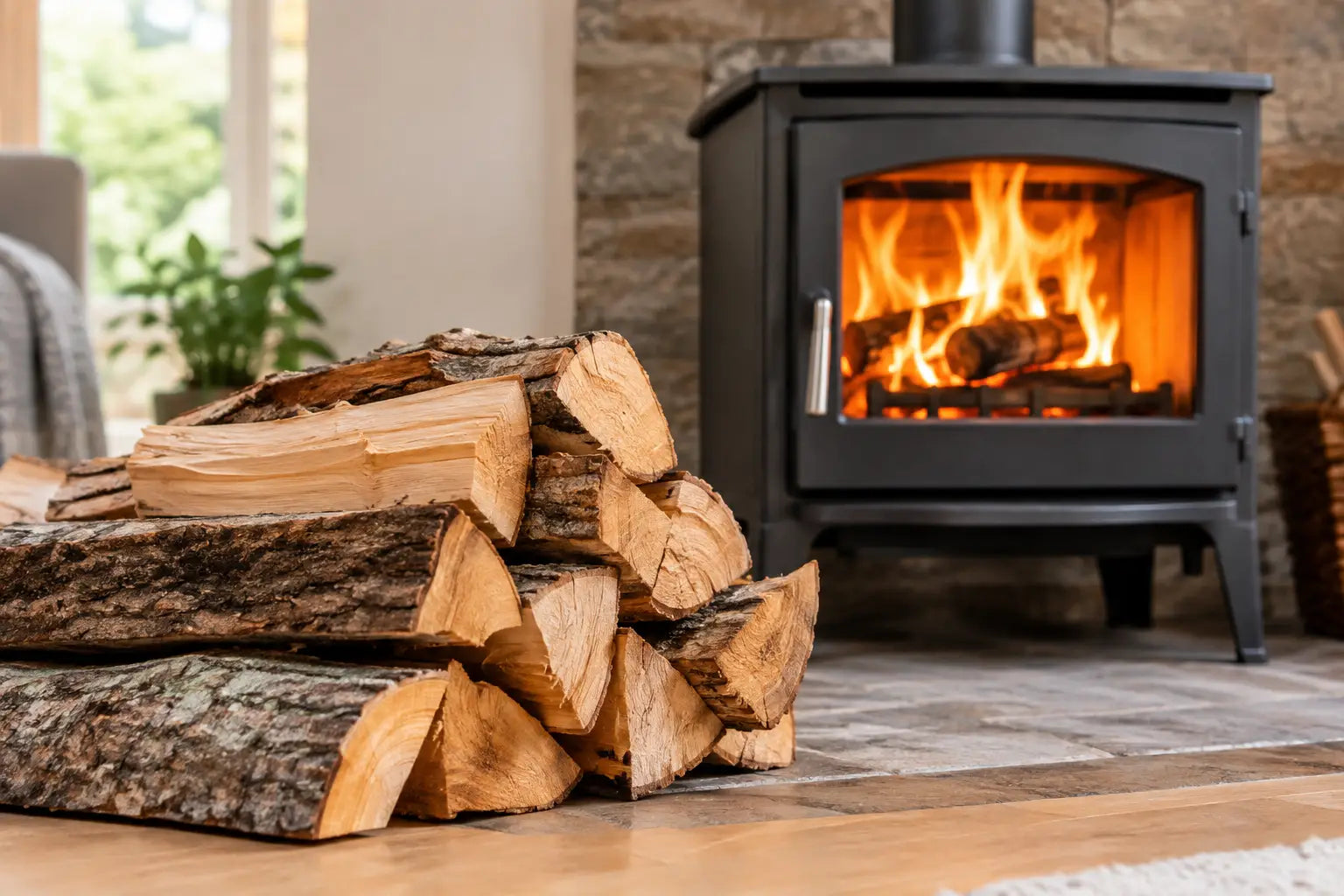
A log burner can only perform as well as the fuel placed inside it. Logs that hiss, blacken the glass and leave little heat behind are usually too damp, poorly sized or unsuitable for the appliance. Choosing properly dried hardwood gives you a cleaner flame, dependable warmth and less time spent tending the fire.
Hardwood logs for log burners are a practical choice for UK households because dense wood generally burns steadily and produces lasting heat. The best option is not simply the heaviest or cheapest bag available, though. Species, moisture content, log length, storage and the way you use your stove all affect the result.
Why dry hardwood makes the difference
Freshly felled wood contains a large amount of water. When it is burned before it has dried sufficiently, much of the fire's energy is spent driving off that moisture rather than heating your room. The result is a cooler, smokier fire that can cause soot on the stove glass and deposits within the flue.
For domestic wood-burning appliances, look for logs with a moisture content below 20%. Ready to Burn certified wood meets this standard, giving customers a clear indication that the fuel is suitable for immediate use. Kiln-dried logs are dried in controlled conditions, so they arrive ready to burn without the uncertainty of buying unseasoned wood and waiting months, or even years, for it to dry.
Dry fuel does not only make lighting easier. It supports more efficient combustion, helps keep the glass clearer and reduces the amount of ash and residue produced. It also means you can buy your fuel with greater confidence, particularly when ordering larger volumes for the heating season.
Which hardwood logs for log burners are best?
Different hardwoods have different burning characteristics. There is no single right species for every household. A small stove used for a short evening fire may benefit from a wood that lights quickly, while a larger appliance heating a main living space may suit denser logs that provide a longer burn.
Ash: reliable and easy to use
Ash is widely valued as a firewood because it lights readily and gives a steady, consistent flame. It produces good heat without being difficult to manage, making it a sensible all-round choice for regular stove users. Ash works well when you want an uncomplicated fire that establishes quickly and continues burning evenly.
Birch: quick warmth and an attractive flame
Birch is a popular option for getting a fire going. Its bark catches well when dry, and it produces a bright, lively flame. It tends to burn faster than denser woods such as oak or hornbeam, so it is especially useful for shorter fires or as part of a mixed load. If your priority is an immediate burst of warmth after work, birch can be very effective.
Oak: dense logs for a longer burn
Oak is a dense hardwood with a slower, longer-lasting burn when properly kiln dried. It is often chosen by customers who want sustained heat and fewer refills through an evening. Because it is slower to establish than lighter woods, oak is usually best added once a good bed of embers is already in place rather than used as the only wood when lighting from cold.
Hornbeam: high heat from a dense wood
Hornbeam is among the denser firewoods available and is valued for strong heat output and a long burn. It suits households using a stove regularly through colder weather, particularly where maintaining a steady room temperature matters. Its density means it benefits from a well-established fire and adequate airflow.
Alder: a practical faster-burning option
Alder is lighter than oak and hornbeam, with a quicker burn that makes it useful for shorter heating periods. It can also be a good choice when you prefer to build and control the fire in smaller stages. Used alongside a slower-burning hardwood, it provides flexibility without compromising on dry, clean fuel.
Many households find that a mix of species is the most practical arrangement. Birch or alder can help establish heat promptly, while oak, hornbeam or ash can maintain it. Your stove manufacturer's guidance should always take priority, especially regarding the amount of fuel, log size and air controls recommended for your appliance.
Moisture content matters more than log appearance
A log can look clean and well-cut while still holding too much moisture inside. Pale colour, cracked ends and loose bark can be useful clues, but they are not a dependable substitute for a stated moisture level or certification.
Buying Ready to Burn certified, kiln-dried fuel removes much of the guesswork. It is particularly worthwhile for homeowners without a large, well-ventilated wood store or the time to season logs themselves. Although kiln-dried logs may cost more upfront than wet wood, the comparison should be made on usable heat, not just the price of a bag. Damp logs burn inefficiently, create more mess and can be consumed more quickly for the warmth they provide.
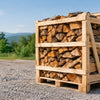
When comparing products, check the format as well as the price. Net bags, plastic bags, fire-box packs and crates all serve different needs. Smaller packs are convenient for occasional fires or limited storage, while crates can offer clearer value for regular users who have dry space available. Loose volume, log length and delivery access are equally relevant when planning a bulk order.
Choose a log size that suits your stove
Overly long logs are inconvenient at best and unsafe at worst. Before buying, measure the internal width and depth of your firebox, then allow enough room around each log for air to circulate. Logs should not be forced against the glass or packed tightly against the stove walls.
Most domestic stoves work well with consistently cut logs, but the ideal length varies by appliance. Smaller log burners may need shorter pieces, while larger stoves can take standard-length logs comfortably. Consistency matters because evenly sized fuel makes it easier to build a stable fire and judge when to refuel.
Avoid filling the firebox to the top simply to make the fuel last longer. A stove needs space for combustion gases to burn properly. Follow the manufacturer's instructions, use the air controls as intended and never leave an appliance operating in a way that is unsuitable for its design.
Store kiln-dried logs properly after delivery
Even the best dried logs can absorb moisture if they are stored badly. Keep your supply off the ground, protected from rain and open to the air at the sides. A purpose-built log store, covered shelter or dry garage can work well, provided airflow is not restricted.
Do not wrap logs in a fully sealed cover outdoors. Condensation can build up and undermine the benefit of buying dry fuel. Instead, cover the top and leave the sides exposed where possible. Bring a small amount indoors before use so it is at room temperature, but do not store excessive quantities next to the stove or in a location that could create a fire risk.
If you order crates or palletised fuel, decide where it will be placed before delivery. A level, accessible area close to your store will make moving and stacking the logs much easier. Buying a sensible volume for your available storage is better than ordering more than you can keep dry.
Get a cleaner fire from every load
Start with dry kindling and a small number of dry logs, using the lighting method recommended for your stove. Give the fire sufficient air while it establishes, then reduce the controls gradually once the flames are burning strongly. Closing down the air too early can produce a smoky, inefficient fire.
Refuel onto a bed of glowing embers rather than waiting until the fire has almost gone out. Use fewer logs than you might expect at first, then adjust according to the room temperature and your stove's instructions. If the glass darkens quickly or the fire struggles to stay bright, check that the logs are dry, the air supply is open enough and the flue has been maintained correctly.
Regular chimney sweeping and servicing remain essential. Dry hardwood supports cleaner operation, but it does not remove the need for professional maintenance or safe installation. Households in Smoke Control Areas should also make sure their appliance and fuel use comply with local requirements.
Candowe supplies kiln-dried, Ready to Burn hardwood in practical formats, helping households choose fuel that suits both their stove and their storage space. Whether you need a few convenient packs or a larger crate for the season, prioritising dry, consistently sized logs will make every fire easier to light, cleaner to manage and more rewarding to use.
A well-stocked log store is not just preparation for cold weather. It is the reassurance that, when you want the stove on, your fuel is ready to do its job.