Skip to content
Choosing the Right Low Moisture Hardwood Crate
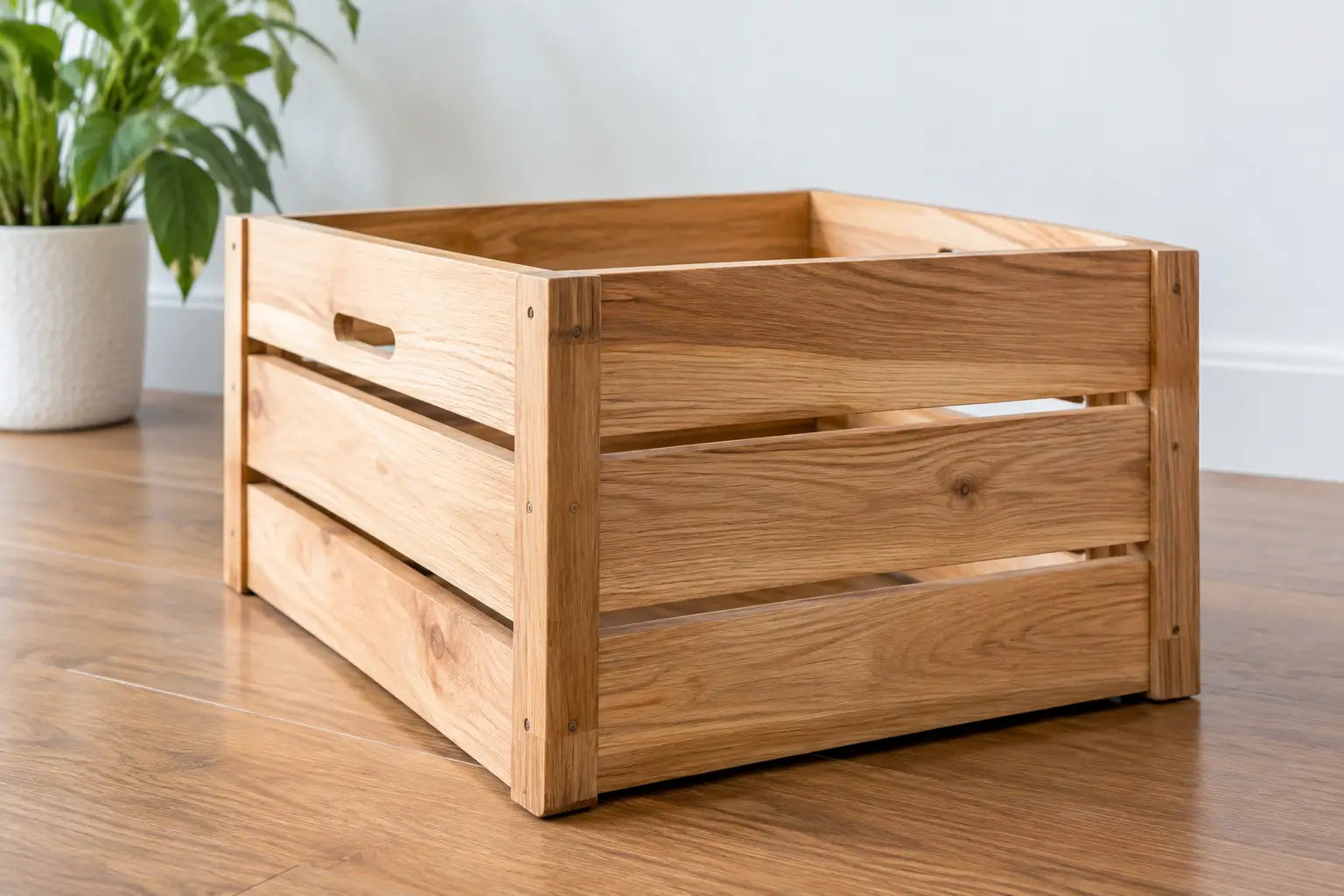
A fire that struggles to light, blackens the stove glass and leaves logs hissing at the back of the grate is usually a fuel problem, not a stove problem. A low moisture hardwood crate gives you dry, dense logs in a practical bulk format, so you can build a cleaner, more dependable fire without waiting months for wood to season.
For households that rely on a log burner or open fire through the colder months, the crate format also makes planning simpler. You know what you are buying, how it is supplied and where it can be stored. The best choice still depends on the wood species, crate volume, your appliance and the space available at home.
Why moisture content comes first
Freshly felled wood contains a high amount of water. Before it can burn properly, the heat from your fire must first drive that water out. That wastes energy, produces more smoke and makes it harder to achieve a steady flame.
Dry firewood with a moisture content below 20% burns more efficiently. It lights more readily, produces stronger heat and leaves less soot and residue in the stove and flue. It is also a more considerate choice for your neighbours and local air quality, particularly in built-up areas where smoke lingers.
For domestic users, Ready to Burn certification is a useful check. In England, firewood sold in small quantities for use in domestic solid-fuel appliances must meet the required moisture standard. Certified fuel offers reassurance that the logs have been properly dried and are suitable to burn when delivered, rather than needing further seasoning before use.
Moisture claims should be treated as a product specification, not a vague description. Terms such as seasoned or air dried can mean different things depending on how long and how well the wood has been stored. Kiln-dried, Ready to Burn logs with a stated moisture level give a clearer basis for comparing products.
What a low moisture hardwood crate contains
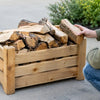
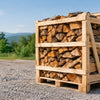
A hardwood crate is a palletised supply of logs, typically packed into a timber frame for transport and delivery. It is designed for customers who use enough firewood to make bulk buying worthwhile. Compared with net bags or smaller fire-box packs, a crate reduces the need to reorder regularly and can offer clearer value per cubic metre.
The exact quantity matters. Suppliers may state stacked volume, loose volume, crate dimensions or an approximate log count. These are not interchangeable measures. Stacked logs naturally contain less air space than loose logs, so always compare like for like before deciding which crate represents better value.
Log length matters too. A log that is too long for your stove is inconvenient at best and unusable at worst. Check your appliance manual or measure the firebox, allowing room for airflow around the fuel. Many household stoves suit logs around 25 cm long, but there is no universal size.
Crates are normally delivered by pallet service, so access should be considered before ordering. A firm, reasonably level hardstanding near the delivery point makes a significant difference. Gravel, steep drives, steps, narrow gates and soft ground can limit how close a pallet lorry can place the crate. It is sensible to plan the transfer and storage of logs before delivery day.
Hardwood species: heat, flame and everyday use
Hardwood is valued because it is generally denser than softwood and can provide a longer, steadier burn. That does not mean every hardwood performs in exactly the same way. Species affects how easily the logs light, how quickly they release heat and how often you need to refuel.
Ash is widely appreciated for its reliable burn and straightforward lighting qualities. Birch catches readily and provides a bright flame, making it useful when starting or reviving a fire, though it can burn faster than denser species. Alder is another easy-burning option that suits regular household fires.
Oak and hornbeam are denser, slower-burning choices. They can be particularly good for maintaining heat in a well-established stove, but they benefit from a strong fire bed and proper air control. A crate containing a single species offers predictable characteristics, while a mixed hardwood crate can provide useful flexibility through the week.
The right species is therefore not simply the one with the highest density. If you want quick warmth after work, a responsive species such as birch or ash may be practical. If you run your stove for long evening periods, oak or hornbeam may suit your routine better. In every case, dryness remains more important than the hardwood label alone.
How to store a low moisture hardwood crate
Dry logs can take on moisture again if they are stored badly. A crate protects the logs during transport, but it is not a substitute for sensible fuel storage once it reaches your property.
Keep the crate off bare soil and away from standing water. A covered log store, garage with good ventilation, lean-to or suitably sheltered side passage can work well. The aim is to keep rain off while allowing air to move around the logs. Fully wrapping a crate in plastic can trap condensation, which is exactly what you are trying to avoid.
If the crate arrives with a weather cover, remove or adjust it as needed once it is in its final position. Cover the top, leave the sides able to breathe and use the oldest logs first. Bringing a small supply indoors a day or two before use can help surface moisture evaporate after wet weather, but avoid storing a large volume directly beside the stove for safety reasons.
A dry, tidy storage arrangement also makes your fuel last longer in practical terms. You can see how much is left, keep bark and debris contained, and avoid the repeated trips associated with collecting bags from different corners of the shed.
Getting the best burn from crate logs
Even premium dry logs need the right firing method. Start with dry kindling and a suitable natural firelighter, then add small split logs before moving on to larger pieces. This creates enough heat for the flue to draw properly and helps reduce smoky starts.
Once the fire is established, avoid overfilling the stove. Logs need space for oxygen to circulate, and every appliance has a recommended loading level. Running a stove with the air controls closed down too far can cause incomplete combustion, soot deposits and reduced heat output. A clean, lively flame is generally a better sign than a fire that is heavily smouldering.
Use the correct fuel for the appliance. Wood is not suitable for every multi-fuel stove setting, and some appliances have specific requirements for smoke control areas. Follow the manufacturer guidance, have the chimney swept at appropriate intervals and never assume that dry wood removes the need for regular maintenance.
Is a crate better value than bags?
A crate is usually the sensible option for regular stove users with enough dry storage space. Buying at volume can reduce the unit cost, simplify delivery and ensure you have fuel ready before demand rises in cold weather. It is especially useful for rural homes, households using wood as a meaningful supplementary heat source and small commercial premises with solid-fuel heating.
Bagged logs may be better if storage is limited, you burn only occasionally or access prevents a pallet delivery. They also make it easier to try a new species before committing to a larger quantity. The lowest headline price is not always the best deal: compare moisture content, usable volume, log size, delivery terms and certification alongside the price.
At Candowe, kiln-dried hardwood logs are supplied in practical formats for households that need dependable fuel without uncertain seasoning. Choosing the format that fits your usage and storage space is the simplest way to get consistent value from every delivery.
Before ordering, measure your log store, check the route from the kerb to the storage area and confirm your stove's preferred log length. With those details settled, a low moisture hardwood crate becomes a straightforward way to keep your home supplied with clean-burning fuel when you need it.