Skip to content
Are Bulk Hardwood Firewood Crates Worth It?
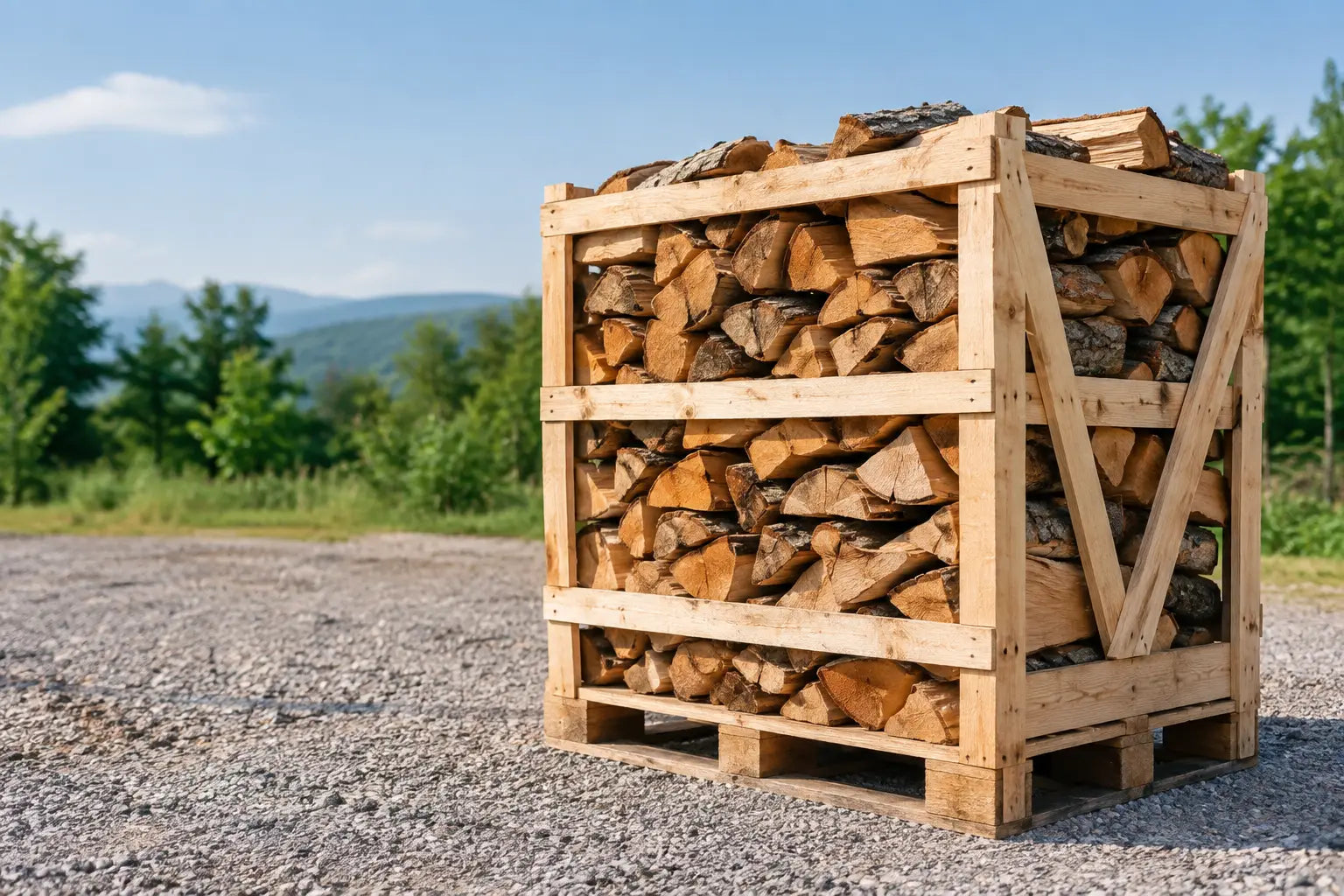
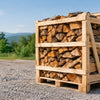
A cold spell quickly exposes the limits of small log bags. When the stove is your main source of heat, or regularly takes the edge off central heating, bulk hardwood firewood crates offer a more dependable way to keep fuel on hand. You receive a substantial quantity in one palletised delivery, with dry logs ready to burn rather than wood that needs months of seasoning.
The right crate is not simply the biggest one available. Value depends on the wood species, the stated volume, moisture content, delivery access and how well you can store it once it arrives. Taking a few minutes to compare these details can make the difference between a tidy, efficient winter fuel supply and a pile of logs that is difficult to manage.
Why buy bulk hardwood firewood crates?
A crate suits households that use a log burner, stove or open fire frequently. It reduces repeat orders, avoids the uncertainty of collecting loose loads locally and gives you a known quantity of fuel before demand rises. For rural homes, holiday lets, small businesses and customers heating larger spaces, this predictability is often as useful as the logs themselves.
Kiln-dried hardwood is especially practical because it has been dried to a low moisture level before delivery. Wood with moisture below 20% burns more cleanly and efficiently than wet or unseasoned logs. It lights more easily, produces more useful heat and creates less smoke and residue in the appliance and flue.
Where a product is Ready to Burn certified, it provides further reassurance that the logs meet recognised moisture requirements for domestic use. This removes the guesswork associated with green wood or loosely described "seasoned" logs, which may still hold too much water to perform well.
Buying in volume can also improve the cost per cubic metre compared with purchasing multiple small bags. The saving is most meaningful for regular users, provided the crate fits your storage space and the logs remain dry after delivery.
Hardwood species: choosing for your stove and routine
Not every hardwood burns in exactly the same way. All quality kiln-dried hardwoods can provide a reliable fire, but the best choice depends on whether you prioritise easy lighting, a lively flame, a long burn or a balance of all three.
Birch and alder for easy, bright fires
Birch is popular for its attractive flame and straightforward lighting qualities. It is a useful choice for evening fires, smaller stoves and households that want a responsive burn without excessive effort. Alder also lights readily and burns cleanly, making it well suited to regular use and quicker fires.
These species can be particularly convenient when you do not want to spend time building up a fire with several stages of fuel. Kindling, firelighters and correctly adjusted airflow still matter, but dry birch or alder gives you a strong starting point.
Ash, oak and hornbeam for lasting heat
Ash is widely valued as an all-round firewood. It lights well, burns steadily and provides reliable warmth, which makes it a sensible choice for daily stove users. Oak is denser and tends to burn more slowly, offering a long, calm fire once it is established. It is often best paired with a good bed of embers and sufficient airflow during the lighting stage.
Hornbeam is another dense hardwood with strong heat output and a long burn. It can suit customers who want their stove to hold heat over a longer evening. Denser woods may take a little more care to get going than lighter species, but their slower burn can be worthwhile where sustained warmth is the priority.
A mixed hardwood crate can be a sensible compromise. It gives you lighter logs for lighting and faster heat alongside denser logs for maintaining the fire. For many homes, that flexibility is more useful than committing to one species alone.
Compare crate volume, not just the price
The most useful way to assess a crate is by its stated log volume and price per cubic metre. A crate may look large in a product image, but timber dimensions, packing style and log length all affect the amount of usable firewood you receive.
Look for transparent information on loose volume, stacked volume or the dimensions of the crate. These measurements are not interchangeable. Loose-filled logs contain more air gaps than neatly stacked logs, so a loose cubic metre is not the same as a stacked cubic metre. Comparing like with like is the only fair way to judge value.
Log length also deserves attention. Check your stove manufacturer’s recommended maximum log size, allowing room for safe loading and airflow around the fuel. A log that is technically short enough but awkward to position can make daily use frustrating.
For regular stove users, it helps to think in terms of burn rate rather than trying to predict an exact number of weeks from a crate. Consumption changes with the weather, the size and insulation of your home, appliance efficiency and how long the stove runs each day. A crate that lasts comfortably through autumn may disappear much faster during a hard January cold snap.
Storage decides whether the crate stays good value
Even excellent kiln-dried logs can absorb moisture if stored poorly. The aim is simple: keep rain off, allow air to move around the wood and avoid direct contact with damp ground.
A covered log store with open sides is usually ideal. Position it where water does not pool, and raise the logs on a stable base if they are not staying in their crate. A garage, shed or outbuilding can work if it is dry and ventilated, although completely enclosed spaces may trap moisture if there is little airflow.
Avoid wrapping the crate tightly in a waterproof sheet for long periods. It may protect against rain, but it can also hold condensation around the logs. If a cover is needed, keep the top protected while leaving the sides open enough for ventilation.
There is no need to bring a whole crate indoors. Keeping a small basket or log holder near the stove is practical, while the main supply remains outside or in a dry storage area. This limits mess in the house and keeps your fuel stock organised.
Check delivery access before you order
Crated logs are generally delivered on a pallet, so access matters. Consider whether a delivery vehicle can safely approach your property and whether there is a reasonably level, firm surface for a pallet truck. Gravel, steep slopes, steps, narrow gates and soft ground can all restrict where a crate can be placed.
Measure access points in advance if the crate needs to pass through a side entrance or onto a particular area of the drive. It is also wise to decide where it will be stored before delivery day. Moving individual logs is manageable, but moving a loaded crate after the driver has left is not.
For customers in areas with difficult access, smaller fuel formats may be easier to handle even if the unit cost is higher. The best purchase is the one that can be delivered safely and stored correctly, not simply the largest quantity on paper.
Make a crate last longer with better burning habits
Dry hardwood delivers its best performance in an efficient appliance operated correctly. Start with dry kindling and smaller pieces, establish a hot flame, then add larger logs once a bed of embers has formed. Running a stove too slowly from the outset can lead to smoky combustion and darkened glass.
Use only the amount of fuel your stove needs. Overloading wastes wood and can overheat the appliance, while repeatedly starving the fire of air encourages inefficient burning. Your appliance manual remains the best guide to air controls and safe loading.
It is also worth arranging routine chimney sweeping. Even low-moisture logs produce deposits over time, and the frequency required depends on how often you burn, the appliance and the fuel mix. Clean-burning wood supports good maintenance, but it does not replace it.
When a bulk crate is the sensible choice
Bulk buying is strongest where there is regular demand, secure storage and straightforward delivery access. It is a practical option for households using wood as a meaningful part of their heating routine, as well as small commercial settings that need a consistent fuel supply without repeated collections.
If you only light the fire occasionally, smaller net bags or fire-box packs may offer more convenience and take up less space. The price per unit may be higher, but avoiding damp storage or surplus stock can make that the better decision. For frequent users, a properly stored crate of kiln-dried hardwood usually provides clearer value and fewer interruptions through the heating season.
Candowe’s palletised hardwood options are designed for customers who want dependable, low-moisture fuel delivered with clear product information and the reassurance of quality-controlled supply. Choose the species and crate size that match your appliance, storage and typical usage, then give the logs a dry, well-ventilated home. That preparation is what turns a bulk delivery into steady, clean heat whenever you need it.