Skip to content
Is a Large Crate of Logs Right for Your Home?
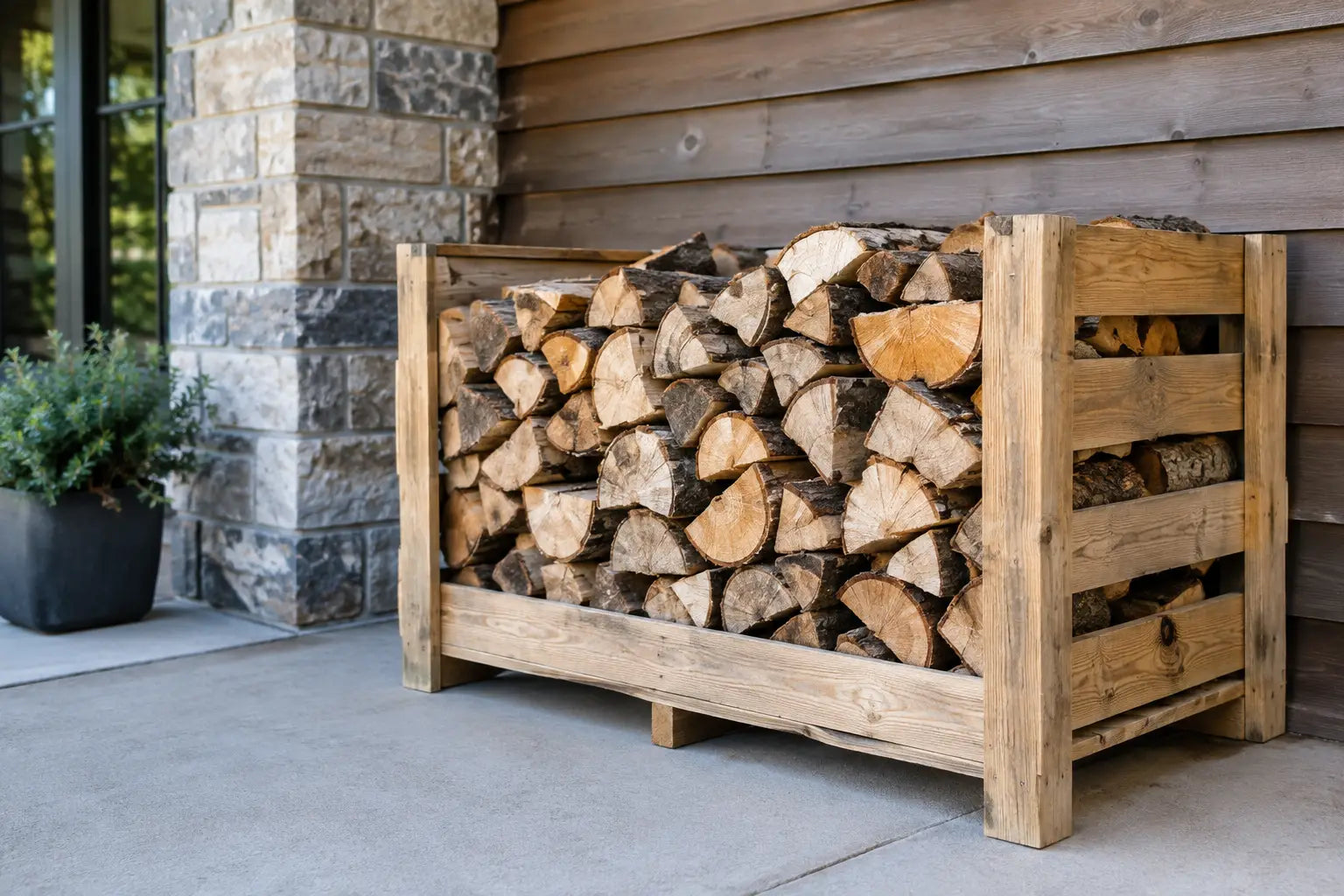
A large crate of logs can take the uncertainty out of heating your home with wood. Rather than collecting small bags every few weeks or relying on poorly seasoned local supplies, you have a substantial reserve of dry fuel ready for the stove, fireplace or wood burner. The right crate can offer better value per cubic metre, fewer deliveries and more consistent burning performance - but only if you have the storage space and choose fuel that is genuinely ready to burn.
For households that use a stove regularly through autumn and winter, a crate is often the practical middle ground between bagged logs and ordering several pallets. It provides a meaningful volume without turning the garden into a fuel yard. Before ordering, it is worth looking beyond the headline price and considering volume, moisture content, log species, access for delivery and how quickly your household gets through wood.
What do you get in a large crate of logs?
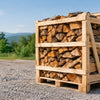
A crate is a palletised load of logs contained in a sturdy wooden frame. This makes it easier to transport, protects the load during delivery and gives you a clearer indication of the amount you are buying than a loose tipper load. Crates are usually sold by their stacked or loose volume, so check the product specification rather than assuming every crate holds the same quantity.
The most useful comparison is the price per cubic metre. A neatly stacked crate can look generous because the logs are arranged tightly, while loose-filled volume includes the natural air gaps between logs. Neither method is misleading when stated clearly, but they are not directly interchangeable. Transparent volumetric information lets you compare like for like and judge the real value of a bulk order.
A larger crate suits homes where wood is a primary or frequent supplementary heat source. If you light the stove most evenings during the colder months, one crate can reduce the disruption of repeated orders. For occasional weekend fires, however, a smaller crate or fire-box packs may be easier to store and may prevent you buying more fuel than you will use within a sensible timeframe.
Why dry logs matter more than crate size
A large supply is only useful if it burns efficiently. Freshly cut or poorly stored wood contains a high level of water, which means part of the fire's heat is spent evaporating moisture instead of warming your room. Wet logs can be difficult to light, produce more smoke and leave heavier deposits in the stove and flue.
For domestic wood-burning appliances in England, Ready to Burn fuel must have a moisture content below 20 per cent when sold in volumes under two cubic metres. Kiln-dried logs are dried in controlled conditions to reach this level reliably. They light more readily, burn with a cleaner flame and provide more usable heat from each load.
This is where the quality of a crate matters. A cheaper bulk load can prove poor value if the logs are damp, inconsistent in size or mixed with soft, low-density wood. Choosing certified kiln-dried fuel gives you a known starting point. You can then store it properly and use it straight away, rather than waiting months for it to season.
Choose the species for how you use your stove
The best species depends on whether you need quick heat, a long steady burn or a balance of both. Birch is popular because it lights easily and produces a bright flame, making it a practical choice for getting a fire established. Alder is also easy to light and works well for shorter fires or milder evenings.
Denser hardwoods such as oak, ash and hornbeam generally burn for longer and give a strong, sustained heat output. They are well suited to households that keep a stove running through the evening or use wood as a serious part of their heating routine. Oak can be slower to establish, so it often performs best when used alongside a faster-lighting log or a good bed of embers.
There is no single right answer. A household with a small living-room stove may prefer a mixed crate that provides flexibility, while a larger appliance in a rural home may justify dense hardwood logs for longer burn times. Log length matters as well. Measure your stove's firebox and allow room for air to circulate around the fuel. Logs forced tightly into an appliance do not burn as cleanly or as controllably.
Do not confuse slow burning with poor airflow
Hardwood should give a longer burn, but a stove should never be starved of air to make fuel last. Restricting airflow too far can cause incomplete combustion, blackened glass and deposits in the flue. Use dry logs, follow the appliance manufacturer's instructions and maintain your chimney or flue regularly. Good fuel and correct operation work together.
Storage decides whether your logs stay ready to burn
Once a crate arrives, the job is not finished. Kiln-dried logs can absorb moisture again if they are left uncovered in persistent rain or placed directly on damp ground. A large crate is easiest to manage when you have a planned storage area before delivery day.
Choose a location with a solid, level base and good airflow. A log store, open-sided shelter or covered area against a wall is usually suitable, provided rain cannot blow directly onto the wood. Keep the logs off the ground and cover the top rather than wrapping the whole stack in an impermeable sheet. Fully enclosing the fuel traps moisture and restricts ventilation.
If space is limited, use the crate as your main reserve and bring a smaller quantity indoors or into a porch for day-to-day use. Avoid piling a full winter supply next to the stove. Aside from taking up valuable room, logs stored too close to a heat source can create a fire risk. Keep your appliance clearances in line with its installation guidance.
A crate also needs a realistic footprint. Check its dimensions, not just its volume, and consider whether gates, side passages and uneven drives will affect where it can be placed. Palletised fuel is normally delivered to the kerbside or the nearest safe, accessible point using pallet-handling equipment. Gravel, steep slopes and steps can prevent a driver from moving the crate to your preferred spot.
Work out whether bulk buying will save you money
The value of a crate is usually strongest for customers who burn wood regularly. Larger formats often reduce packaging and delivery costs per unit of fuel, while buying ahead avoids the inconvenience of searching for dry logs during a cold spell. Free delivery across most mainland UK postcodes can make the calculation even clearer, provided the product price and volume are set out plainly.
Start with your actual use rather than a guess. Think about how many evenings a week you light the stove, whether wood is your main heat source or an occasional comfort, and how long your heating season lasts. A home using logs every day may get through several cubic metres over winter. A household that lights a fire only at weekends will use far less.
It also pays to consider the cost of poor fuel. Logs that are cheaper upfront but burn quickly, smoke heavily or need extra kindling can cost more in practice. Dry, dense logs may have a higher initial price, yet give steadier heat and less waste. The aim is not simply to buy the biggest crate available. It is to buy the quantity and quality that fits your usage.
Ordering and receiving a large crate of logs
Before placing an order, confirm three things: the log type, the stated volume and the delivery arrangements. If you have a narrow access road, shared drive or restricted parking, plan ahead. Make sure there is enough space for the delivery vehicle to stop safely and that the drop point is firm and level.
It is sensible to order before the first sustained cold weather. Demand for firewood rises sharply when temperatures fall, and ordering early gives you time to stack the logs properly. Candowe supplies premium kiln-dried logs in palletised crate formats, with clear product details to help households and trade buyers select the right quantity for their fuel needs.
When the crate arrives, inspect the outer wrap and position it promptly in its storage area. Remove packaging as appropriate, while keeping the top protected from rain. If you are moving logs from the crate into a store, stack them loosely enough for air to pass through. That simple step helps preserve the low moisture level you paid for.
A well-chosen crate should make winter heating feel more predictable: dry fuel to hand, fewer last-minute purchases and a fire that performs as your appliance was designed to. Plan the storage first, buy the right volume second, and your logs will be ready when the temperature drops.