Skip to content
Ready to Burn Hardwood Logs for Cleaner Heat
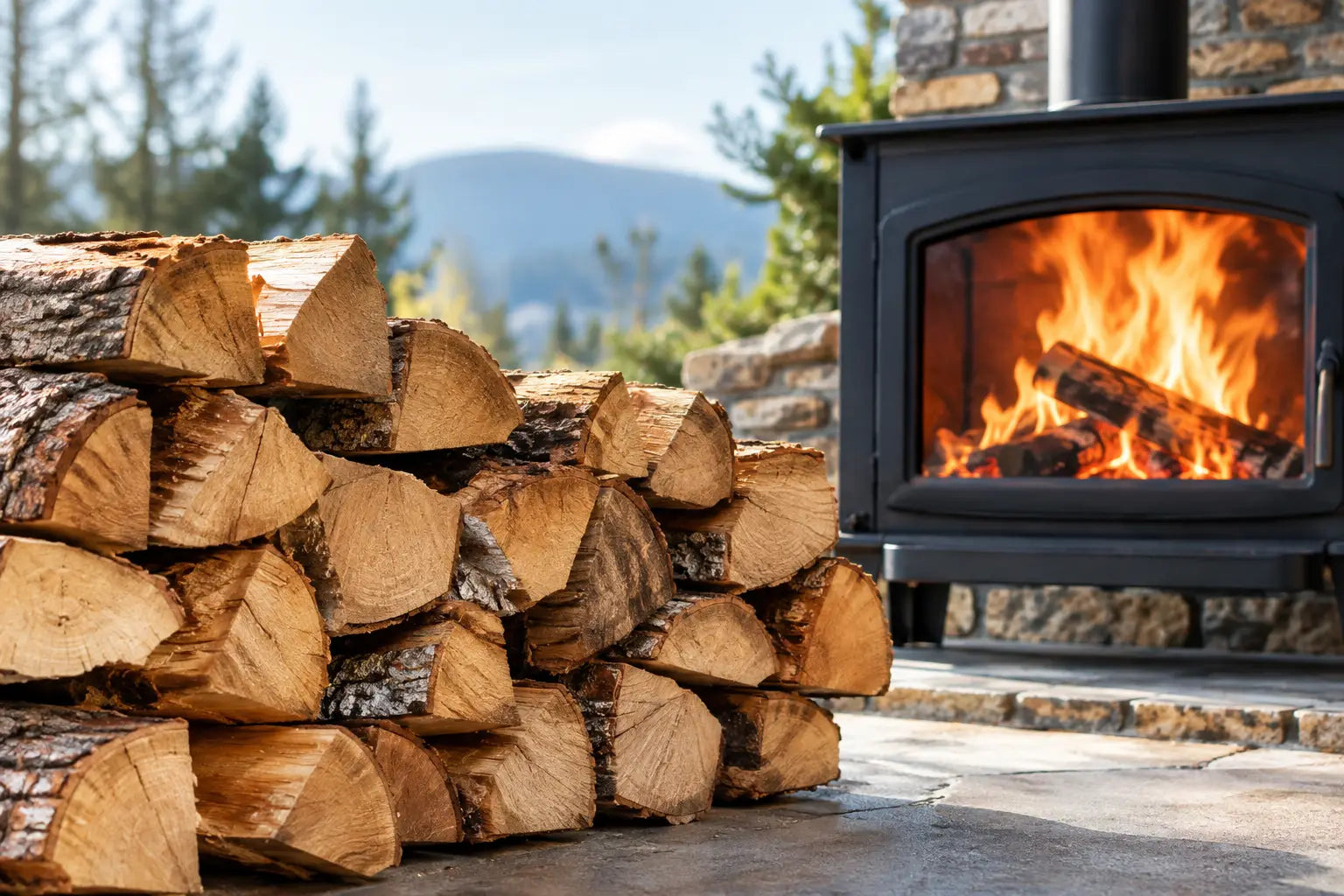
A stove that struggles to stay alight, blackens the glass quickly or fills the room with smoke is often being fed wood that is too wet. Ready to burn hardwood logs remove that uncertainty. They are supplied dry enough for efficient use, so you can light a fire with less fuss and enjoy reliable heat without spending months seasoning a stack of timber yourself.
For households that rely on a log burner, open fire or wood-fired cooker, buying dry fuel is not simply a convenience. It affects heat output, chimney cleanliness, storage requirements and how much wood you use over the colder months. The right logs should arrive ready for the stove, not as a project for next winter.
What Ready to Burn hardwood logs mean
In the UK, the Ready to Burn scheme helps customers identify wood fuel with a moisture content of 20% or below. Wood at this level is dry enough to burn efficiently in domestic appliances. Suppliers selling small volumes of firewood under the scheme must meet its requirements, giving buyers a clear and useful quality benchmark.
This matters because freshly felled wood can contain a substantial amount of water. When it is burned before it has dried properly, much of the fire's energy is spent heating and evaporating that moisture. The result is a cooler, less efficient fire, more smoke and greater deposits in the flue.
Kiln-dried logs are dried in controlled conditions to bring their moisture content down consistently. This gives a more dependable product than untested, loosely described ‘seasoned’ logs, which may have been left outdoors for an unknown period and can still hold too much water at the centre. Seasoned wood can be a sensible choice when it has genuinely been dried and stored correctly, but it is worth checking the stated moisture level rather than relying on the label alone.
Dry wood also makes day-to-day stove use easier. It catches more readily with good kindling and airflow, produces a brighter flame, and is less likely to leave the glass coated in soot. No fuel eliminates cleaning entirely, particularly if the appliance is run too slowly, but properly dried logs give you a much better starting point.
Why hardwood is a practical choice
Hardwood refers to wood from broad-leaved trees such as birch, ash, oak, alder and hornbeam. These species vary in density, ignition speed and burn duration, so there is no single best log for every household. The most useful choice depends on your appliance, the heat you want and how you prefer to manage the fire.
Birch is popular because it lights easily and provides an attractive, lively flame. Its bark can assist when starting a fire, although kindling remains the most reliable way to establish it. Birch is a good everyday option for households that value easy lighting and steady heat.
Ash is widely valued for its dependable performance. It lights well when dry, burns evenly and gives good heat, making it a flexible choice for stoves and fireplaces. Alder is generally lighter and quicker burning, which can suit milder evenings or fires that do not need to run for long.
Oak and hornbeam are denser woods. They tend to burn more slowly and can produce long-lasting heat once a fire is properly established. Their trade-off is that they benefit from a hot bed of embers and should not be expected to light as quickly as lighter species. Many stove owners find that a mix works well: use easier-lighting logs to build the fire, then add denser hardwood logs for a longer burn.
The size of the log matters too. Smaller pieces suit compact stoves and make fire management simpler, while larger logs can be useful for bigger fireboxes. Never force oversized logs into an appliance or overload it. Follow the stove manufacturer's guidance on fuel size, loading and air controls.
Getting the most from dry firewood
Even excellent logs need the right conditions to perform well. Start with a clean firebox and an appropriate layer of dry kindling. Open the air controls as recommended by the appliance manufacturer, then allow the initial fire to establish before adding larger logs. Restricting airflow too early encourages a smoky, inefficient burn.
Once the stove is up to temperature, add logs in sensible quantities rather than filling the firebox to the top. A bright, controlled flame is generally preferable to logs that are smouldering with little visible flame. Smouldering fires produce more soot and pollution, and they waste the benefit of buying dry fuel.
Use only untreated wood fuel in your stove or fireplace. Painted, varnished, glued or chemically treated timber can release harmful fumes and damage your appliance or chimney. Household waste, old furniture and construction offcuts do not belong on a domestic fire. If you need a longer, controlled burn, purpose-made briquettes or smokeless fuels may be appropriate, but always check that your appliance is designed for them.
Your chimney or flue also needs regular professional sweeping. The right interval depends on how often you burn fuel and the type of appliance, but dry logs are not a substitute for proper maintenance. They help reduce unnecessary deposits; they do not remove the need to keep the whole system safe.
Storing ready to burn hardwood logs correctly
A delivery of kiln-dried logs should be protected from rain and ground moisture as soon as possible. Store your fuel in a dry, ventilated log store, shed or covered area with airflow around the sides. Keep it raised off the ground where practical, using a pallet or a purpose-built base.
Avoid sealing logs in an airtight container. Wood needs ventilation to remain in good condition, particularly if there is any residual surface moisture from transport or changing weather. A covered top with open sides is usually more useful than wrapping a stack tightly in plastic.
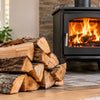
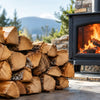
Bringing a small supply indoors is sensible, especially during wet weather. A basket or log holder near the stove lets the next day's fuel warm through and keeps trips to the garden to a minimum. Do not pile large quantities directly against the appliance, and keep logs clear of hot surfaces and escape routes.
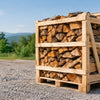
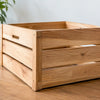
Storage capacity should influence the format you buy. Net bags and fire-box packs are straightforward to carry, stack and use gradually. They can suit occasional fires, smaller homes and customers who want a manageable supply. Crates and palletised loads often offer better value per cubic metre for regular stove users, but they require suitable access and a dry place to store the volume.
Comparing value beyond the price per bag
The cheapest-looking bag is not always the best-value fuel. A useful comparison includes the stated volume, log length, species, moisture standard and whether delivery is included. Weight can vary with wood type and dryness, so volumetric information is often a clearer way to compare like for like.
Buying in bulk can reduce the cost per unit where you have the storage space and burn logs frequently. It can also reduce the inconvenience of repeated orders during the heating season. However, smaller packs may be the better decision if access is difficult, your stove is used only at weekends, or you are trying a species for the first time.
Transparent product details make this decision easier. Look for the loose volume or crate dimensions, the approximate log size and a clear statement of moisture content. Candowe offers Ready to Burn certified hardwood in formats ranging from convenient packs to larger crates, allowing households and trade customers to match their order to their usage and storage space.
A cleaner fire starts before the match is lit
Ready to Burn certification is a valuable check, but it is only one part of good fuel buying. Choose a hardwood species that suits how you use your stove, order a volume you can keep dry, and burn it with enough airflow to maintain a clean flame. Also check any local smoke-control requirements, particularly if you live in a Smoke Control Area.
When dry, properly sourced logs are stored well and used in a maintained appliance, they make winter heating more predictable. Stock up before the weather turns, keep a small supply close to the stove, and your next fire will be ready when you need it.