Skip to content
Extra Dry Birch Logs Delivered for Cleaner Heat
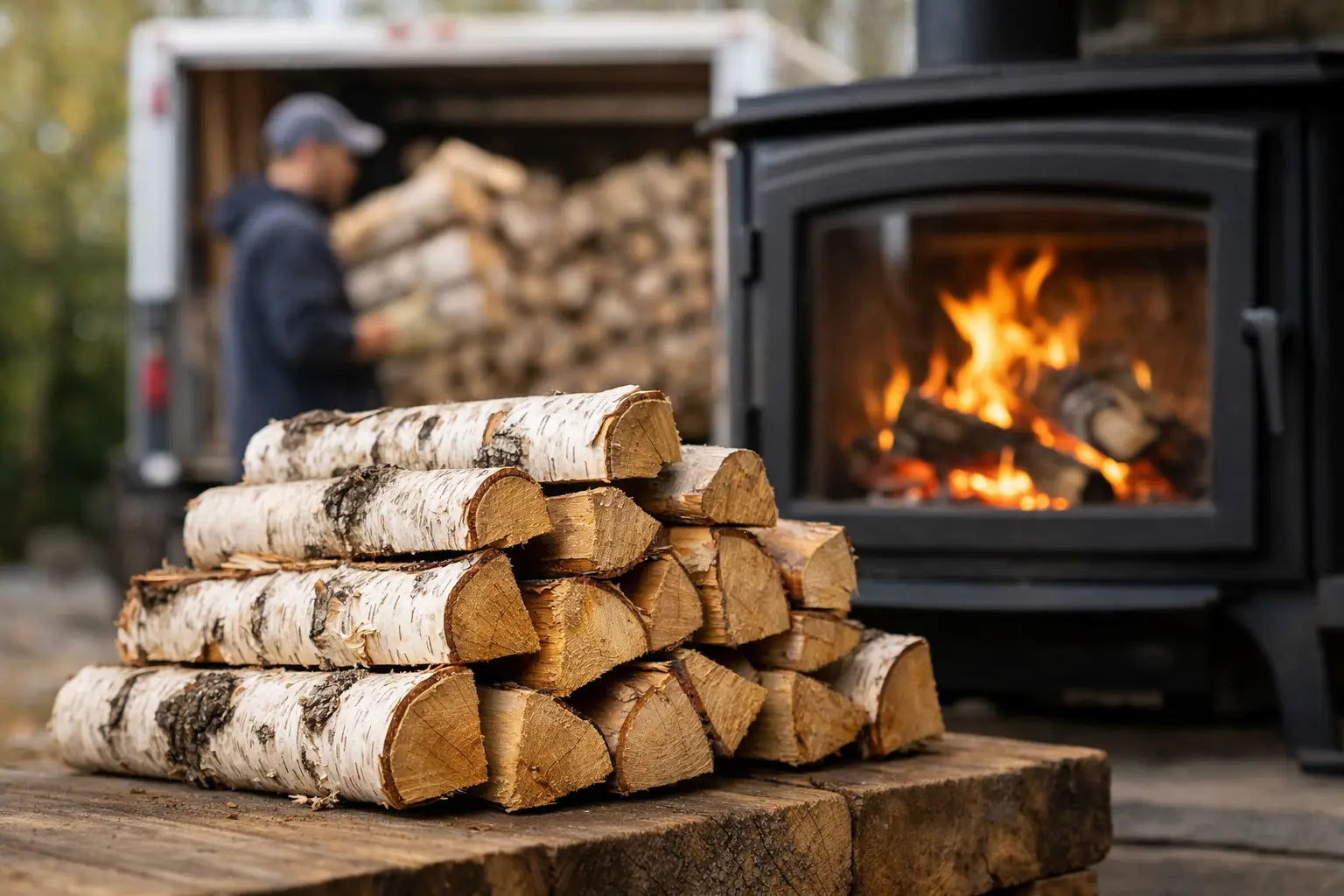
A fire should be ready when you are. Ordering extra dry birch logs delivered to your door avoids the uncertainty of wet loads, lengthy seasoning and last-minute trips to find usable fuel. For households relying on a stove, open fire or log burner, dry birch offers a practical balance of quick lighting, attractive flame and dependable warmth.
Birch is one of the most popular firewoods in the UK for good reason. It is easy to handle, lights readily when properly dried and creates a bright, lively fire. The key is not simply the species, but the moisture content. Logs that have been professionally kiln dried burn more efficiently, produce less visible smoke and leave your appliance easier to maintain.
Why extra dry birch logs make a difference
Freshly felled wood contains a high level of water. Before it can burn well, that water must be driven off. If it is still trapped in the log, much of the fire's energy is spent boiling moisture away instead of heating your room. The result is a fire that is reluctant to establish, gives off less heat and can create excessive smoke and deposits in the flue.
Extra dry birch logs are prepared for immediate use. In practical terms, look for kiln-dried logs with a moisture content below 20%, backed by Ready to Burn certification where required. This gives you a clear standard to buy against, rather than relying on claims that a load has simply been "seasoned".
Dry birch catches more easily than dense hardwoods such as oak or hornbeam, making it particularly useful for getting a fire going. Its pale bark also lights well, although kindling and a suitable firelighter will still give the cleanest, most controlled start. Once the fire is established, birch provides a good level of heat with a pleasing flame.
That does not mean birch is the right answer for every situation. If your priority is the longest possible burn overnight, a denser hardwood may suit you better. Many households use birch for quick, responsive heat and combine it with oak, ash or hornbeam for a longer-lasting fire. The best choice depends on your appliance, how often you light it and whether flame appearance or burn duration matters most.
What to expect from extra dry birch logs delivered
Buying online should make fuel planning simpler, not leave you guessing what will arrive. A well-described order tells you the log type, moisture standard, pack format and volume. These details matter more than a vague bag count, because bag sizes vary considerably between suppliers.
Birch logs are commonly available in net bags, plastic bags, fire-box packs and larger crates. Smaller packs are useful when storage is limited, when you want to try a fuel before ordering more, or when you only light occasional fires. Crates and palletised formats generally offer better value per cubic metre for regular stove users and households preparing for the colder months.
Before ordering, check the maximum log length recommended by your stove manufacturer. A log that is too long is frustrating to split or impossible to position safely in the firebox. Also consider access to your property. Larger orders are efficient, but they need a dry, accessible place for delivery and storage. If a lorry cannot safely reach your preferred drop point, it is better to clarify this before dispatch.
Candowe supplies kiln-dried fuel in practical formats, with clear volumetric information to help customers compare orders properly. Free delivery across most mainland UK postcodes and fulfilment typically within three to four business days can make it easier to restock before your log store runs low.
Delivery is only half the job - storage protects the quality
Even exceptionally dry logs can lose their advantage if they are left exposed to persistent rain or stored directly on damp ground. Put your delivery under cover as soon as possible. A purpose-built log store is ideal, but a shed, garage or covered side passage can work well if air can circulate.
Keep logs raised off the floor on pallets, battens or a rack. This reduces contact with ground moisture and helps air move underneath the stack. Cover the top and protect the sides from driving rain, but do not wrap the wood tightly in plastic. Trapped condensation can undo the work that went into drying it.
Bring a small quantity indoors a day or two before use if you have space. This is especially useful in winter, when surface moisture from cold outdoor air can make lighting slower. Avoid piling large amounts of wood directly beside a stove, however, as it creates an unnecessary fire risk.
How birch burns in a stove or open fire
For the cleanest result, begin with dry kindling and one or two smaller birch logs. Build the fire with enough space for air to move through it, then use your appliance controls as recommended by its manufacturer. Trying to light a large stack of logs with restricted airflow often leads to smouldering rather than efficient combustion.
Once the fire is burning brightly, add logs gradually. Birch responds well to this approach because it lights quickly and gives a visible flame without needing a large fuel load from the start. Overfilling the stove can reduce airflow, waste fuel and push the appliance beyond the way it was designed to operate.
Use only suitable wood fuel in a wood-burning appliance. Treated timber, painted wood, old furniture, chipboard and household waste can release harmful fumes and create damaging residues. Dry, certified firewood is the safer and more efficient option for both your home and your chimney or flue system.
A useful sign of good combustion is a bright, active flame with little smoke once the fire has warmed through. Blackened stove glass, a sluggish flame or heavy smoke may indicate damp fuel, poor airflow, an overfilled firebox or a flue that needs attention. Fuel quality is central, but it is not the only factor.
Calculating how much birch you need
The right quantity depends on how you use your heating. A homeowner who lights a stove for a few hours at weekends will have very different needs from someone using a log burner as a regular supplementary heat source throughout winter. Start with your recent usage if you have it, then allow extra for colder spells and holiday periods when the fire is used more often.
For occasional use, bags or fire-box packs keep stock manageable and make storage straightforward. For frequent use, a crate of logs can reduce the cost per unit of fuel and cut down on repeat deliveries. Compare loose volume or stated cubic-metre information, rather than assuming the cheapest-looking pack represents the best value.
It is also worth thinking about the mix of fuels in your store. Birch is an excellent everyday choice for quick warmth and easy lighting. A few bags of kindling will help maintain reliable starts, while briquettes can be useful where compact storage and a more consistent, longer burn are priorities. The most economical setup is often a considered combination rather than a single product for every fire.
Ready to Burn quality and responsible sourcing
For domestic users in England, wood sold in small quantities must meet Ready to Burn requirements, which means a moisture content of 20% or less. This standard is useful because it helps buyers identify firewood designed to burn efficiently and reduce smoke emissions. Wherever you live in the UK, choosing properly dried fuel remains a sensible way to protect appliance performance and improve the experience of using it.
Sourcing matters as well. Responsible suppliers provide firewood from managed sources and dry it in controlled conditions. Kiln drying requires energy, but it gives a reliable moisture result and removes the uncertainty that comes with poorly stored or inconsistently seasoned logs. The practical benefit is simple: you receive fuel that is ready to burn, rather than wood that may need months of further drying.
When your next delivery arrives, stack it carefully, keep it dry and use it with the right airflow. Good birch logs reward that small amount of preparation with fast lighting, clean flame and reliable heat when it matters most.