Skip to content
Choosing a Firewood Crate That Burns Better
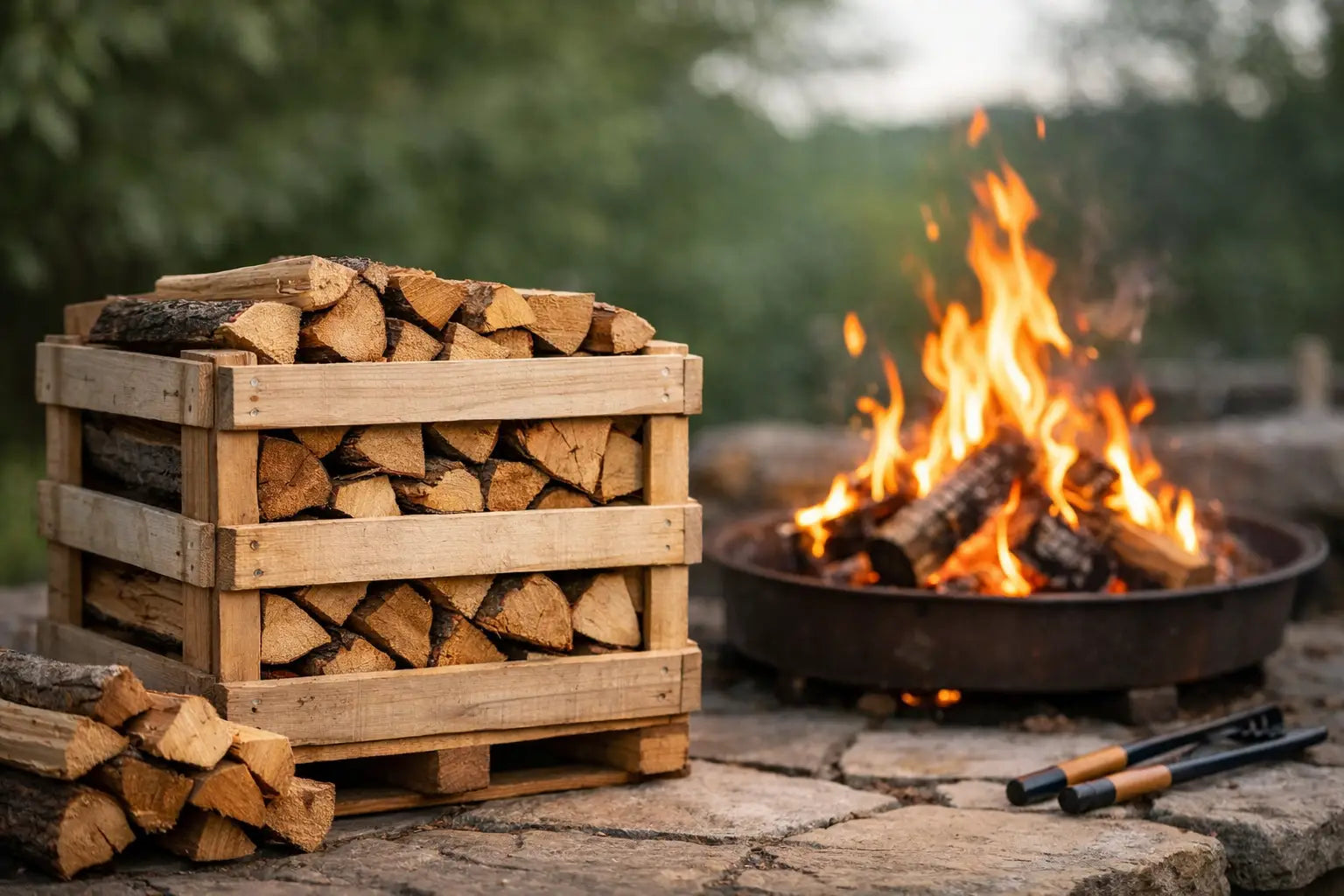
A firewood crate is not simply a larger pile of logs. It is a practical way to buy a known volume of dry fuel, keep your stove supplied through the colder months and avoid repeated trips for small bags. For households that rely on a log burner, open fire or multi-fuel stove, choosing the right crate can make a noticeable difference to heat output, cleanliness and overall value.
The best choice depends on your appliance, available storage and how often you burn wood. A crate of properly kiln-dried logs can offer dependable fuel from the first fire, but the log species and crate size still need to suit the way you heat your home.
What to expect from a firewood crate
Firewood crates are generally palletised loads of logs supplied in a rigid wooden crate. Unlike buying individual bags, the format gives you a larger quantity in one delivery and makes it easier to compare the cost by volume. It also helps you plan ahead: you can order enough fuel for regular evening fires, a full heating season or a busy period at a holiday let, pub or small commercial premises.
The key benefit is consistency. When the wood is kiln dried and certified Ready to Burn, it has a moisture content of below 20%. That matters because dry wood lights more easily, produces more usable heat and creates less smoke than damp or poorly seasoned logs. It also helps keep the stove glass clearer and reduces the amount of soot and residue building up in the flue.
A crate does require suitable access and storage. Deliveries are usually made on a pallet, so a firm, level surface near the property is helpful. If access is narrow, steep or loose underfoot, consider where the delivery can be safely placed before ordering. Moving logs from the crate to your store is straightforward, but it is still a job worth planning rather than doing in the rain after dark.
Choose the right log species for your stove
There is no single best firewood for every household. Hardwood species vary in density, flame character and how quickly they establish heat. The right choice comes down to whether you value a fast, bright fire, a long burn, or a balance of both.
Birch is popular for easy lighting and an attractive flame. It catches quickly and is a reliable choice for everyday stove use, particularly when you want warmth without a long wait. Because it burns more readily than the densest hardwoods, it can be useful alongside a slower-burning species.
Alder also lights well and produces a steady, pleasant fire. It is a practical option for regular use when you want clean-burning logs that are easy to manage. Ash is widely valued because it offers dependable heat and good all-round performance. It suits many households looking for a straightforward, familiar hardwood fuel.
For longer, slower-burning fires, oak and hornbeam are strong options. Their density means they can provide sustained heat once the firebox is properly established. They may take a little longer to get going than lighter woods, so using dry kindling and a few quicker-lighting logs at the start makes sense. For an evening stove fire that you want to maintain without constant refuelling, dense hardwood can be particularly good value.
Log length is equally important. Check your appliance manual or measure the firebox before ordering. Logs that are too long are inconvenient at best and unusable at worst. Leave enough room for air to circulate around the fuel inside the stove rather than filling it too tightly.
Getting crate size and value right
A larger crate usually offers better value per cubic metre than smaller packaged logs, but only if you have dry space to store it and will use it within a sensible period. Buying too little can mean paying more often for smaller orders. Buying far more than you can protect from weather can undermine the benefit of choosing premium dry fuel in the first place.
When comparing options, focus on the stated loose volume rather than judging a crate by its outside dimensions alone. Logs naturally leave spaces between them, so transparent volumetric information is the fairest way to understand how much firewood you are receiving. A clear price per cubic metre also makes it easier to compare species and formats without guesswork.
For occasional weekend fires, bags or compact fire-box packs may be easier to store and handle. For a household using a stove several times each week, a firewood crate can reduce the cost and inconvenience of topping up. Regular users often benefit from keeping a main crate supply plus a small indoor log basket, refilled as needed.
It is also worth thinking about your burn rate honestly. A well-insulated home using a stove for a few evening hours will use much less wood than a rural property where the stove is a major source of heat. Cold spells, room size, stove efficiency and the species you burn all affect consumption. Start with a quantity you can store properly, then use your first season to build a realistic picture of demand.
Store your crate of logs properly
Kiln-dried logs arrive ready to burn, but they still need protection from persistent rain and ground moisture. The goal is simple: keep the wood dry while allowing air to move around it.
A covered log store, lean-to or well-ventilated shed is ideal. Keep the logs raised off bare ground, and avoid sealing them in plastic where trapped moisture can cause condensation. If the crate is stored outdoors temporarily, cover the top against rain but leave the sides open enough for airflow. A tarpaulin wrapped tightly around the whole crate often creates more problems than it solves.
Store the main supply outside where possible. Bringing only a day or two of logs indoors keeps the living area tidy and avoids making a home for insects or debris. If you use a garage, ensure it is dry and ventilated, rather than assuming any enclosed space will protect the wood adequately.
Do not place the crate close to a heat source, boiler flue or appliance air intake. Fuel storage should be practical and accessible, but safety always comes first. A clear route from the log store to the house will make a difference on wet winter evenings.
Burn efficiently from the first lighting
Good logs perform best when the stove is operated properly. Begin with dry kindling and smaller pieces of wood, with sufficient airflow to establish a hot flame. Once a bed of embers has formed, add larger logs without overloading the firebox.
Avoid closing the air controls too early. Starving a fire of oxygen can lead to smoky, inefficient combustion and darker glass. Follow the manufacturer’s guidance for your particular stove, especially if it is a modern clean-burning model. A hot, controlled fire is generally cleaner and more effective than a stove that is smouldering for hours.
Use only suitable untreated firewood. Painted, varnished, reclaimed or contaminated timber can release harmful fumes and damage your appliance or chimney. The same applies to burning household waste. Clean fuel, regular chimney sweeping and correct stove operation work together to protect your home and get the most heat from every crate.
When a crate is the sensible choice
A firewood crate is particularly useful when local supplies are inconsistent, when you want known dry fuel delivered to your door, or when buying small bags has become poor value. It offers a clear route to stocking up without relying on wood that may need months of extra drying before it is fit for a stove.
Candowe supplies premium kiln-dried logs in practical crate formats, with clearly stated volumes and free delivery across most mainland UK postcodes. That gives household and trade customers a more predictable way to plan fuel supply, whether they prefer the quick lighting of birch or the longer burn of oak, hornbeam and ash.
Before your next order, measure your log store, check your stove’s log length and consider how you actually use your fire each week. A crate that fits your space, appliance and burn pattern will do more than fill a store - it will make winter heating simpler, cleaner and easier to rely on.