Skip to content
How to Buy the Right Firewood Pallet Load
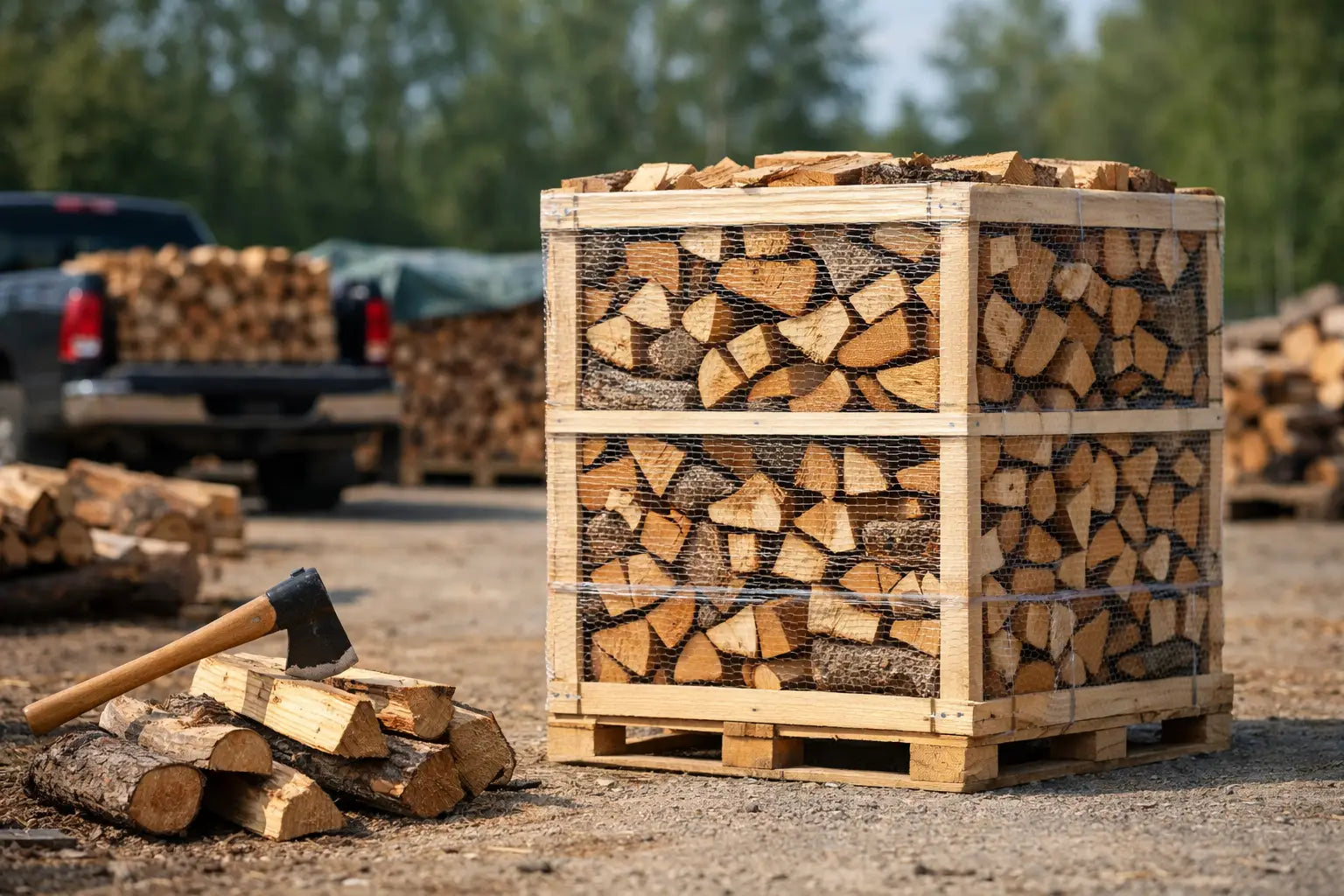
A firewood pallet is the practical choice when small bags no longer keep pace with your stove, fireplace or regular heating needs. It gives you a substantial supply in one delivery, but good value depends on more than the headline price. The type of wood, its moisture content, the stated volume and the access to your property all affect what you receive and how well it burns.
For households that use a log burner throughout autumn and winter, buying by the pallet can reduce the cost per cubic metre and avoid repeated trips to collect fuel. It also makes it easier to stock dry logs before colder weather arrives, rather than relying on whatever is available locally when temperatures fall.
What is included in a firewood pallet?
A firewood pallet is a bulk load of logs supplied on a wooden pallet, commonly in a crate, stacked pack or large bags secured for transport. Unlike a small net or plastic bag, it is intended for customers who have enough dry storage and want a more economical volume of fuel.
The most useful way to compare pallet loads is by the amount of usable wood, not by how tall the delivery looks. Suppliers may state a loose volume, a stacked volume, the dimensions of a crate, or a number of bags. These descriptions are not interchangeable. Stacked logs contain less air space than loose-filled bags, so a clear volumetric description helps you compare like for like.
Before ordering, check whether the product page confirms the log length, wood species, moisture level and the volume supplied. These details determine whether the fuel will suit your appliance and whether the price represents genuine value.
Start with dry, Ready to Burn firewood
For domestic wood burners and open fires, moisture content is the first specification to check. Freshly cut or poorly stored logs can contain a high amount of water. Burning them wastes energy driving off that moisture, produces more smoke and can leave soot and deposits in the flue.
Ready to Burn certified firewood has a moisture content below 20% and is suitable for immediate use in domestic appliances. Kiln-dried logs are dried in controlled conditions to reach this level consistently. They light more easily, give a cleaner flame and produce dependable heat compared with unseasoned wood.
Dry logs can sometimes feel lighter than damp logs of the same size, but that does not mean they offer less heating value in the stove. The opposite is usually true: more of the wood’s energy becomes heat for your room rather than steam leaving the chimney. For regular users, this can also mean less kindling and fewer failed relights.
A pallet is a sizeable purchase, so avoid assuming that every bulk load is ready to burn. If a listing does not clearly state the moisture content or certification status, it is difficult to know how the logs will perform. Buying certified dry fuel removes that uncertainty.
Choose the wood species for the way you heat
There is no single best species for every household. The right choice depends on whether you want quick warmth, a long steady burn or a balance of both.
Birch is popular because it lights readily and produces a bright, attractive flame. It is a good choice for evening fires and for customers who value easy lighting. Alder also lights well and burns cleanly, making it useful when a responsive fire matters more than maximum burn duration.
Harder woods such as ash, oak and hornbeam are denser. They generally provide a longer-lasting fire, which can make them a sensible option for stoves used daily or for maintaining heat through a cold evening. Oak can take longer to establish, so it benefits from a well-built fire with dry kindling and smaller logs underneath. Hornbeam is particularly dense and is often chosen for high heat output and long burn times.
Many homes benefit from a mixed approach. Faster-lighting birch or alder can help get the fire going, while ash, oak or hornbeam can be added once there is a good bed of embers. If you only want one species, choose based on your routine rather than a simple claim that one log is always better.
Check log length against your stove
Measure the usable width and depth of your firebox before buying. Logs that are too long can be awkward to arrange and may prevent the door from closing properly. A small allowance around each log makes loading easier and supports better airflow.
If your stove takes shorter logs, do not assume a standard pallet will fit. Confirm the stated log length first. This small check prevents the inconvenience of splitting logs yourself or storing fuel you cannot use comfortably.
Work out how much firewood you need
Your annual usage depends on how often the appliance is lit, the size and insulation of your home, the efficiency of the stove and whether wood is your main heat source or an occasional supplement. A household using a stove at weekends may find a few smaller packs sufficient, while a home relying on wood most days during winter can get through several cubic metres.
A simple starting point is to track what you used last season. If you bought bags, note how many and compare their stated volume with the pallet volume you are considering. If this is your first bulk order, it can be sensible to begin with one pallet rather than overfill a storage area.
A larger order usually improves the price per cubic metre, but only if the logs stay dry. Savings disappear if a pallet is left exposed to rain or placed directly on wet ground. Buy the volume your storage can protect, then reorder before your stock becomes urgent.
Prepare for pallet delivery
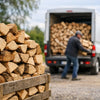
Palletised fuel is convenient, but delivery needs a little planning. The load is typically moved using a pallet truck, which works best on a firm, level surface such as a driveway, paved path or suitable hardstanding. Gravel, steep slopes, grass, loose stones and steps can prevent the pallet from being moved close to your preferred storage spot.
Think about the route from the kerb to where you will stack the logs. Check for narrow gates, tight turns and low obstructions. If access is limited, the pallet may need to be left at the nearest safe point, so it is worth arranging help to move the logs afterwards.
Delivery timing matters too. If possible, choose a day when someone can receive the order and inspect it. Reputable suppliers provide clear delivery expectations, and Candowe offers free delivery across most mainland UK postcodes with fast fulfilment, helping households plan their fuel supply without unnecessary collection trips.
Store the pallet properly once it arrives
Kiln-dried logs need protection after delivery. Keep them off the ground, under cover and in a location with good airflow. A log store with a roof, open sides and a raised base is ideal. It keeps rain off while allowing any surface moisture to evaporate.
Do not wrap the whole load tightly in plastic for long-term storage. Although a cover is useful on the top of a stack, enclosing all sides can trap moisture and restrict ventilation. If the logs arrive in a crate, you may keep them there temporarily, but transfer them to a suitable store if the crate cannot remain protected from the weather.
Bring a small number of logs indoors only when you expect to use them. Keeping a day or two of fuel near the stove is convenient, but large indoor stacks can bring dust, bark and insects into the home. A basket or firebox pack is usually enough for everyday use.
Compare firewood pallet prices fairly
The cheapest pallet is not always the lowest-cost fuel. A fair comparison includes the actual volume, whether the logs are certified below 20% moisture, the species, log size, delivery charge and any included extras such as kindling.
Be careful with vague descriptions such as “large load” or “seasoned logs” without measurements. Seasoned does not automatically mean dry enough to burn efficiently, particularly if the wood has been stored outdoors. Transparent information lets you calculate the cost per cubic metre and make a confident decision.
For regular stove users, a premium kiln-dried pallet often offers better overall value than damp bargain logs. You use less effort to light the fire, get more useful heat from each load and reduce the mess associated with smoky, inefficient burning.
Make the first fire count
When your firewood pallet arrives, start with the driest small pieces and quality kindling, then add larger logs gradually. Avoid filling the stove too quickly, as a fire needs airflow to establish properly. Once the appliance is hot and there is a bed of embers, denser logs will give you the steady, efficient heat that makes bulk firewood worthwhile.
A well-chosen pallet is not simply a larger pile of logs. It is a reliable reserve of clean-burning fuel, sized for your appliance, protected in storage and ready when your home needs it most.