Skip to content
Best Wood for Log Burner and How to Choose It
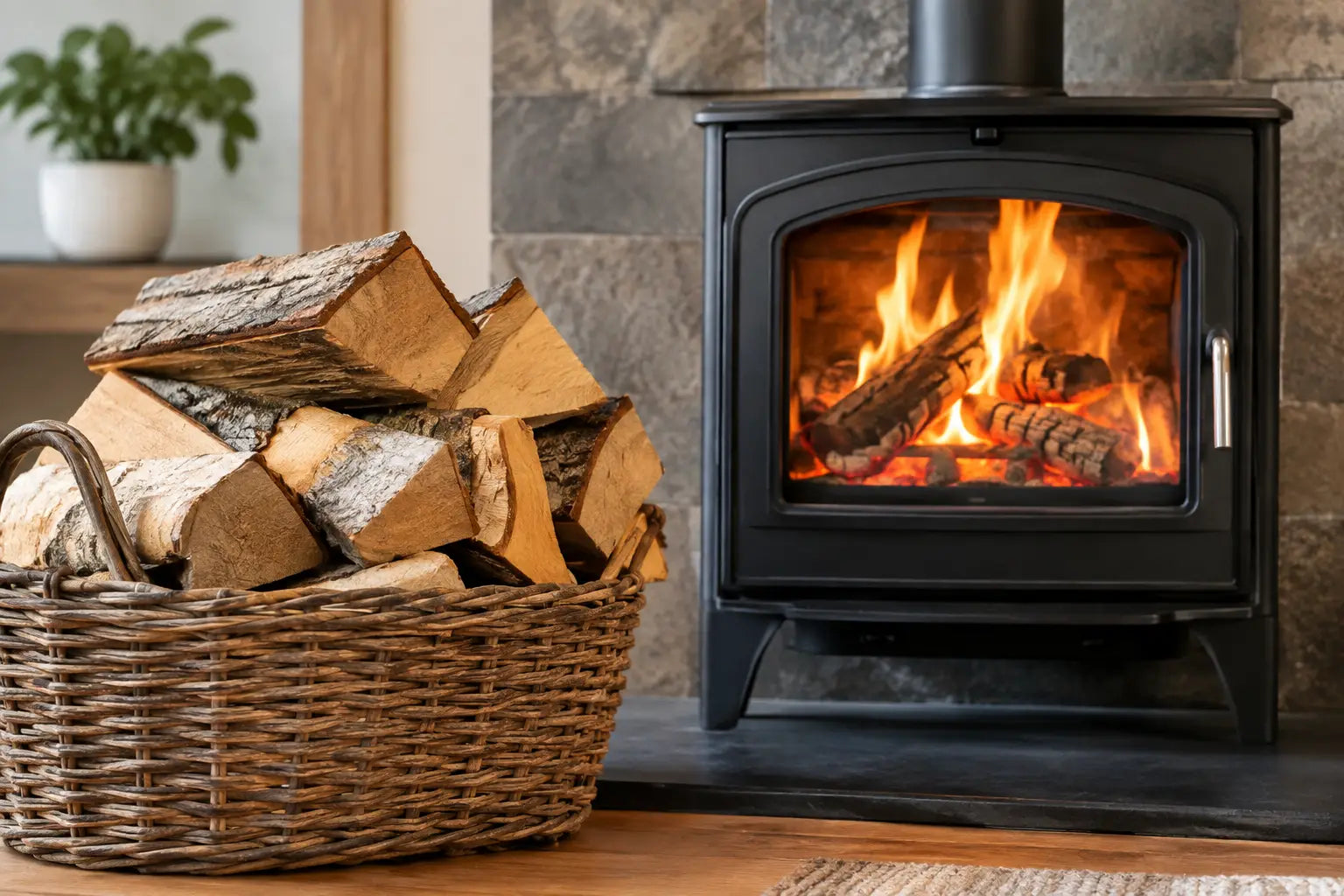
A log burner can only perform as well as the fuel inside it. If the glass is blackening quickly, the fire struggles to stay alight or your room is not warming as expected, the issue is often the logs rather than the stove. The best wood for log burner use is dry, dense enough for the heat you need and sized correctly for your appliance.
For most UK homes, kiln-dried hardwood logs offer the most dependable result. They light more easily than wet logs, burn with less smoke and help keep the stove, flue and chimney in better condition. The right species still matters, though. Some woods are ideal for quick weekday fires, while others provide a slower, longer burn on cold evenings.
What makes the best wood for a log burner?
Moisture content comes before wood species. A wet log wastes much of its energy boiling off water before it can heat your room. It produces more smoke, can leave deposits in the flue and is harder to control. In England, wood sold in volumes under two cubic metres for domestic burning must meet the Ready to Burn standard, which means a moisture content of 20% or less.
Kiln-dried logs are dried in controlled conditions to reach this level consistently. They are ready to burn when delivered, rather than requiring months of storage and guesswork. This is especially useful if you rely on your stove regularly or have limited space to season wood at home.
After dryness, look at density. Denser hardwoods generally burn for longer and produce a steady bed of embers, but they can take a little more effort to get going. Lighter hardwoods catch quickly and give lively heat, making them useful when you want the room warm without waiting. A good log store often contains a mix rather than one species alone.
Log length is equally practical. Check your stove manufacturer’s guidance and leave space around the logs for airflow. Forcing oversized logs into a firebox restricts combustion and makes clean burning more difficult.
Ash: the reliable all-rounder
Ash is widely considered one of the best choices for a log burner. It is a dense hardwood with a high heat output, a clean, steady flame and a good burn time. It lights relatively easily for a hardwood, so it works well as the main fuel for everyday use.
For households using a stove through much of autumn and winter, ash offers an excellent balance. It is responsive when you adjust the air controls, provides lasting heat and does not demand constant refuelling. Its consistent performance makes it a sensible choice when you want one dependable type of log for most fires.
The trade-off is that ash is often priced as a premium firewood, reflecting its performance and demand. When comparing prices, assess the actual volume supplied and whether the logs are certified dry, not simply the price of an individual bag.
Birch: fast lighting, bright warmth
Birch is an excellent option for getting a fire established quickly. It lights easily, produces an attractive bright flame and gives good heat without excessive effort. Its bark is naturally useful for lighting, although kindling and firelighters should still be used sensibly to build a stable fire.
Because birch is less dense than oak or hornbeam, it burns faster. That is not a weakness when it is used for the right job. Birch suits milder days, shorter evening fires and the first stage of a fire before adding denser logs. Many stove owners keep birch alongside a longer-burning hardwood for this reason.
If you want immediate warmth after work, birch can be particularly convenient. Add a few pieces of kiln-dried birch to kindling, allow the fire to establish with the air controls open, then introduce larger logs once there is a hot ember base.
Oak: long-burning heat for colder weather
Oak is one of the densest commonly available firewoods. Once properly kiln dried and burning well, it provides substantial heat and a long burn, making it a strong choice for cold weather and larger rooms. Its slow release of energy means fewer top-ups than lighter species.
Oak needs a sufficiently hot fire to perform at its best. It is not always the easiest wood to light from cold, so it is usually better introduced after kindling and faster-lighting logs such as birch have created a solid bed of embers. Trying to smoulder a large oak log on a weak fire will lead to smoke rather than efficient warmth.
Choose oak when burn duration is the priority. It is particularly useful for an evening fire that needs to hold heat for longer, but it benefits from being part of a mixed fuel approach rather than the only log you keep.
Hornbeam: dense wood with serious staying power
Hornbeam is a very dense hardwood, valued for its long, hot burn and lasting embers. It is a strong choice for households that use their log burner as a meaningful source of heat rather than an occasional feature. With the right airflow and a fully established fire, hornbeam delivers dependable, sustained warmth.
Its density means it behaves much like oak in one important respect: it needs heat underneath it. Start with kindling and a quicker-burning hardwood, then add hornbeam logs once the stove is up to temperature. Used this way, it can reduce how often you need to refuel during a long evening.
Hornbeam may not be the first choice for a quick decorative fire, but for efficiency and burn time it is among the strongest options available.
Alder: practical for quicker fires
Alder is a lighter hardwood that lights readily and burns cleanly when dried properly. It gives a shorter burn than ash, oak or hornbeam, but that can be useful when you need a quick burst of heat or do not want the stove running for hours.
It is a practical choice for shoulder seasons, such as early autumn and spring, when a heavy, long-lasting fire may make the room too warm. It can also work well in a mixed load, helping establish heat before adding denser logs.
The key is to match the fuel to how you use your stove. Buying only the longest-burning logs can be unnecessary if most of your fires are short. Equally, using only lighter logs may mean you burn through your stock faster in midwinter.
Softwood versus hardwood logs
Softwoods such as pine and spruce can light quickly, but they usually burn faster than hardwood and require more frequent refuelling. When dry, they can be used successfully, especially as kindling or for starting a fire. The problem is not that softwood is automatically unsuitable; it is that wet, resinous or poorly stored wood is unsuitable.
For regular log burner use, kiln-dried hardwood is normally the more economical and convenient choice because it offers longer burn times and steadier heat. Softwood can still have a place in your fuel store, but most households will want hardwood as their primary stove fuel.
Never burn painted, treated, varnished or reclaimed timber in a domestic stove. These materials can release harmful fumes and leave damaging residues in the appliance and flue. Household waste, MDF, chipboard and pallets are not a substitute for proper firewood.
How to get better results from any firewood
Even the best wood will disappoint if it is stored badly. Keep logs outside or in a ventilated log store, raised off the ground and protected from driving rain. Do not seal them in an unventilated shed or pile them directly against the house, where airflow is poor.
Use a top-down lighting method where practical. Place larger logs at the bottom, then smaller split logs, kindling and a suitable firelighter above. This allows the flame to burn down through the fuel, warming the flue gradually and reducing early smoke. Keep the stove air controls open while the fire establishes, then adjust them in line with your stove’s instructions.
Avoid shutting the air supply down too soon. A slow, smoky fire may appear to make logs last longer, but it produces less useful heat and more deposits. A clean, bright flame and a hot firebox are better signs of efficient combustion.
Choosing the right quantity and format
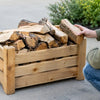
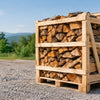
The best purchase depends on how often you burn. Net bags and fire-box packs suit occasional users or those with limited storage. Crates and larger pallet deliveries usually offer stronger value per cubic metre for households that use a stove throughout the heating season. Compare loose volume carefully, as bag sizes alone do not always show how much usable fuel you are receiving.
Candowe supplies Ready to Burn kiln-dried birch, alder, oak, hornbeam and ash in practical formats, helping households choose fuel around storage space, burn frequency and budget rather than settling for uncertain mixed wood.
A mixed order can be the most useful arrangement: birch or alder for easy lighting and quicker fires, with ash, oak or hornbeam for longer-lasting heat. It gives you control over each fire without compromising on dry, clean-burning logs.
Choose certified dry logs first, then select the species that suits the way you heat your home. A well-stored supply of quality hardwood turns a log burner from a temperamental feature into a reliable source of everyday warmth.