Skip to content
Ash Firewood Benefits for UK Homes
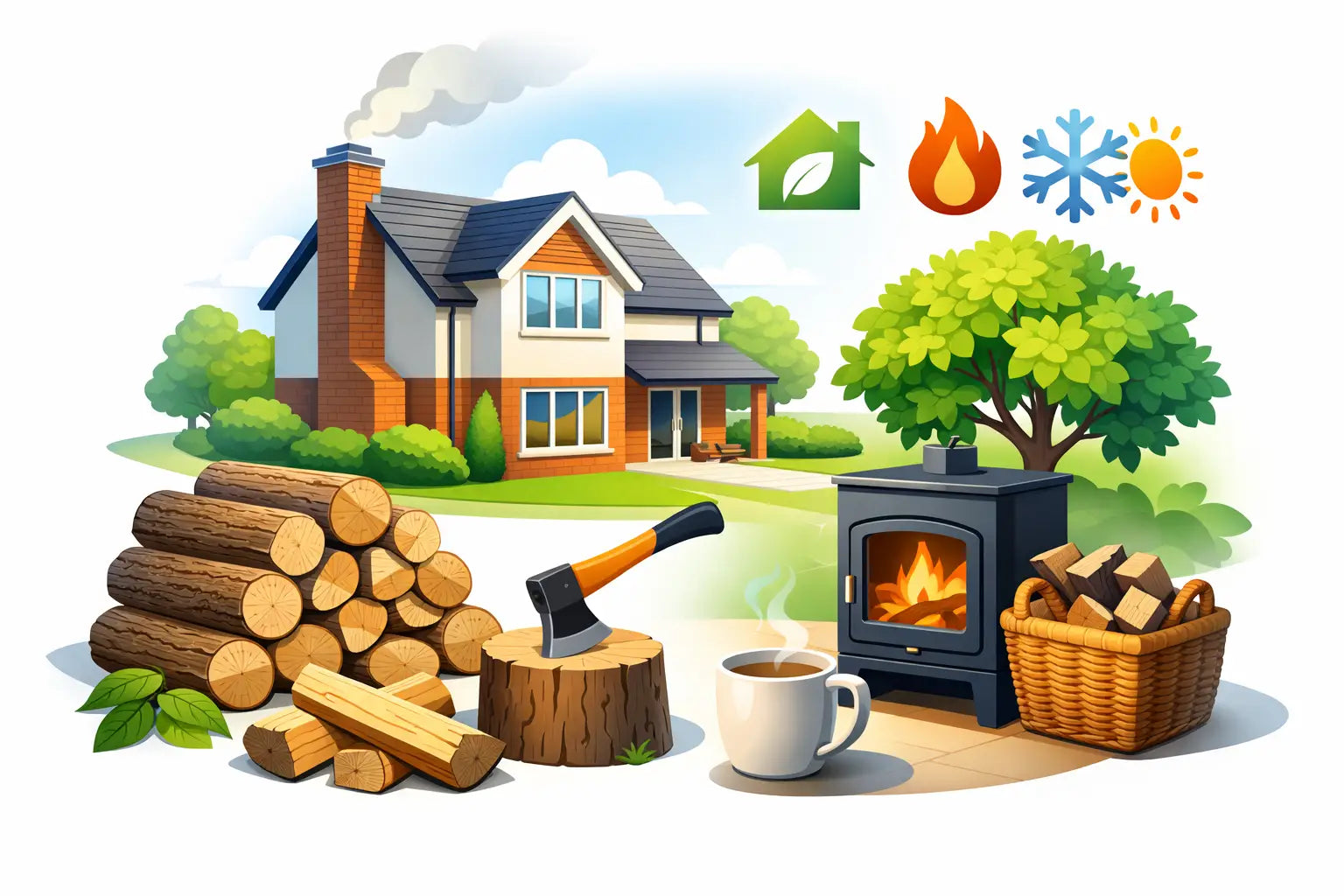
When a load of logs needs to work first time, ash is one of the safest choices you can make. The main ash firewood benefits are practical rather than flashy - dependable heat, straightforward lighting and a steady burn that suits everyday use in UK stoves, fireplaces and log burners. For households that want less fuss and more consistent performance, ash earns its place.
Why ash is such a popular firewood
Ash has long been valued as a hardwood that burns well without being awkward to handle or slow to get going. It gives a strong heat output, but it is not as dense and stubborn as some heavier species that can be harder to light. That balance matters if you rely on your stove regularly and want fuel that behaves predictably from one evening to the next.
For many households, the appeal is simple. Ash is efficient, clean when properly dried, and suitable for both short fires and longer burns. It is not a novelty wood and that is part of its strength. You know what you are getting.
Ash firewood benefits in day-to-day use
The biggest advantage of ash is that it combines several useful traits in one log. You are not choosing between easy lighting and good heat, or between convenience and burn quality. With kiln-dried ash at under 20% moisture, you can get all of those benefits at once.
Strong, reliable heat output
Ash is a hardwood, so it produces a good level of heat compared with many softer woods. That makes it a sensible option for rooms where the fire is doing real work rather than just adding atmosphere. If your stove supports part of your household heating, ash can help maintain comfortable warmth without burning through fuel too quickly.
Heat output is not only about the species, of course. Moisture content plays a major role. Wet logs waste energy boiling off water before they can burn properly. Properly dried ash gives you more of the heat you paid for.
Easier to light than many dense hardwoods
Some hardwoods are excellent once fully established, but can feel slow and reluctant at the start. Ash tends to be more forgiving. When it is kiln-dried and stored properly, it catches more readily than very dense alternatives, which can make fire lighting simpler, especially on cold mornings or busy evenings.
That ease of lighting also helps reduce frustration and wasted kindling. If you want a firewood option that does not demand too much preparation or trial and error, ash is a practical fit.
A steady, controlled burn
Ash burns with a stable flame and good consistency, which is useful when you want a fire that is easy to manage. It does not usually flare up too aggressively, and it does not disappear too fast either. In a stove, that can mean fewer adjustments and a more even heat.
This is one reason ash is popular with regular stove users rather than occasional fireplace users alone. It suits a routine. You can build a fire, settle it, and expect a dependable result.
Cleaner burning when properly dried
One of the most important ash firewood benefits is clean combustion. When logs are dried below 20% moisture and burned in a suitable appliance, they produce less smoke, fewer deposits and a better overall burn than wet or poorly seasoned wood. That matters for efficiency, stove maintenance and air quality.
Cleaner burning logs can also help reduce tar and soot build-up in the flue. No firewood eliminates maintenance entirely, but using dry hardwood gives you a much better starting point than buying unverified mixed loads with uncertain moisture content.
Why kiln-dried ash makes the difference
Ash has a strong reputation, but the species alone is not the whole story. The difference between good ash and disappointing ash usually comes down to moisture content and storage. A wet ash log will not perform like a dry one, no matter how suitable the species is on paper.
Kiln-drying removes moisture to a consistent level, helping logs light faster, burn hotter and produce less smoke. That consistency is valuable for households ordering online, because it removes much of the guesswork. You are not left seasoning wood for months or wondering whether a bulk load is really ready to burn.
For UK buyers, Ready to Burn certification is also worth paying attention to. It confirms the wood meets the legal moisture standard for cleaner domestic burning. That gives added confidence, especially if you are buying in larger quantities and want fuel you can use straight away.
How ash compares with other popular firewood
Ash sits in a very useful middle ground. Compared with softer woods, it generally offers longer burn times and stronger sustained heat. Compared with very dense hardwoods such as oak or hornbeam, it is often easier to light and quicker to get producing useful warmth.
That does not make ash the right answer for every single situation. If your priority is the longest possible burn overnight, a denser hardwood may suit you better. If your main goal is very fast ignition for short evening fires, birch can be attractive. But if you want one dependable all-rounder, ash is hard to fault.
This is why many households treat ash as a default fuel. It is versatile enough for regular use and reliable enough to reorder with confidence.
Best uses for ash logs around the home
Ash works especially well in wood-burning stoves, multi-fuel stoves and enclosed log burners where steady heat and clean combustion matter most. It is also a good option for open fires, although open fireplaces are generally less efficient overall than enclosed appliances.
For everyday domestic use, ash is well suited to living rooms, kitchens with solid-fuel cookers, garden rooms and other spaces where a controlled, reliable fire is more useful than a dramatic but short-lived blaze. Small commercial settings that use solid-fuel heating can also benefit from ash because of its predictable performance and manageable handling.
If you use mixed species, ash can work well as the main body of the fire. You might use kindling and a quick-lighting wood to start, then add ash for more sustained heat. That approach gives you flexibility without sacrificing efficiency.
Storage still matters
Even premium ash can lose quality if it is stored badly after delivery. Keep logs in a dry, ventilated place with protection from direct rain. A log store with airflow is better than sealing wood in damp conditions, where moisture can build back up.
It also helps to bring in a small quantity ahead of use so the logs are fully acclimatised and easy to light. Good storage protects the value of your order and helps preserve the clean-burning advantages that dry ash is known for.
Is ash good value?
For many buyers, yes. Ash is not always the cheapest option per load, but price on its own can be misleading. Better burning efficiency, lower moisture, less waste and more dependable heat can make a higher-quality log the better value choice over time. Cheap, wet wood often costs more in practice because it burns poorly and delivers less useful warmth.
This is where clear volumetric pricing and consistent product grading matter. If you know the format, moisture standard and quantity you are buying, it is much easier to judge value properly. That is particularly important for households ordering enough fuel to cover weeks or months rather than picking up the odd net bag locally.
Candowe focuses on that kind of clarity because customers need fuel that arrives ready to use, burns cleanly and performs as expected.
When ash may not be the perfect fit
Ash is highly versatile, but there are still trade-offs. If you want the absolute longest, slowest burn for very extended stove cycles, denser woods may edge ahead. If you are buying solely on lowest upfront cost, other options might look cheaper, though not always better once burning performance is considered.
Your appliance also matters. A modern stove burning dry ash will usually show its strengths clearly. In an older, less efficient setup with poor airflow or neglected maintenance, even quality logs can underperform. Good fuel works best when matched with a suitable appliance, sound storage and regular chimney care.
That is why buying firewood should never be reduced to species alone. Ash is an excellent choice, but the best result comes from the full package - dry logs, the right format, correct storage and a stove or fireplace that is operating properly.
Choosing ash with confidence
If you are comparing firewood for regular home heating, ash deserves to be near the top of the list. It offers strong heat, straightforward lighting, a steady burn and cleaner performance when properly kiln-dried. Just as importantly, it is a reliable option that suits real household use rather than ideal conditions.
For most UK stove owners, the best firewood is the one that arrives dry, burns consistently and does not create extra work. Ash fits that brief well. Choose it in a properly dried, Ready to Burn format, store it correctly, and you are far more likely to get the kind of fire that feels easy from the moment you strike the match.
A good log should make heating simpler, not more complicated - and that is where ash continues to prove its worth.