Skip to content
Best Logs for a Wood Burning Stove in the UK
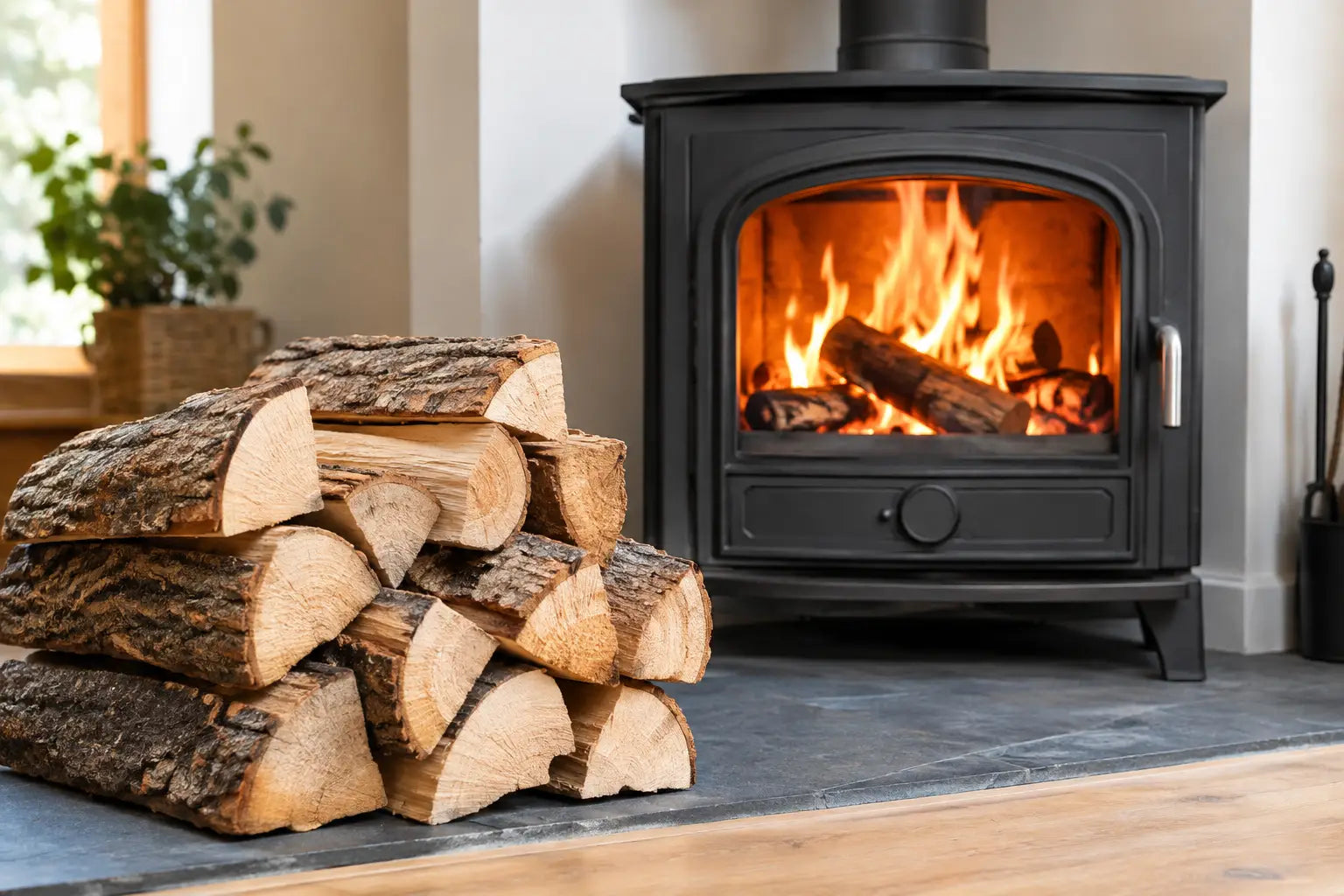
A stove can only perform as well as the fuel put into it. The best logs for a wood burning stove are dry, suitably sized for the firebox and chosen to match how you use your heat: quick warmth after work, steady evening heating or a long-lasting fire on a cold weekend. Wood species matters, but moisture content is the first thing to get right.
For most UK homes, kiln-dried hardwood logs with a moisture content below 20% are the dependable choice. They light more easily, give off more usable heat and produce less smoke than wet or poorly seasoned wood. They also help keep the stove glass, flue and surrounding room cleaner.
What makes the best logs for a wood burning stove?
The right log has three qualities: it is genuinely dry, responsibly sourced and a practical size for your appliance. A dense hardwood can offer a longer burn, but it is not automatically the best option if the logs are damp or too large to catch well. Conversely, a lighter hardwood can be an excellent everyday fuel when it is properly kiln dried.
Look for Ready to Burn certified firewood when buying logs in smaller volumes. This confirms that the wood meets the required moisture standard of 20% or less, so it is suitable for immediate use in domestic stoves and fires. It removes the uncertainty that often comes with untested, loosely described "seasoned" logs.
Dry logs create a hotter, more efficient fire because less energy is wasted boiling off water trapped in the wood. Wet logs can hiss and struggle to ignite, while the fire produces more visible smoke and deposits in the flue. The apparent saving on cheaper, wetter wood can disappear quickly when you need more logs to achieve the same room temperature.
Log length matters too. Check your stove manual or measure the internal firebox before ordering. Logs should sit comfortably with room for air to circulate, rather than being forced against the door or packed tightly together. Many domestic stoves suit logs around 25 cm long, but appliances differ.
Which wood species should you choose?
There is no single best species for every household. A good fuel choice depends on whether you value easy lighting, a lively flame, long burn time or a balance of all three. Mixing species can work particularly well: use a quicker-burning log to establish the fire, then add denser logs to maintain heat.
Ash: the reliable all-rounder
Ash is widely valued for its steady flame, good heat output and straightforward burning behaviour. Properly dried ash catches well and gives a consistent fire without being difficult to manage. It is a strong choice for regular stove users who want dependable performance through the heating season.
Its balance is the main appeal. Ash does not usually burn quite as slowly as the densest woods, but it offers practical, even heat and makes a good foundation for a mixed load.
Birch: fast lighting and an attractive flame
Birch is an excellent option when you want warmth without a long wait. It lights readily, produces a bright flame and is useful for getting a stove up to operating temperature. The bark can help ignition, although it should never replace dry kindling and a suitable firelighter when starting from cold.
Because birch is less dense than oak or hornbeam, it burns through faster. That is not a fault, but it means birch works best for shorter fires, shoulder-season heating or as part of a mixed load rather than as the only fuel for an all-evening burn.
Oak: slow, high-heat burning
Oak is dense and can provide a long-lasting, substantial fire once it is fully alight. It suits households looking for sustained heat and fewer refuels during a settled evening. Its slower-burning nature makes it a popular choice for larger stoves and for colder weather.
The trade-off is that oak benefits from a well-established fire. Use kindling and smaller, quicker-burning logs first, then add oak once there is a bright bed of embers. Like every species, it must be dry. Dense wet oak is still poor stove fuel.
Hornbeam: dense logs for longer burn times
Hornbeam is among the denser hardwoods used for firewood. It offers strong heat output and a slow, controlled burn, making it useful when you want to keep a room warm over several hours. It is often compared favourably with oak for its weight and lasting performance.
It can be a sensible choice for people who use their stove as a meaningful part of their household heating rather than simply for occasional atmosphere. Start it on a good ember bed and avoid overloading the appliance, as a stove needs airflow to burn efficiently.
Alder: practical, quick and clean-burning
Alder is lighter than ash, oak and hornbeam, so it generally burns faster and gives a gentler heat output. It is well suited to milder days, smaller stoves or households that prefer an easily controlled fire. It also makes a useful companion wood when you do not need the longer burn of a dense hardwood.
The key is to buy by intended use, not by species name alone. A crate of kiln-dried alder may suit frequent short fires better than oak, while hornbeam or oak may represent better value for long evening heating.
Moisture content matters more than a bargain price
The simplest way to compare firewood is to ask how much dry fuel you are receiving. Logs sold by bag, crate or loose volume can look similar at first glance, yet their usable heat can be very different when moisture content and actual volume are unclear.
Kiln drying gives a consistent result because the process reduces moisture under controlled conditions. Properly seasoned logs can also burn well, but only if they have been split, stacked with airflow and stored for long enough in suitable conditions. In the UK climate, that can take considerable time and space. Freshly cut wood is not ready for a stove simply because it has spent a few months under cover.
A moisture meter can provide reassurance, particularly if you have stored logs for a while. Split a log and test the freshly exposed centre rather than the outside surface. However, buying Ready to Burn logs from the outset is usually the more convenient route for households that need fuel ready to use.
Use the right logs in the right way
Even premium logs need sensible stove operation. Begin with dry kindling and small pieces of wood, following the lighting method recommended by your stove manufacturer. Once the fire is established, add one or two larger logs at a time. A crowded firebox can restrict airflow and lead to incomplete combustion.
Avoid burning treated timber, painted wood, old furniture, chipboard, MDF or household waste. These materials can release harmful fumes and leave damaging residues in the stove and flue. Ordinary damp garden wood is also a poor substitute for properly dried firewood.
Keep air controls open enough during lighting and refuelling to establish a clean flame. Closing them too early can cause the fire to smoulder. Once the stove and flue are warm, adjust the controls in line with the appliance instructions to maintain a stable burn rather than chasing maximum flame.
Store your logs so they stay dry
Kiln-dried logs arrive ready to burn, but poor storage can undo that advantage. Keep them off the ground on a pallet, rack or other raised base, and protect the top from rain. A log store with open sides or gaps for ventilation is better than sealing wood in an airtight shed or wrapping it completely in plastic.
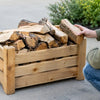
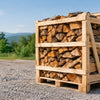
Bring a small basket indoors for the next fire, rather than storing a large quantity beside the stove. This keeps the room tidy and avoids taking up valuable living space. If you order in bulk, a crate can make it easier to see what you are receiving and to plan storage before delivery.
Candowe supplies Ready to Burn kiln-dried logs in formats ranging from convenient packs to larger crates, helping households match fuel volume to available storage and expected use.
Choosing quantity without overbuying
Your fuel requirement will depend on stove size, insulation, room temperature, how often you light it and whether it supplements or replaces central heating. A decorative weekend fire uses very little compared with a stove running most evenings from October to March.
Start by tracking how quickly you use a few bags or a small load during colder weeks. This gives a more useful guide than estimating from room size alone. Bulk formats often offer better value per unit of wood, but only where you have a dry, accessible place to store them.
For a cleaner fire and less guesswork, choose dry logs that fit your stove, then select the species around your routine. Birch or alder can make lighting and short fires easy; ash provides dependable everyday heat; oak and hornbeam earn their place when longer, slower burning is the priority. A well-stored supply of certified dry fuel lets you light the stove with confidence when the temperature drops.