Skip to content
Hornbeam Crates of Logs Near Me Delivered
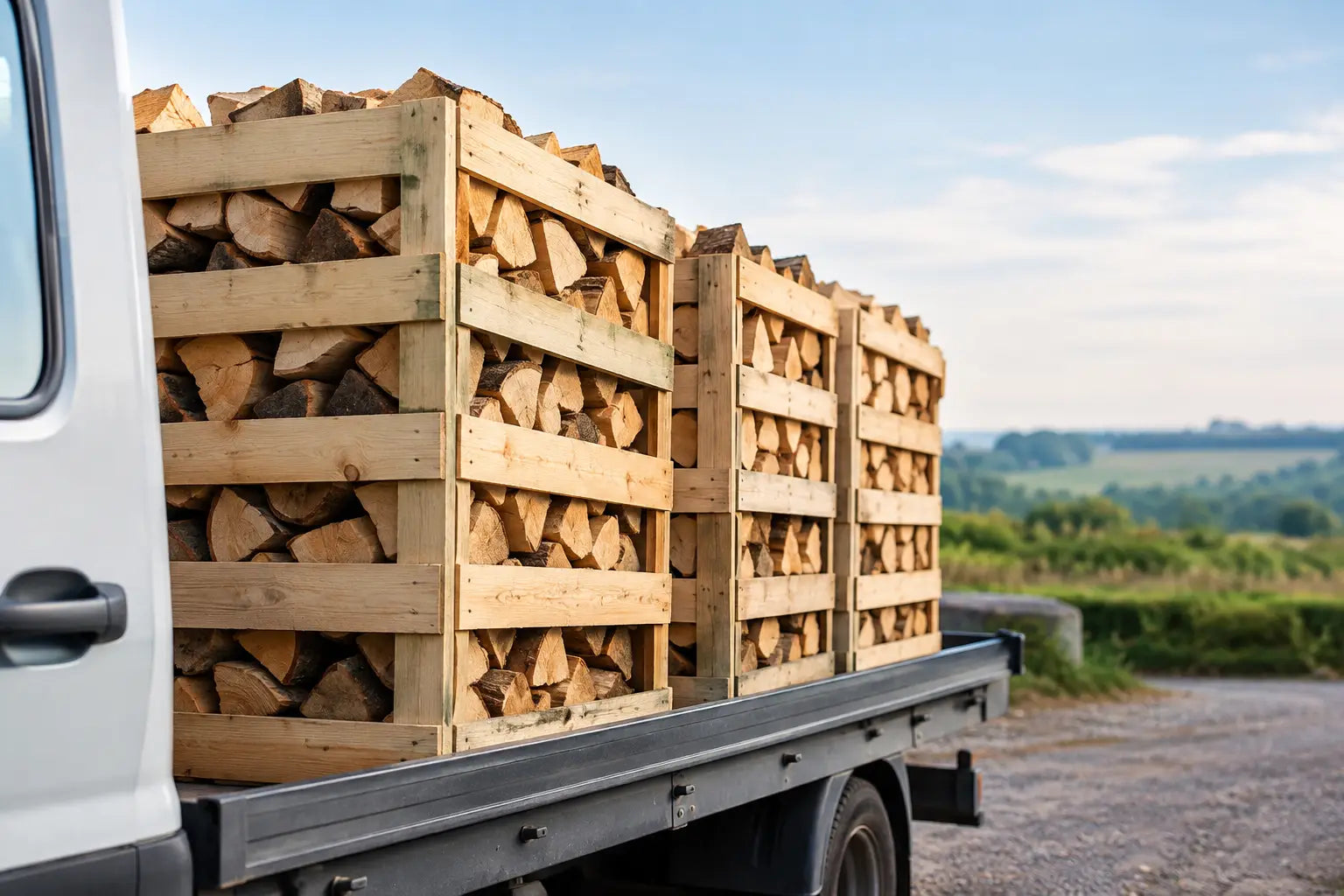
A search for hornbeam crates of logs near me usually starts when the log store is running low and the local options are unclear. You want logs that arrive dry, burn properly and provide enough heat to justify buying in bulk. A crate of kiln-dried hornbeam can be a practical answer, provided you know what you are comparing and have suitable space for a pallet delivery.
Hornbeam is one of the denser hardwoods used for domestic firewood. It is valued by stove and fireplace owners because it produces a strong, steady heat and tends to burn for longer than lighter woods. Buying it in a crate gives you a substantial, clearly defined supply rather than a few small bags that need replacing every week.
Why choose hornbeam logs?
Hornbeam has a reputation as a high-performance firewood for good reason. Its density means there is plenty of fuel in each log, making it well suited to evenings when you want a stove to hold a dependable heat. Once established, a hornbeam fire can give a long, even burn with a good bed of embers.
That density comes with a trade-off. Hornbeam is not generally the quickest wood to get going from cold, especially when compared with birch. Use dry kindling and a proper firelighter, build the fire with enough airflow, and allow the initial flames to establish before reducing the stove’s air controls. For many households, hornbeam works particularly well alongside an easier-lighting wood or a supply of quality kindling.
The quality of drying matters as much as the species. Wet logs use a significant amount of their energy boiling off water, which means less useful heat, more smoke and dirtier glass. Ready to Burn certified wood has a moisture content below 20%, so it is suitable for immediate domestic use in England. Kiln-dried hornbeam removes the uncertainty that can come with unseasoned local wood piles.
What “near me” should mean when buying a crate
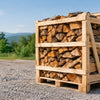
For bulk firewood, “near me” does not have to mean collecting loose logs from a nearby yard. A crate is normally delivered on a pallet, allowing you to order a meaningful volume online and have it brought to your property. This is often more convenient than repeated car journeys, particularly if you rely on a stove throughout autumn and winter.
The most useful question is not simply how close the supplier is. It is whether they can deliver a clearly described crate to your postcode, within a timeframe that works for you, and whether the logs are genuinely dry on arrival. Nationwide suppliers can provide consistent stock and product specifications where local availability changes from week to week.
Before ordering, check the delivery arrangements. Pallet deliveries need an accessible, hard-standing surface for the pallet truck. Gravel, steep slopes, narrow gates, steps and soft ground can prevent a driver from placing the crate exactly where you would like it. If access is limited, plan to move the logs into your store in smaller armfuls once delivered.
Candowe supplies kiln-dried, Ready to Burn firewood with free delivery across most mainland UK postcodes, making bulk ordering a practical option for households outside a convenient collection area. Check the delivery information for your area before placing an order, especially if you live in a remote location.
Comparing hornbeam crates of logs near me
A crate can look like a simple purchase, but value depends on more than the headline price. The main point is to compare like with like. One supplier may state a stacked volume, while another refers to a loose-filled crate or gives only external pallet dimensions. These are not always equal quantities of wood.
Start with the stated volume
Look for a transparent cubic-metre figure or a clearly explained crate volume. Stacked logs have fewer air gaps than loose-filled logs, so a loosely filled container may contain less actual wood than its dimensions suggest. Clear volumetric information makes it far easier to work out your cost per cubic metre and compare a crate with net bags or smaller fire-box packs.
Also consider log length. Logs need to fit your appliance comfortably, with room for airflow around them. Measure the usable width of your stove rather than guessing from the outside dimensions. A log that is too long is frustrating at best and unusable at worst.
Check the drying and certification
A hardwood label alone does not guarantee good burning. Ask whether the wood is kiln-dried and Ready to Burn certified, rather than relying on descriptions such as “seasoned” or “air dried”. The latter can mean different things depending on how long and how well the logs were stored.
Dry, certified logs give you predictable performance. They light more easily, burn more efficiently and help keep your flue and stove glass cleaner when used correctly. They also reduce the risk of paying for water weight in a bulk order.
Consider how much you will actually use
A crate makes most sense if wood is a regular heating fuel, not an occasional treat. A household using a log burner most evenings through the colder months can benefit from the lower handling and delivery frequency that bulk buying provides. If you only light a fire a few times each winter, smaller bags may be easier to store and manage.
Your use also depends on the appliance, insulation levels, room size and how warm you keep the house. A modern, efficient stove in a well-insulated room will use logs differently from an open fire in a draughty period property. Buying a crate is valuable when it helps you avoid running short, but only if you can keep the fuel dry after delivery.
Storing a crate of hornbeam correctly
Kiln-dried logs are ready to burn, but they still need protecting from rain and ground moisture. Keep the crate or transferred logs in a dry, ventilated location. A covered log store, open-sided shelter or garage with airflow is usually suitable. Avoid sealing logs in an airtight shed or wrapping them tightly in plastic, as trapped moisture can affect their condition.
Raise the wood off the ground where possible and cover only the top if it is stored outside. Air should be able to move around the sides. Bring a small amount indoors a day or two before use, rather than storing a full crate beside the stove. This keeps your living space tidier and reduces the chance of bringing in insects or debris.
It is also sensible to position bulk fuel away from boundaries, doors and escape routes. A crate is heavy, and a log store should not obstruct access around the property. Take the time to choose the right location before delivery day rather than moving a whole season’s fuel twice.
Making hornbeam burn at its best
Use the right lighting method and hornbeam will repay the effort. Start with dry kindling and one or two smaller split logs, leaving enough gaps for air. Many stove owners find a top-down fire lay effective: larger logs at the bottom, smaller kindling above, then a firelighter on top. This allows the fire to establish cleanly and reduces early smoke.
Do not overload the firebox. Hornbeam delivers substantial heat, and an overly full stove can lead to poor combustion or excessive appliance temperatures. Follow your stove manufacturer’s guidance on load size and air controls. Once the fire is burning well, reduce the air gradually rather than closing it down too quickly.
Regular maintenance matters too. Empty ash as recommended for your appliance, keep air inlets clear and arrange chimney sweeping at suitable intervals. Good fuel supports cleaner burning, but it does not replace safe stove operation and a properly maintained flue.
When another wood may be the better choice
Hornbeam is an excellent all-round hardwood, but it is not automatically the best choice for every fire. Birch can be preferable when you want a fast, bright flame and easy lighting. Ash is widely appreciated for its straightforward burning characteristics, while oak is often chosen for a slower, long-lasting burn once it is fully established.
A mixed approach can work well. Use kindling and a faster-lighting hardwood to start the stove, then add hornbeam for sustained heat. This gives you the convenience of an easy start without giving up the burn duration that makes dense hardwoods attractive.
When you are choosing hornbeam in bulk, buy from a supplier that states the volume, drying standard and delivery terms plainly. That way, the crate arriving at your home is not just a pile of logs: it is a reliable supply of ready-to-use heat for the weeks ahead.