Skip to content
Best Logs for a Wood Burner to Buy in the UK
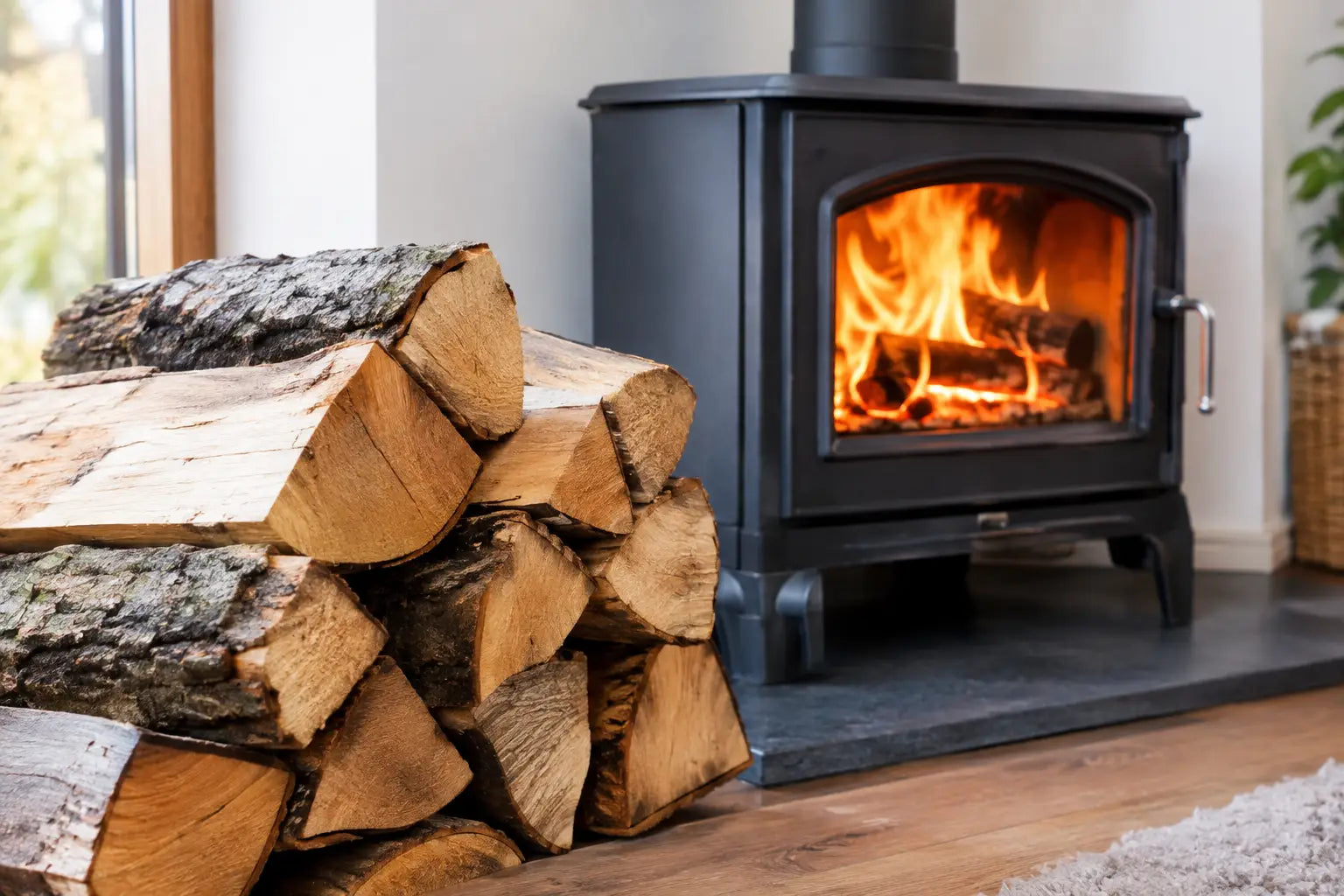
A wood burner can only perform as well as the fuel put into it. The best logs for a wood burner are dry, correctly sized for your stove and suited to the way you use your fire - whether that is a quick evening flame, steady background heat or a longer burn through a cold weekend.
Wood species matters, but moisture content matters more. A well-seasoned hardwood that is still damp can be frustrating to light, inefficient to burn and likely to leave more deposits in your stove and flue. Choosing kiln-dried, Ready to Burn certified logs gives you a dependable starting point: fuel that arrives dry enough to use, rather than wood that needs months of storage before it is fit for the fire.
What Makes the Best Logs for a Wood Burner?
For domestic stoves, look for logs with a moisture content below 20%. This is the standard associated with Ready to Burn fuel in the UK and is one of the clearest signs that firewood is suitable for immediate use. Drier logs light more easily, produce more useful heat and create less smoke than wet wood.
Freshly cut timber contains a high proportion of water. When it is burned too soon, much of the fire’s energy is spent boiling that water away rather than heating your room. You may notice hissing, excessive smoke, blackened stove glass and a sluggish flame. It can also increase soot and tar build-up in the chimney or flue.
Kiln-dried logs remove that uncertainty. The drying process reduces moisture consistently, so each load is easier to light and more predictable to burn. It also makes planning simpler for households that do not have a large, well-ventilated log store or the time to season wood properly.
The other essentials are sensible log length, clean processing and responsible sourcing. Logs should fit comfortably into the firebox without being forced against the door or baffles. They should be free from paint, treatment chemicals and household waste wood. For regular stove users, sustainably sourced virgin timber is the reliable choice.
Ash, Birch, Oak or Hornbeam?
There is no single species that suits every burner perfectly. The right choice depends on how quickly you want heat, how long you want the fire to last and the size of your stove. All quality kiln-dried logs can give excellent results when they are genuinely dry.
Ash logs for an easy, dependable fire
Ash is a popular all-round firewood. It lights readily, burns with a steady flame and delivers good heat output. It is a practical choice for everyday stove use, particularly if you want straightforward fuel that is easy to manage from lighting through to refuelling.
Its balanced performance makes ash suitable for many households. Use it for a relaxed evening fire, regular winter heating or as a dependable option when you prefer not to overthink log selection.
Birch logs for fast warmth and a bright flame
Birch is often chosen when quick heat is the priority. It catches easily and produces an attractive, lively flame, making it particularly useful for lighting a fire or warming a room quickly after coming home.
Because birch can burn faster than denser hardwoods, it is often best used alongside a longer-burning species. Start with kindling and birch, then add oak or hornbeam once the stove is hot and the fire bed is established. This gives you a responsive fire without sacrificing duration.
Oak logs for a slower, longer burn
Oak is a dense hardwood known for a substantial, slower-burning fire. Once your stove is up to temperature, oak is well suited to maintaining heat and reducing the frequency of refuelling. It can be a good option for larger stoves, open fires and households using wood as a meaningful part of their winter heating.
The trade-off is that dense logs generally benefit from a strong, hot fire bed. Oak is not difficult to burn when kiln-dried, but it is usually more effective after the fire is properly established rather than as the only wood used to get it going.
Hornbeam logs for high heat and lasting performance
Hornbeam is one of the densest commonly available firewoods. It burns hot and steadily, with excellent longevity, making it a strong choice when you want maximum heat from each refuel. For cold weather, larger rooms and frequent stove use, hornbeam can offer particularly good value by volume.
As with oak, allow the stove to reach a good operating temperature before adding hornbeam. Pairing it with quicker-lighting birch or ash can make lighting and heat management easier.
Alder logs for lighter, flexible fires
Alder is lighter than oak and hornbeam and tends to burn more quickly. It is useful for milder days, shorter fires and users who want responsive warmth without a long burn cycle. Properly kiln-dried alder is clean and convenient, but it may not be the most economical choice for an all-day fire during the coldest part of winter.
Hardwood Versus Softwood: Is Hardwood Always Better?
Hardwood is often preferred because denser species usually provide a longer burn and more heat per log. Ash, oak and hornbeam are therefore strong choices for sustained stove heating. However, the simple rule that hardwood is always better misses an important point: dry wood is better than wet wood, regardless of species.
Softwood logs can be useful for kindling a fire, achieving fast heat and enjoying shorter burns. They tend to burn more quickly, so you may need to refuel more often. If your priority is long-lasting warmth and fewer trips to the log basket, kiln-dried hardwood is usually the better fit.
Avoid burning construction timber, old fencing, painted boards, MDF, chipboard or pallets of uncertain origin. These materials may contain glues, preservatives or coatings that are unsuitable for a domestic stove and can release harmful pollutants.
Match Log Size to Your Stove
Even excellent firewood can be awkward if the logs are too large for the appliance. Before ordering, check the width and depth of your stove’s firebox and leave enough room for air to circulate around the fuel. Logs should sit comfortably inside the stove, with the door fully closed and no need to force them into place.
Smaller logs are helpful for compact burners and for lighting. Larger logs are more suitable for bigger stoves and longer burns, provided there is sufficient airflow. A mix of sizes is useful in practice: smaller pieces help build the fire, while larger dense logs maintain it.
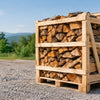
It is also worth thinking about delivery and storage. Net bags and fire-box packs suit households with limited space or occasional fires. Crates and larger palletised formats can offer better value for regular users, but only if you have a dry, accessible place to store them. Keep logs raised from the ground and protected from direct rain, while allowing air to circulate around the stack.
How to Burn Logs Cleanly and Efficiently
Good fuel works best with good stove operation. Begin with dry kindling and smaller logs, using a top-down lighting method if it suits your appliance. Once the flames are established and the flue is warming, add larger logs gradually rather than overfilling the firebox.
Keep the air controls open enough during lighting and immediately after refuelling to establish a clean flame. Closing them down too early can starve the fire of oxygen, leading to smouldering, darker smoke and dirty glass. When the logs are burning well, adjust the controls according to your stove manufacturer’s guidance.
A bright, active flame is generally a better sign than logs that sit and smoke. Regular ash removal, a clear air supply and an annual chimney or flue sweep also help your burner operate safely and efficiently. If your stove glass repeatedly blacks up, check both the moisture content of your fuel and the way the appliance is being run.
Buying Logs With Confidence
When comparing firewood, do not judge value by price alone. Check the stated moisture content, the type of wood, the quantity supplied and whether the volume is clearly explained. A cheaper load of damp logs can cost more in the long run if it produces less heat, creates more mess and needs replacing sooner.
Ready to Burn certification provides useful reassurance that wood meets the required moisture standard. Clear product information on bag size, crate volume and log species also makes it easier to compare like for like. For households stocking up ahead of winter, buying sufficient dry fuel in one delivery can remove the uncertainty of last-minute local supply.
Candowe supplies kiln-dried, Ready to Burn certified logs in convenient bag, fire-box and crate formats, helping households choose a quantity that suits both their stove and available storage.
The most useful approach is to build your fuel choice around how you actually heat your home: use birch or ash for easy lighting and quick warmth, then rely on oak or hornbeam when you want a longer, steadier fire. With dry logs, sensible storage and a stove run with enough airflow, every load has the best chance to deliver the clean, reliable heat you expect.