Skip to content
Best Logs for a Log Burning Stove in the UK
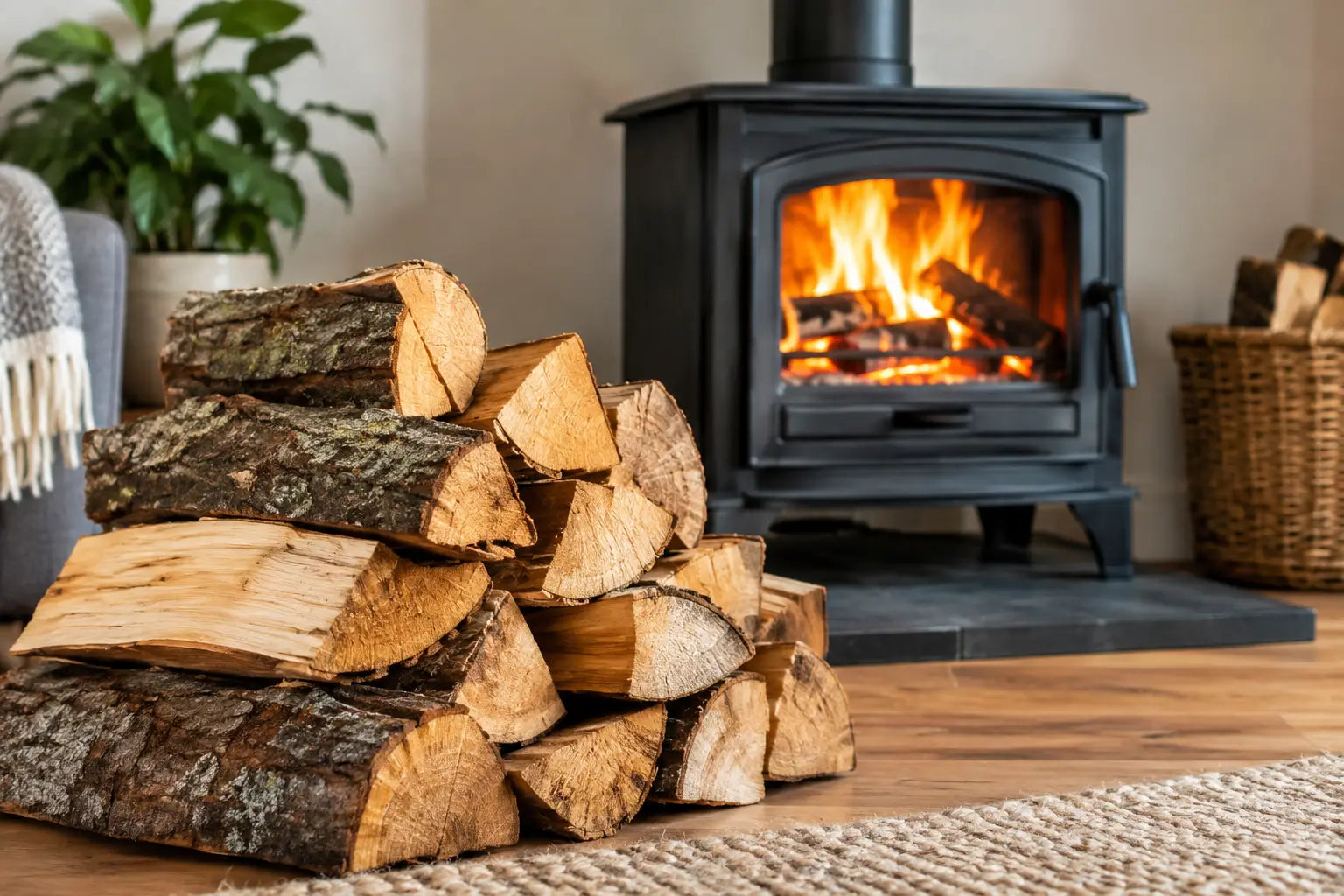
A stove can be efficient, well installed and properly maintained, yet still give disappointing heat if the wood is wrong. The best logs for a log burning stove are dry, correctly sized for the firebox and suited to how you use your heating. Species matters, but moisture content comes first: wet wood wastes heat, creates more smoke and leaves deposits in the stove and flue.
For most UK households, kiln-dried hardwood logs provide the most dependable answer. They arrive ready to burn, light more easily than damp wood and give a cleaner, more consistent fire. The right choice between ash, birch, oak, hornbeam and alder then depends on whether you value quick warmth, a long burn or a balance of both.
What are the best logs for a log burning stove?
Ash is often regarded as the all-round favourite for a log burning stove. It lights readily when properly dry, produces reliable heat and gives a steady flame without being difficult to manage. For regular evening use, it is an excellent choice because it provides a practical balance between easy lighting and burn duration.
Birch is another highly effective stove fuel, particularly when you want heat quickly. Its bark catches well and it produces a lively, attractive flame, making it useful for starting a fire or bringing a cold room up to temperature. Birch burns faster than denser hardwoods, so it is best used for shorter fires or mixed with longer-burning logs.
Oak is dense and slow burning. Once the stove is up to temperature, dry oak can hold a strong bed of embers and provide lasting heat, which makes it well suited to long winter evenings. The trade-off is that oak is not usually the easiest wood to light from cold. Start with kindling and a faster-burning log such as birch or ash, then add oak once the fire is established.
Hornbeam is among the densest commonly available firewoods. It burns hot, steadily and for a long time, so it is a strong option for households that rely on their stove as a meaningful source of heat. Its high density also means that it benefits from being genuinely dry. Kiln-dried hornbeam removes the uncertainty that can come with buying unseasoned or poorly stored logs.
Alder is lighter and faster burning than oak or hornbeam. It is useful when a quick, controllable fire is the priority, including milder days when you do not want the stove running heavily for hours. It can also work well alongside denser logs in a mixed load.
There is no single species that suits every fire. Ash and birch are particularly convenient for everyday lighting and responsive heat; oak and hornbeam are better when burn time matters. A mixed hardwood supply gives many stove owners the most flexibility through the heating season.
Dry logs matter more than the name on the bag
A log can be oak, ash or hornbeam and still perform poorly if it contains too much water. Heat that should warm your room is instead spent evaporating moisture from the wood. The result is a fire that struggles to establish, hisses or spits, produces excess smoke and leaves the glass dirtier.
For domestic wood burners, choose logs with a moisture content below 20%. Ready to Burn certified firewood gives a clear assurance that the logs meet this standard. It is particularly valuable if you do not have the space, time or conditions to season your own wood for a prolonged period.
Kiln-dried logs are dried in controlled conditions to bring moisture down consistently. They are not simply logs left outdoors for a few months. Properly kiln-dried firewood gives more predictable performance from bag to bag or crate to crate, which makes it easier to manage stove output and plan your fuel supply.
The difference is noticeable. Dry logs ignite with less effort, burn with a brighter flame and produce more usable heat per load. They also help reduce the build-up of soot and tar in the flue when the stove is operated correctly. That supports cleaner burning and can make routine maintenance more straightforward.
Choose log size and format for your stove
Before ordering firewood, check the maximum log length recommended by your stove manufacturer. A log that just fits can restrict airflow and make loading awkward. In practice, choosing logs slightly shorter than the firebox gives you room to position them properly and maintain an efficient burn.
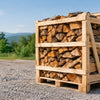
Bagged logs are convenient for smaller stores, occasional fires and easy handling. They can be brought indoors as needed and keep fuel ordering simple. Larger crates and palletised options generally offer better value for households using a stove frequently, provided you have a suitable dry storage area and access for delivery.
When comparing prices, look beyond the number of bags. Volume matters. Transparent loose-volume information helps you compare like for like, particularly when deciding between nets, boxes and large crates. A cheaper-looking bag is not necessarily better value if it contains less wood, shorter logs or fuel that is not properly dry.
Kindling is worth treating as part of the purchase rather than an afterthought. Dry kindling, together with natural firelighters if preferred, helps establish a hot fire quickly. That initial heat is essential for clean combustion, especially when adding denser logs later.
How to get the best performance from stove logs
Even premium firewood needs sensible stove operation. Begin with a clean firebox and use the air controls according to your stove manufacturer's guidance. Build the fire with dry kindling and smaller logs, leaving gaps so air can circulate. Once a bright, established flame is burning, add larger logs without overfilling the stove.
Avoid turning the airflow down too early. A fire that is starved of oxygen can smoulder rather than burn cleanly, creating more smoke and reducing useful heat. Let new logs catch properly before reducing the air supply to maintain a controlled burn.
It also helps to match the wood to the moment. Birch or alder is useful for a quick fire after work, while ash gives dependable all-round performance. Use oak or hornbeam once the stove is hot and you want a slower, longer burn. This approach avoids repeatedly loading dense logs onto a weak fire and wondering why they appear reluctant to burn.
Do not burn treated timber, painted wood, old furniture, pallet wood of uncertain origin or household waste. These materials can release harmful fumes and may damage the stove or flue. Clean, untreated, certified dry firewood is the safer and more efficient option.
Store your logs so they stay ready to burn
Firewood should be protected from rain while allowing air to move around it. A log store with a roof, raised base and open sides is ideal. Keep the main supply outdoors rather than stacked tightly against the house, then bring in a small amount at a time for immediate use.
Do not wrap logs in plastic or store them directly on damp ground. Both practices trap or introduce moisture and can undo the benefit of buying dry wood. If you order a crate, remove the outer wrapping as appropriate after delivery and place the logs in a covered, ventilated store.
A few logs kept by the stove are convenient, but avoid piling large quantities close to a hot appliance. Follow the clearance guidance supplied with your stove and use common sense around children, pets and open doors.
A practical choice for reliable winter heat
For many homes, a combination of kiln-dried ash, birch and a denser hardwood such as oak or hornbeam is the most useful way to buy firewood. It gives you fast ignition, responsive heat and longer-burning fuel without compromising on moisture content. Candowe supplies Ready to Burn certified kiln-dried logs in convenient bagged and larger-volume formats, helping households choose the quantity that suits both their stove use and storage space.
A good fire should not involve guessing whether the logs will light, smoke or heat the room. Choose dry fuel, store it well and use each species for the job it does best, and your stove will reward you with cleaner, more dependable warmth when you need it.