Skip to content
Why Kiln Drying Firewood Gives Better Fires
A log can look dry on the outside and still contain enough hidden moisture to make lighting difficult, blacken stove glass and leave you with less heat than you expected. Kiln drying firewood removes that uncertainty. It gives households a dependable fuel that is ready to burn, rather than wood that needs further seasoning in the shed.
For anyone using a log burner, open fire or multi-fuel stove, dry logs make a noticeable difference from the first fire. They light more easily, produce a cleaner flame and deliver more useful heat into the room. The result is simpler heating, less mess and better value from every basket of logs.
What kiln drying firewood means
Freshly felled timber contains a high level of water. Before it becomes efficient firewood, that moisture must be reduced. Traditional air seasoning can achieve this, but it relies on time, airflow, weather and correct storage. Depending on the species and conditions, it can take a year or considerably longer.
Kiln drying uses controlled heat and airflow to reduce the moisture content far more consistently. Split logs are placed in a purpose-built drying chamber, where warm air circulates around the wood and draws out excess water. The process is monitored so the logs reach a suitable moisture level without being over-dried or damaged.
Quality kiln-dried logs are normally supplied at below 20% moisture content. This is the standard households should look for when buying wood fuel, particularly for stoves and indoor fires. Ready to Burn certification provides useful reassurance that the wood meets the required moisture standard when sold in relevant volumes.
Why dry logs burn more efficiently
When wood contains too much water, a significant part of the fire's energy is spent evaporating that water. Instead of warming your room, the fire is working to dry out the log. This commonly leads to slow lighting, hissing logs, excess smoke and a weak flame.
With kiln-dried logs, more of the energy is available as heat. The fire establishes quickly and burns with a clearer, steadier flame when operated correctly. You may also find that you need fewer logs to achieve the same comfortable warmth, although this depends on your stove, the wood species, room insulation and how the appliance is used.
Dry fuel also helps keep the viewing glass clearer. No firewood eliminates all deposits, especially when airflow is restricted, but properly dried logs reduce the smoky conditions that contribute to soot build-up. They also produce less tar and moisture in the flue than wet or unseasoned wood, supporting cleaner operation between regular chimney sweeps.
A cleaner fire starts with good technique
Even premium logs need sufficient oxygen. Avoid overfilling the stove, use dry kindling to establish the fire and follow the appliance manufacturer's instructions for air controls. Closing the air supply too early can cause any wood to smoulder, creating smoke and reducing heat output.
It is also worth using the right size of log for your appliance. Smaller splits are useful for getting a fire established, while larger logs suit a well-developed bed of embers. A mix of sizes gives you greater control over the fire without wasting fuel.
Choosing the right species of kiln-dried wood
Not every wood burns in exactly the same way. The best choice depends on whether you want fast heat, a long burn, easy lighting or a balance of all three.
Hardwoods such as oak, ash and hornbeam are dense and generally provide a longer-lasting fire. They are well suited to stoves where sustained heat is the priority. Oak can be slower to establish than some other species, so it works particularly well once the fire is already burning strongly.
Birch is popular because it lights readily and creates an attractive, lively flame. It is a practical choice for everyday fires and for households that value convenience. Alder is another easy-burning option that can be useful for a quick, pleasant fire, although it will normally burn through faster than denser hardwoods.
There is no single best species for every home. A household using a stove as a primary heat source may prefer dense hardwood logs in a larger crate. Someone lighting occasional evening fires may find net bags or fire-box packs easier to store and manage. Buying by clear volume, rather than judging a pile by appearance alone, makes it much easier to compare value.
Kiln dried versus seasoned firewood
Well-seasoned firewood can burn effectively if it has been split, stacked correctly and allowed enough time to dry. The difficulty is knowing whether that has genuinely happened. Logs stored outdoors may be exposed to rain, poor airflow or damp ground, and a dry outer surface does not confirm the moisture level at the centre.
Kiln-dried wood costs more to produce because drying requires specialist equipment, energy and careful handling. In return, you are paying for consistency and immediate usability. For many households, that is a worthwhile trade-off: no long wait for wood to season, less uncertainty over performance and fewer disappointing fires.
If price is your main concern, compare the actual dry volume supplied and the quality standard, not just the headline cost per bag. Very cheap logs can be a false economy if they are wet, loosely packed or require more fuel to produce usable heat. Transparent pricing by crate size or cubic metre helps you work out what you are receiving.
Storing kiln-dried logs at home
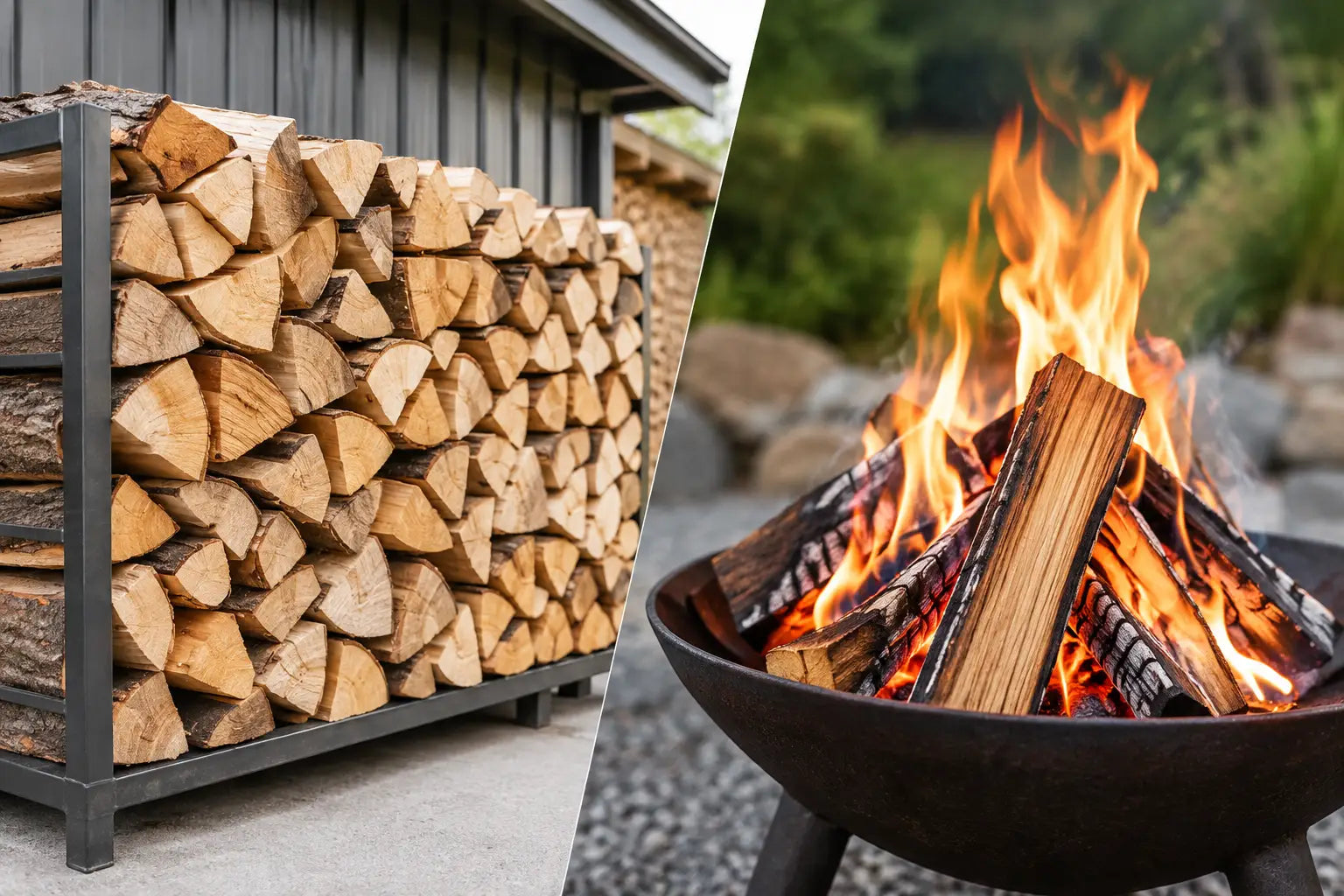
Kiln drying gives wood the right starting point, but poor storage can undo the benefit. Keep logs off the ground, protected from direct rain and exposed to airflow. A covered log store with open sides is ideal. If you use a tarpaulin, cover only the top and leave the sides open so moisture does not become trapped.
Bring a small supply indoors a day or two before use if you have room. This keeps the logs convenient and allows any surface chill or dampness from handling to disappear. Do not store a large volume immediately beside the stove, particularly if your appliance instructions advise against it.
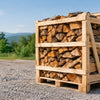
For bulk deliveries, plan the storage space before ordering. A hard crate or palletised load provides strong value and reduces the need for frequent reordering, but it needs a level, accessible delivery point and a dry place to stack the contents. Smaller bags are easier to move and useful where access or storage is limited.
Buying with confidence
Look for clear information on moisture content, wood type, log format and volume. Ready to Burn certification is a useful quality marker, while sustainably sourced timber gives added confidence that your heating fuel has been responsibly produced.
At Candowe, kiln-dried birch, alder, oak, hornbeam and ash are available in formats suited to different households, from convenient bags to larger crates. Free delivery across most mainland UK postcodes and straightforward product specifications help take the uncertainty out of stocking up.
A reliable fire begins before the match is struck. Choose properly dried logs, store them well and match the wood format to how often you use your stove. You will spend less time managing reluctant fires and more time enjoying the heat they were meant to provide.