Skip to content
Best Fuel for a Log Burner: What Should You Use?
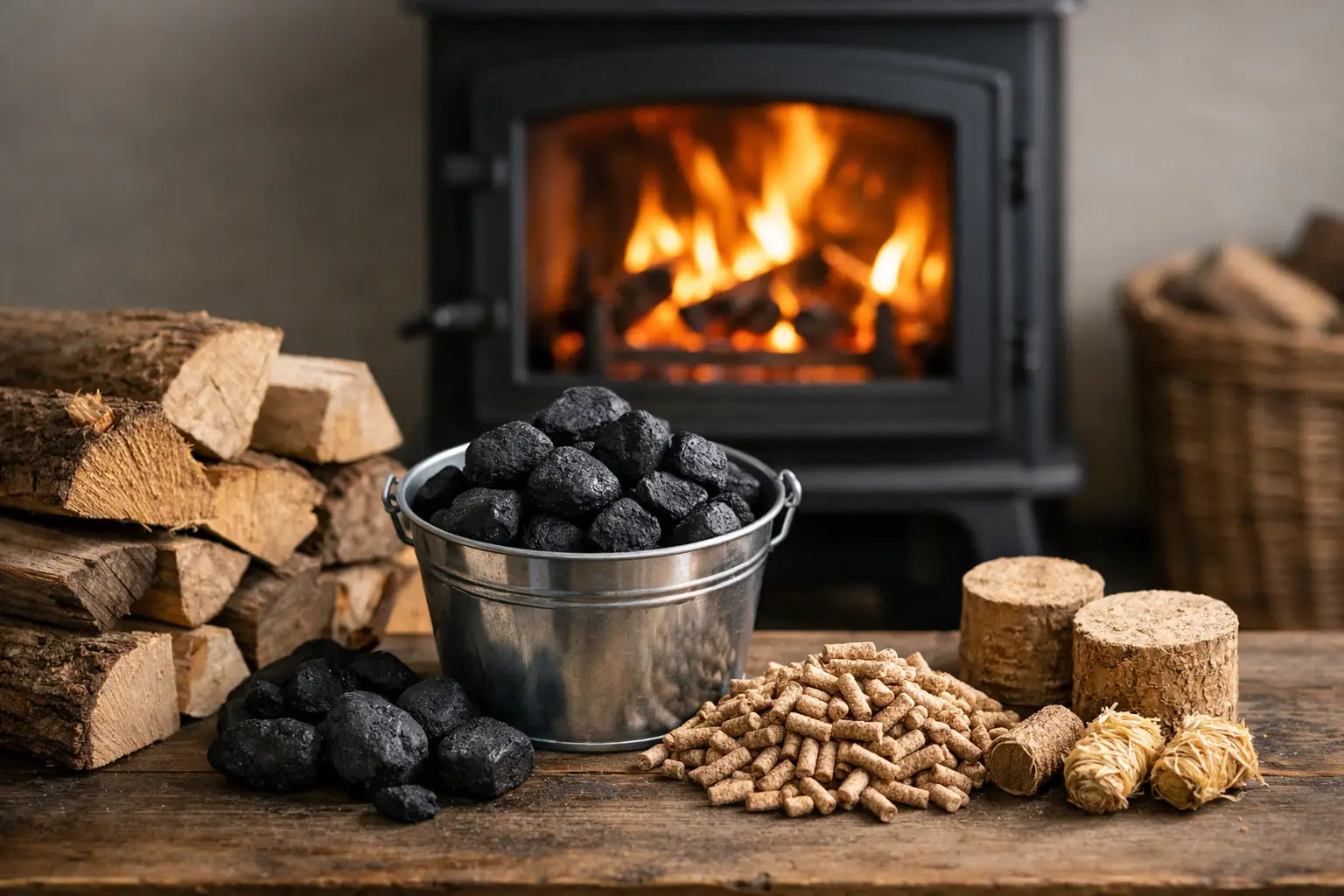
A log burner can be economical, clean and satisfying to use, but only when the fuel suits both the appliance and the way you heat your home. The best fuel for a log burner is usually dry, Ready to Burn certified hardwood, yet the right choice can vary by stove type, room size, storage space and whether you want a quick evening fire or long, steady heat.
The key is not simply buying the densest or cheapest-looking fuel. It is choosing fuel with reliably low moisture, a predictable burn and the correct approval for your appliance. This protects stove performance, keeps the glass clearer and helps reduce smoke, soot and unnecessary chimney deposits.
The best fuel for a log burner is dry wood
For a dedicated wood-burning stove, kiln-dried logs with a moisture content below 20% are the dependable choice. They light more easily than wet or unseasoned wood, produce more usable heat and create considerably less smoke. In practical terms, less of the fire's energy is wasted boiling water out of the logs.
Look for Ready to Burn certification when buying firewood in England. This gives reassurance that the wood meets the required moisture standard for domestic use and is suitable to burn straight away. It also removes the uncertainty that comes with loosely described "seasoned" logs, which may have been air-dried for an unknown period or stored in poor conditions.
Kiln-dried logs offer consistency as well as convenience. When every load arrives dry and ready to use, it is easier to control your stove, plan your fuel supply and avoid the disappointing, smoky fire caused by damp wood. Store the logs under cover with airflow around them, rather than directly on the ground or sealed in an unventilated shed.
Which firewood species should you choose?
Most good-quality hardwoods work well in a log burner. The difference is mainly in how quickly they light, how much heat they give over time and the character of the flame. A mix can be useful, particularly if you use your burner regularly through the colder months.
Ash: reliable and easy to manage
Ash is a popular all-round firewood. It lights readily, burns with a steady flame and gives good heat without being difficult to manage. It is an excellent everyday choice for households that want a straightforward, consistent fuel for evening use.
Birch: fast warmth and an attractive flame
Birch catches quickly and gives a bright, lively fire, making it particularly useful for lighting or quickly warming a room. It tends to burn faster than denser hardwoods, so it is best used when you want responsive heat rather than the longest possible burn. Birch bark is naturally useful for getting a fire established, but the logs should still be properly kiln-dried.
Oak and hornbeam: dense, longer-lasting heat
Oak and hornbeam are denser hardwoods, valued for their long, steady burn. They are well suited to larger stoves, long evenings and households that want to refuel less often. Because dense logs take longer to catch, use enough dry kindling and smaller logs to establish a hot fire first.
Alder: a practical lighter-burning option
Alder burns more quickly than oak or hornbeam but can still provide clean, useful warmth when dried correctly. It is a sensible choice for shorter fires, milder weather or mixing with slower-burning hardwoods. The best species is rarely a universal answer - it depends on how you use the stove.
Why moisture content matters more than log size
A large log may look like better value, but wet timber can turn it into poor fuel. Moisture is the main reason a fire struggles to light, hisses or spits, blackens the stove glass and produces excessive smoke. It also contributes to tar and creosote deposits in the flue, increasing the need for careful maintenance.
Dry logs burn hotter and more completely. That means the heat stays in your room instead of being lost up the chimney as smoke and water vapour. You will generally use fewer logs to achieve the same comfortable temperature, which matters when comparing the real value of different formats and species.
Log size matters too, but only after dryness. Smaller logs are helpful for lighting and building the fire; larger split logs are better once a strong bed of embers is established. Choose a log length that fits comfortably inside your firebox, leaving space around the fuel for air to circulate.
Are briquettes good fuel for a log burner?
Wood briquettes can be an efficient alternative or addition to kiln-dried logs. Made from compressed, dry wood residue, quality briquettes are compact, low in moisture and capable of producing strong heat. They can be particularly useful where storage is limited, as they take up less room than an equivalent amount of loose logs.
However, briquettes are not all the same. Some expand considerably as they burn, while others give intense heat over a shorter period. Start with a small amount and follow your stove manufacturer's guidance, especially if you have a smaller appliance. Overloading a stove with high-energy briquettes can lead to overheating.
For most wood burners, a practical approach is to light with kindling and smaller kiln-dried logs, then add briquettes or denser logs once the stove is fully up to temperature. This combines easy lighting with longer-lasting heat.
Pellets, coal and smokeless fuel: check your appliance first
Wood pellets are designed for pellet stoves and boilers with a dedicated feed system. They are not suitable for a conventional log burner unless the manufacturer specifically says otherwise. Never assume that because pellets are made from wood, they can be burned safely in any wood-burning appliance.
House coal and smokeless fuels require the same care. A dedicated log burner should burn wood only. If you own a multi-fuel stove with a grate designed for solid fuel, an approved smokeless fuel may be suitable, subject to the appliance instructions and local smoke-control rules. Coal needs air from beneath the fire, while wood burns best with air supplied primarily above and around it, so the two fuels perform differently.
Do not burn treated timber, painted wood, old furniture, chipboard, MDF, rubbish or household waste. These materials can release harmful pollutants, damage your stove and create unsafe deposits in the flue. Clean fuel is not just about a better fire - it is about safer air in and around your home.
Get more heat from the fuel you buy
Even premium logs will underperform if the stove is operated with too little air during lighting. Begin with a clean firebox, an open air control and enough dry kindling to create a fast, hot flame. Add small logs first, then move to larger pieces once the fire is burning strongly.
Avoid shutting the air supply down too early to make a load last longer. A slow, smouldering fire creates more smoke and deposits than a properly established fire burning at the stove's intended operating temperature. Once the stove and flue are warm, adjust the controls gradually to maintain a clear, active flame.
Regular chimney sweeping is equally important. How often you need it depends on how frequently you burn, the fuel used and the appliance, but annual sweeping is a sensible minimum for many households. Your sweep can also identify early signs of wet-fuel use or an incorrect burning technique.
Buying the right amount and format
Net bags and fire-box packs are useful for occasional fires, smaller storage areas and testing a new species. Crates and larger palletised loads usually offer better value for regular users, provided you have a dry, accessible place to store them. Compare fuel by stated volume, log size and moisture standard rather than price alone.
If your household relies on a log burner through winter, ordering before the coldest spell helps avoid running low when demand is highest. Candowe supplies Ready to Burn kiln-dried logs in practical formats, making it easier to match your fuel order to your storage and heating needs.
The best choice is fuel that your appliance is designed to burn, arrives genuinely dry and suits the rhythm of your home. Start with well-stored kiln-dried hardwood, use the right-sized logs for each stage of the fire, and let a clean, lively flame do the work it is meant to do.