Skip to content
Net Bags of Logs: Are They Worth Buying?
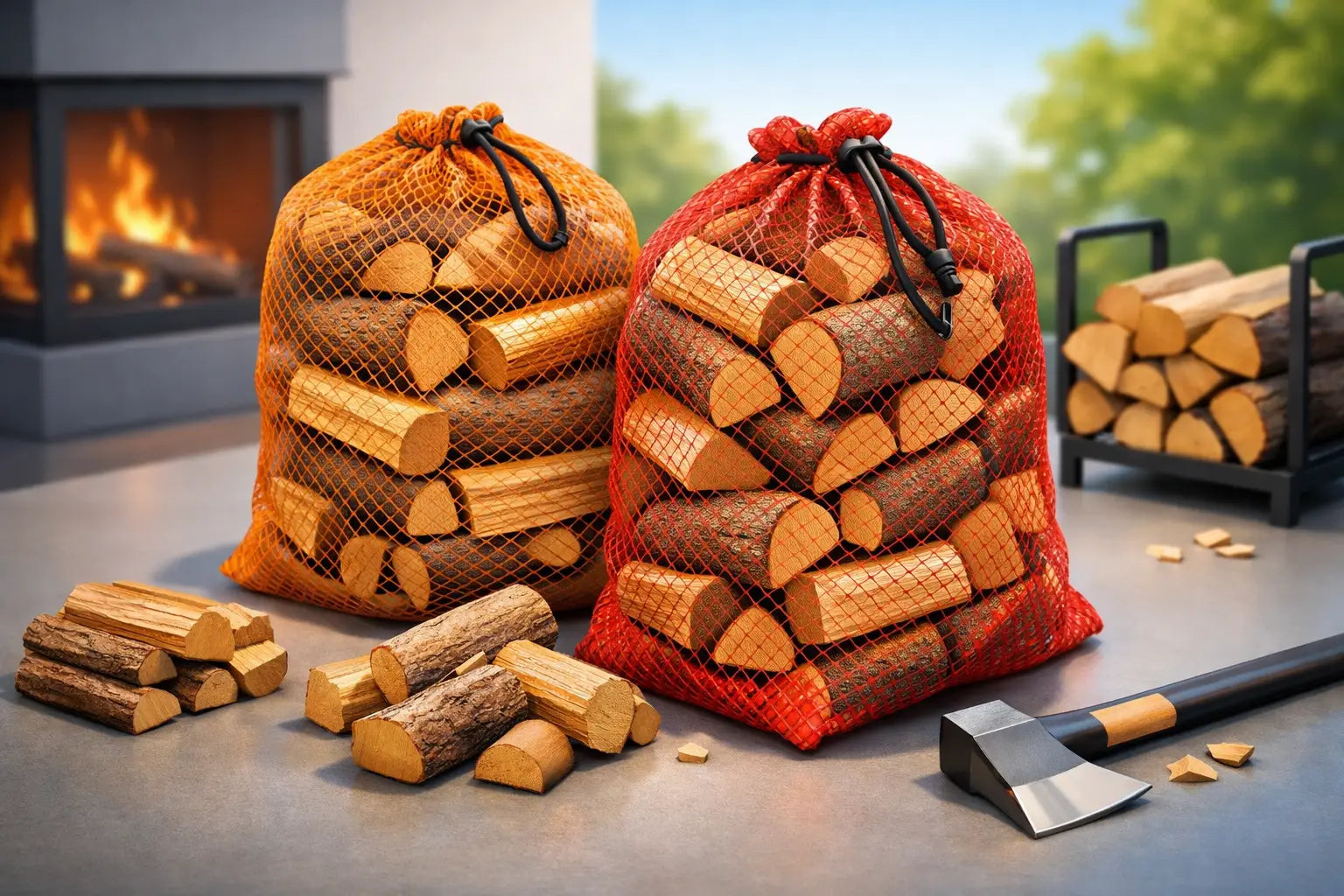
When you need fuel you can carry straight from delivery point to log store or hearth, net bags of logs make a lot of sense. They are easy to handle, simple to stack, and useful for households that want ready-to-burn firewood without ordering a large crate all at once. That said, the best format depends on how often you burn, how much storage space you have, and whether you are buying for convenience or lowest cost per cubic metre.
Why net bags of logs appeal to so many households
For many stove owners, the attraction is straightforward. A net bag is manageable in weight, takes up less room than a bulk load, and keeps the fuel together neatly during delivery and storage. If you only burn in the evenings, at weekends, or as a top-up to central heating, that convenience can be more useful than buying in larger formats.
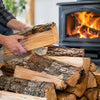
The other advantage is visibility. With logs packed in netting, you can see the species, approximate log size and general consistency before you open the bag. That matters if you have had mixed experiences with loose loads or poorly packed firewood in the past. It gives buyers a clearer sense of what they are paying for.
For households with limited access, net bags are often the practical option. Not every property has space for a pallet drop, a large wood store, or a wide side entrance. Carrying several smaller bags through a gate, around a shed or into a garage is usually far easier than dealing with one large bulk format.
Where net bags of logs work best
Net bags are particularly well suited to occasional and moderate users. If your stove is used mainly for comfort heating rather than as the primary heat source, smaller packed quantities are often easier to manage. You can keep a few bags in reserve without committing to a larger delivery than you need.
They also suit people who like to keep fuel dry and organised indoors or under cover. Because each bag is self-contained, stock rotation is simple. You can use the oldest bags first and keep newer ones at the back of the store.
There is also a trade-off here. If you burn every day through autumn and winter, net bags may not be the most economical format over time. Larger crate or pallet options often offer stronger value per unit of volume. So the right choice depends less on the bag itself and more on your burning habits.
Net bags of logs and burn quality
The bag format is only one part of the picture. What matters just as much is what is inside it. Well-dried logs with moisture content below 20% burn more cleanly, light more easily and produce better heat than wetter wood. They also help reduce excess smoke, tar build-up and frustration at the stove.
This is why Ready to Burn certified firewood matters. A neatly packed net bag is convenient, but convenience alone does not guarantee performance. If the logs are not properly dried, you may end up using more fuel to achieve the same warmth. That can wipe out any saving from buying a cheaper product.
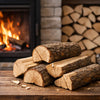
Kiln-dried hardwoods are often a dependable choice for domestic users because they offer consistency. Birch lights quickly and burns brightly. Ash is a reliable all-rounder. Oak and hornbeam tend to be denser and can suit longer burns, though they may take a little more effort to get going. Alder can be a practical option where fast, clean heat is the priority. The right species depends on your appliance and how you use it.
Storage matters more than people think
One reason buyers choose net bags is that they are easy to store, but the storage itself still needs some care. Logs should be kept off the ground, protected from rain and allowed some airflow. The netting helps ventilation, which is useful, but it does not replace proper storage.
If you leave net bags outside fully exposed to the weather, the outer logs can take on moisture again. In a covered log store, garage or dry outbuilding, they will stay in much better condition. Even a simple shelter with decent air movement is better than a sealed damp corner.
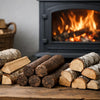
Indoor storage near the stove can work well for a small working stock, but it is usually better to keep most bags elsewhere and bring in what you need. That avoids clutter and helps you manage your fuel more neatly.
Are net bags of logs good value?
They can be, but value needs to be judged properly. The cheapest bag price does not always mean the best value. Buyers should look at log quality, moisture content, species, packed volume and how consistently the bags are filled.
This is where transparent pricing helps. When products are sold with clear information on size, weight or loose volume, it becomes much easier to compare formats fairly. A small net bag may be perfect for convenience, but if you know you are going to get through a large quantity over winter, stepping up to a larger format can reduce your cost over time.
For many households, the best approach is mixed purchasing. A larger order for the main heating season can provide stronger overall value, while a few net bags are useful as top-up stock, emergency reserve or easy-access fuel for daily use. That balance often gives you both convenience and control over cost.
Choosing the right net bags of logs for your stove
Not every stove or fireplace has the same requirements. Smaller appliances usually benefit from neatly cut logs that fit comfortably without needing extra splitting. Open fires can be a little more forgiving on size, but they still benefit from dry, consistent fuel.
Look closely at the log length range and whether the wood is sold as hardwood, mixed hardwood or a named species. If you prefer a longer, steadier burn, denser woods may suit you better. If ease of lighting matters most, a lighter hardwood paired with good kindling may be the better fit.
It is also worth considering how often you want to handle fuel. If you would rather avoid repeatedly moving heavy loads, net bags provide a sensible middle ground between very small retail packs and full bulk deliveries.
Cleanliness, handling and day-to-day use
There is a practical reason many customers keep coming back to bagged firewood: it is easier to live with. Net bags are simple to move, straightforward to count and generally tidier than loose-filled options. For households trying to keep garages, porches or utility spaces organised, that matters.
They also make stock levels easier to judge at a glance. If you know roughly how many evenings one bag will cover, it becomes easier to plan your next order before you run low. That is particularly useful in colder periods when local availability can be patchy and people do not want to rely on last-minute sourcing.
For small commercial settings such as holiday lets, workshops or rural pubs with a stove, bagged logs can also simplify fuel management. Staff can see what is left, use bags one at a time, and avoid the mess that often comes with part-used loose piles.
When another format may be better
Net bags are not the answer to every buying decision. If you have plenty of dry storage and use wood as a primary or near-primary heat source, a crate or pallet delivery may offer better long-term value. The upfront spend is higher, but the cost per volume is often lower.
Likewise, if you are buying solely on the basis of convenience for a one-off fire or occasional use, a compact boxed format may suit you better than several separate bags. It depends on how much fuel you want on hand and how you prefer to store it.
That is why a broad product range matters. Some customers need a small, tidy quantity they can use straight away. Others need larger, repeat deliveries they can rely on through the season. A supplier that clearly sets out those options makes the buying decision much easier.
What to look for before you order
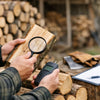
Before buying net bags of logs, check four things: moisture content, certification, species information and the stated bag size or volume. Those details tell you far more than the photo alone. Fast delivery and free delivery across most mainland UK postcodes can also make a real difference, especially if you are ordering ahead of colder weather.
Candowe focuses on the basics that matter most to stove owners: properly dried fuel, clear product information, reliable delivery and formats that suit both domestic and larger-volume buyers. That kind of consistency is often what separates a good first order from a supplier you use again.
If you want firewood that is easy to carry, easy to store and ready to burn without extra fuss, net bags are a practical choice. The key is not simply buying the bag format - it is choosing dry, well-specified logs in a quantity that matches how you actually heat your home.