Skip to content
Kiln Dried Firewood Delivered UK Made Simple
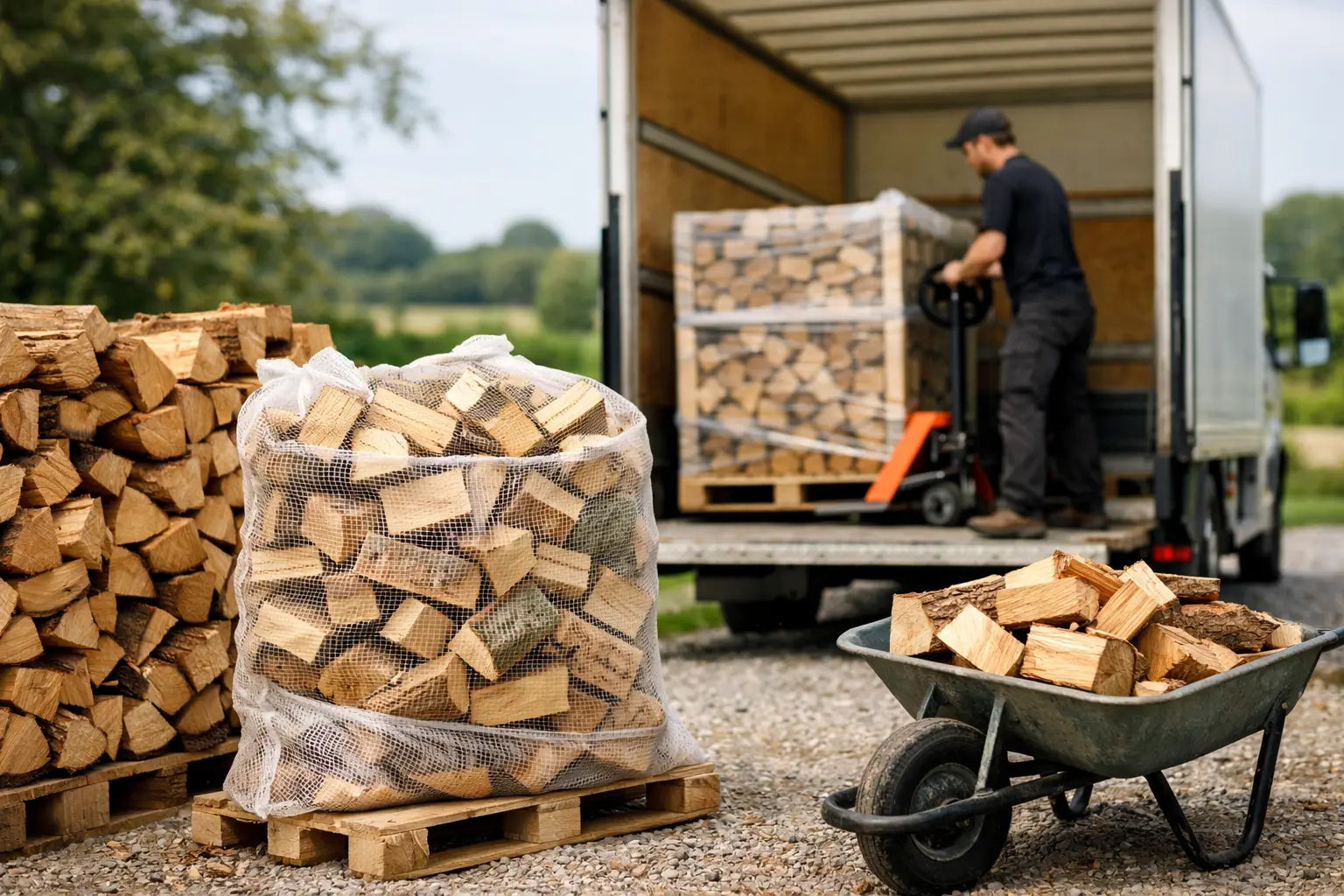
A stove is only as dependable as the fuel beside it. Choosing kiln dried firewood delivered UK-wide means avoiding the uncertainty of damp logs, slow lighting and blackened stove glass. The right order arrives dry, clearly described and ready to store, so you can light a clean, efficient fire when you need one.
For households that rely on a log burner through autumn and winter, convenience matters. But delivery alone is not enough. Moisture content, certification, log species, pack size and storage all affect the heat you get from every load.
Kiln dried firewood delivered UK-wide: what dry really means
Kiln drying removes moisture from logs in a controlled process. This matters because freshly cut wood can hold a large amount of water. Before it can heat your room effectively, a damp log must first use much of its energy to boil that water away.
Kiln-dried logs with a moisture content below 20% light more readily, burn hotter and produce less smoke than unseasoned or poorly stored wood. They also leave less residue on your stove glass and help reduce soot and tar building up in the flue. A cleaner burn is more comfortable at home and kinder to your appliance over time.
Look for Ready to Burn certification when buying wood for a domestic stove or open fire. It confirms that the fuel meets the required moisture standard for sale in small quantities in England. It is a practical sign that the logs should be ready to use, rather than a load you must season for months before burning.
There is still a difference between certified dry wood and wood that has been left exposed after delivery. Even the best kiln-dried logs can take on moisture if they are stored directly on wet ground or left open to persistent rain. Delivery quality and storage work together.
Select the right log for your stove and routine
There is no single best firewood species for every household. The best choice depends on the size of your stove, how often you light it and whether you value long burn time, easy lighting or a mix of both.
Ash is widely valued because it lights well and gives a consistent, satisfying heat. It is a sensible all-round choice for regular stove use. Oak is denser and generally slower burning, making it well suited to a sustained fire once a good bed of embers is established. Because of its density, it can take a little more effort to get going than lighter woods.
Birch burns brightly and lights easily, which makes it particularly useful for getting a fire started. Alder is also a practical option where a quicker, more responsive fire is wanted. Hornbeam is a dense hardwood that can provide strong, long-lasting heat for households looking to make the most of each stove load.
Many experienced stove owners keep more than one type of fuel. For example, birch or kindling can help establish the fire, while oak, ash or hornbeam maintains it. This is often more effective than expecting one oversized log to do every job.
Check log length before ordering, especially for compact stoves. Measure the usable depth of the firebox rather than estimating from the outside of the appliance. Logs that are too long are inconvenient to split or force into place, while a consistent log size makes loading safer and easier.
Compare firewood by volume, not just the price on the pack
A low price per bag can be misleading when bags vary widely in size, log length and packing density. For a fair comparison, consider the stated loose volume or price per cubic metre, alongside the type of wood and its moisture content.
Crates are often the clearest choice for households using a stove frequently. They provide a substantial quantity in a defined format and can be better value than buying repeated small packs. Net bags, plastic bags and fire-box packs are useful where access is limited, storage space is tight or you need a manageable top-up rather than a seasonal stock of logs.
Think about how much fuel you genuinely use. A small occasional fire might only need several compact packs, while a stove used most evenings can get through a larger quantity quickly during colder spells. Buying enough to avoid emergency local purchases can be sensible, provided you have a dry place to keep it.
It also pays to check what is included. Free kindling, for example, has genuine value if it saves you from buying separate fire-starting materials. Transparent product details should tell you the pack format, expected volume and whether delivery is included, allowing you to compare like for like.
Plan delivery around access and storage
A nationwide delivery service removes the need to collect heavy bags or arrange a trailer, particularly for rural homes and customers ordering larger volumes. Before placing an order, consider where a pallet or crates can be left safely and whether the delivery vehicle can reasonably access your property.
A firm, level area close to your gate, driveway or garage is helpful. If access involves narrow lanes, steep slopes, steps or loose gravel, it is worth checking delivery arrangements in advance. Larger orders are efficient, but they need a sensible drop point.
Candowe supplies kiln-dried logs in formats ranging from convenient bags to larger hard crates, with free delivery across most mainland UK postcodes and fulfilment typically within three to four business days. That gives households a practical way to plan their fuel supply rather than waiting until the log store is empty.
On arrival, move the logs under cover as soon as possible. A purpose-built log store is ideal, but a covered side area, shed with ventilation or dry garage can work well. Keep wood raised off the ground on pallets, slats or a rack, and allow air to move around it. Cover the top to protect from rain, but avoid wrapping the sides tightly in plastic, as trapped moisture can cause problems.
Bring a small number of logs indoors ahead of use rather than storing a large pile next to the stove. This keeps your living space tidier and reduces the chance of insects or surface dirt being brought inside in bulk.
Make every load burn efficiently
Good logs perform best when the stove is operated properly. Begin with dry kindling and smaller pieces of wood, with enough airflow to establish a strong flame. Once the fire is burning well, add larger logs without overfilling the firebox. Restricting the air supply too early can lead to a smoky, inefficient burn.
Avoid burning treated timber, painted wood, old furniture, MDF, plywood or household waste. These materials can release harmful fumes and may damage your stove or chimney. Clean, certified firewood is the dependable option for a domestic appliance.
Regular maintenance matters too. Empty ash as recommended by your stove manufacturer, keep air controls working freely and arrange chimney sweeping at an appropriate frequency for your use. If your stove glass is blackening quickly, damp fuel or poor airflow is often part of the cause.
Wood is not always the only suitable solid fuel. Wood pellets are designed for compatible pellet appliances, while briquettes can offer a dense, tidy alternative for certain stoves and fires. Smokeless coal and anthracite are intended for suitable approved appliances and may be relevant where longer-lasting solid fuel heat is required. Always follow the appliance manufacturer's fuel guidance before changing what you burn.
Buy for the way you heat your home
The most cost-effective order is not automatically the largest one. It is the quantity and format that you can store correctly, use confidently and compare transparently. A regular stove user with protected storage may benefit from a larger crate, while a household with limited space may be better served by smaller, dry packs delivered when needed.
When comparing suppliers, prioritise stated moisture content, Ready to Burn certification, clear volumes, sustainable sourcing and realistic delivery information. These details are more useful than vague claims about premium quality because they tell you what will arrive at your property and how it should perform in your stove.
A well-stocked log store turns a cold evening into a simple routine: dry logs, sound kindling, a properly maintained stove and fuel you can rely on. Order before the weather changes, store it with care and let the quality of the wood do the hard work.