Skip to content
Why Dried Hardwood Burns Better in Your Home
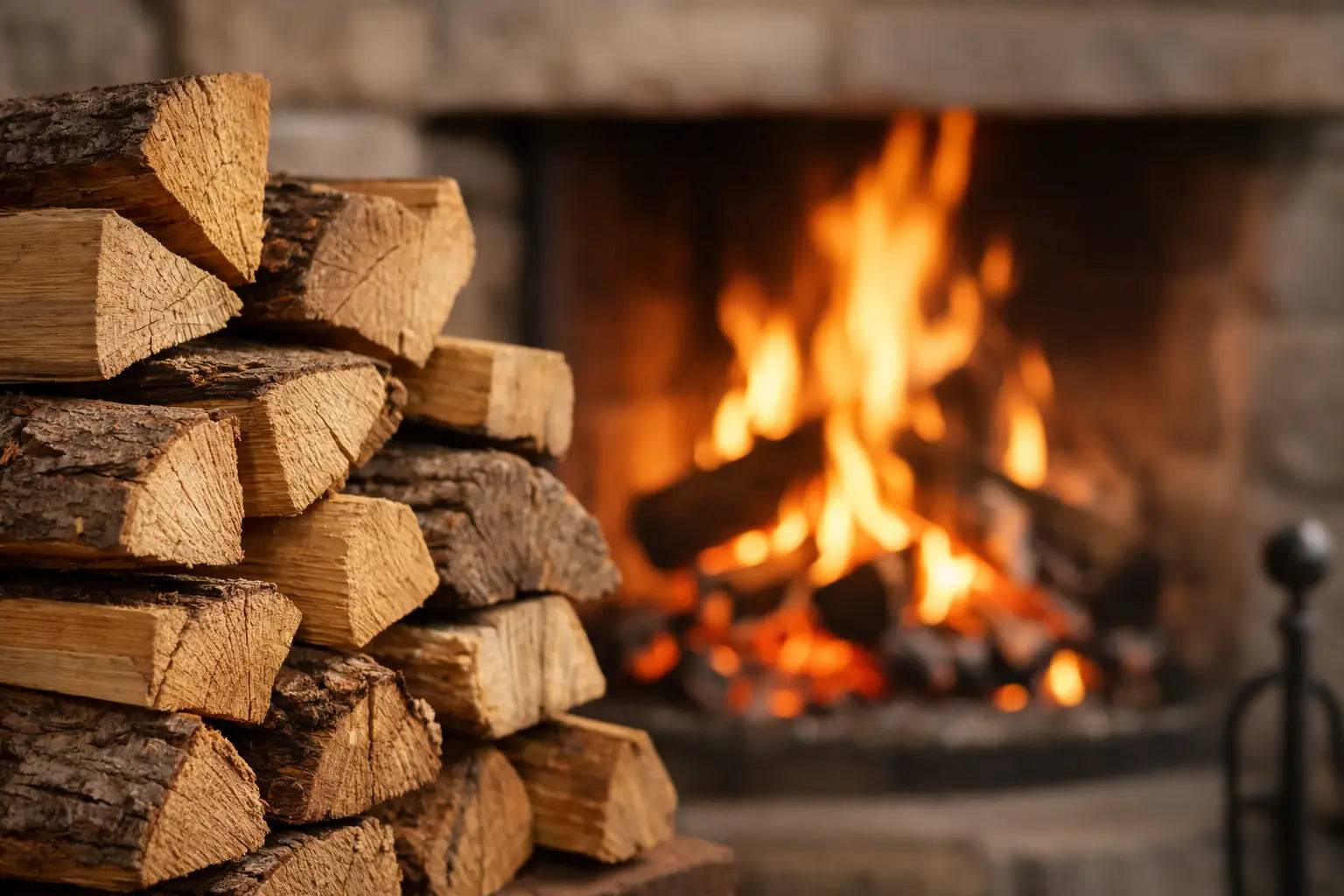
A fire can only perform as well as the fuel put into it. Dried hardwood gives stove and fireplace owners a more dependable burn because less of the fire's energy is spent driving water out of each log. The result is easier lighting, steadier heat and less mess around the appliance.
That difference matters on a cold evening, but it matters over a full heating season too. Better fuel makes it easier to control the fire, plan how much wood to keep on hand and get worthwhile heat from every basket of logs.
What dried hardwood really means
Hardwood describes timber from broad-leaved trees, such as ash, birch, oak, alder and hornbeam. It does not automatically mean that the wood is ready to burn. A freshly cut oak log may be a dense, high-energy piece of timber, but it can still hold a large amount of water and be difficult to light.
Dried hardwood has been seasoned or kiln dried to reduce its moisture content. For domestic use, the practical benchmark is wood at below 20% moisture content. This is also the standard associated with Ready to Burn certified wood fuel sold in small quantities in England. It gives buyers reassurance that the logs are suitable for immediate use rather than needing months, or even years, of drying at home.
Kiln drying uses controlled heat and airflow to remove moisture consistently. Air seasoning can also produce good firewood, but its outcome depends on the species, split size, weather, airflow and time in storage. A log that looks dry on the outside is not necessarily dry in the middle. This is why known moisture content is more useful than appearance alone.
How dried hardwood improves your fire
Wet wood first has to heat the water inside it before it can produce useful warmth. That process cools the fire and creates more smoke, steam and deposits in the flue. With properly dried logs, more of the fire's heat reaches the room instead.
The most noticeable benefit is usually the way the fire starts. Dry kindling and dry logs catch more readily, which means less paper, fewer firelighters and less time with the stove door open. Once established, the fire responds more predictably when you adjust the air controls.
A cleaner burn is another practical advantage. Low-moisture logs generally create less visible smoke and leave less tar-like residue in the chimney or flue than damp fuel. That does not remove the need for regular sweeping or correct stove operation, but it supports both. Burning only dry, suitable fuel and maintaining the appliance remain essential.
There is a value benefit as well. A cheaper bag of damp logs can be poor value if much of what you are paying for is water. Comparing price per bag alone rarely tells the full story. Moisture level, log volume, species, log size and delivery all affect how much usable heat you receive.
Choosing dried hardwood for your stove or fire
The best species depends on how you use your appliance. Dense woods tend to provide a longer-lasting fire, while lighter hardwoods often light quickly and establish a good bed of embers. Many households get the best results by using more than one type across the week rather than expecting every log to do the same job.
Oak is dense and slow burning, making it a sensible choice for longer stove sessions once the fire is properly established. Hornbeam is also a very dense hardwood with a strong, long burn. Both can suit homeowners who want sustained heat, although they benefit from a good base of kindling and smaller logs during lighting.
Ash is widely valued because it lights readily and provides reliable heat. Birch catches quickly and produces an attractive, lively flame, which can make it useful for getting a fire going or for a shorter evening burn. Alder is lighter and easy to light, making it a practical option where quick warmth matters. All of these can perform well when properly dried.
Log dimensions deserve the same attention as species. Logs that are too long for the firebox encourage overfilling and restrict airflow. Logs that are very large may be excellent for an established stove but frustrating at the lighting stage. Check your appliance manual, measure the usable firebox length and choose a log size that leaves space around the fuel.
For open fires, a mix of sizes helps you build the fire gradually. For a wood-burning stove, smaller split logs are useful for lighting and bringing the appliance up to temperature, followed by medium or larger logs for a steady burn. Avoid loading the stove to the top simply to make a batch last longer. Correct loading and airflow are safer and usually more efficient.
Buying dried hardwood in the right format
Your storage space and rate of use should guide the format you buy. Net bags and fire-box packs are convenient for occasional fires, limited storage areas and carrying fuel through the house. Larger crates offer a more economical option for regular stove users, provided there is a dry, accessible place to keep them.
When comparing products, look for the loose volume or stated volume rather than judging only from a photograph or the number of bags. Logs settle differently depending on split size and how tightly they are packed. Transparent volumetric information makes it easier to compare like for like and estimate how long a supply may last.
A household using a stove most evenings through winter will normally benefit from ordering larger quantities less often. This reduces the risk of running short during colder spells and can make delivery more convenient. On the other hand, buying more than your storage can protect properly is false economy. Fuel left exposed to persistent rain and ground moisture will lose the advantage of being dry when delivered.
Candowe supplies Ready to Burn certified kiln-dried logs in several hardwood species and formats, helping households match their order to both their appliance and available storage. For trade and higher-use customers, palletised quantities can also make planning stock simpler.
Storing dried hardwood without undoing the benefit
Dry logs need protection from rain, but they also need airflow. The ideal store has a roof, open or ventilated sides and a raised base that keeps wood away from wet ground. A purpose-built log store, covered side area or well-ventilated shed can all work.
Do not wrap a full stack tightly in a tarpaulin. While the cover may keep rain off, trapped moisture and still air can encourage mould and prevent surface dampness from drying away. If a cover is needed, protect the top and leave the sides open as far as possible.
Keep the main supply outdoors rather than beside the stove. Bringing in a small basket or two of logs at a time is usually enough for convenience, while reducing indoor mess and avoiding the risk of insects or damp being brought into the home. Stack logs with bark and split faces arranged to allow air gaps, rather than pressing every piece together.
If you are unsure whether old logs in your store are still dry, a moisture meter can help. Split one log and test the freshly exposed centre face, not the weathered outside. A reading below 20% gives a useful indication that the fuel remains suitable for burning.
Getting the most heat from every load
Even excellent logs need the right fire conditions. Begin with dry kindling and enough airflow to establish a bright flame. Once the stove and flue are warm, add larger logs and adjust the controls in line with the manufacturer's instructions. Closing the air down too soon can lead to a slow, smoky fire rather than an efficient one.
Use only fuels approved for your appliance. Treated timber, painted wood, chipboard, household waste and damp garden wood should never go into a stove or fireplace. They can release harmful pollutants, damage the appliance and create unnecessary deposits in the flue.
A reliable fuel supply is one of the simplest ways to make a wood burner easier to live with. Choose dry logs suited to your appliance, store them properly from delivery day and keep a small reserve before the weather turns. When the next cold spell arrives, your fire will be ready to provide the heat you expected.