Skip to content
Ready to Burn Logs: What to Look For
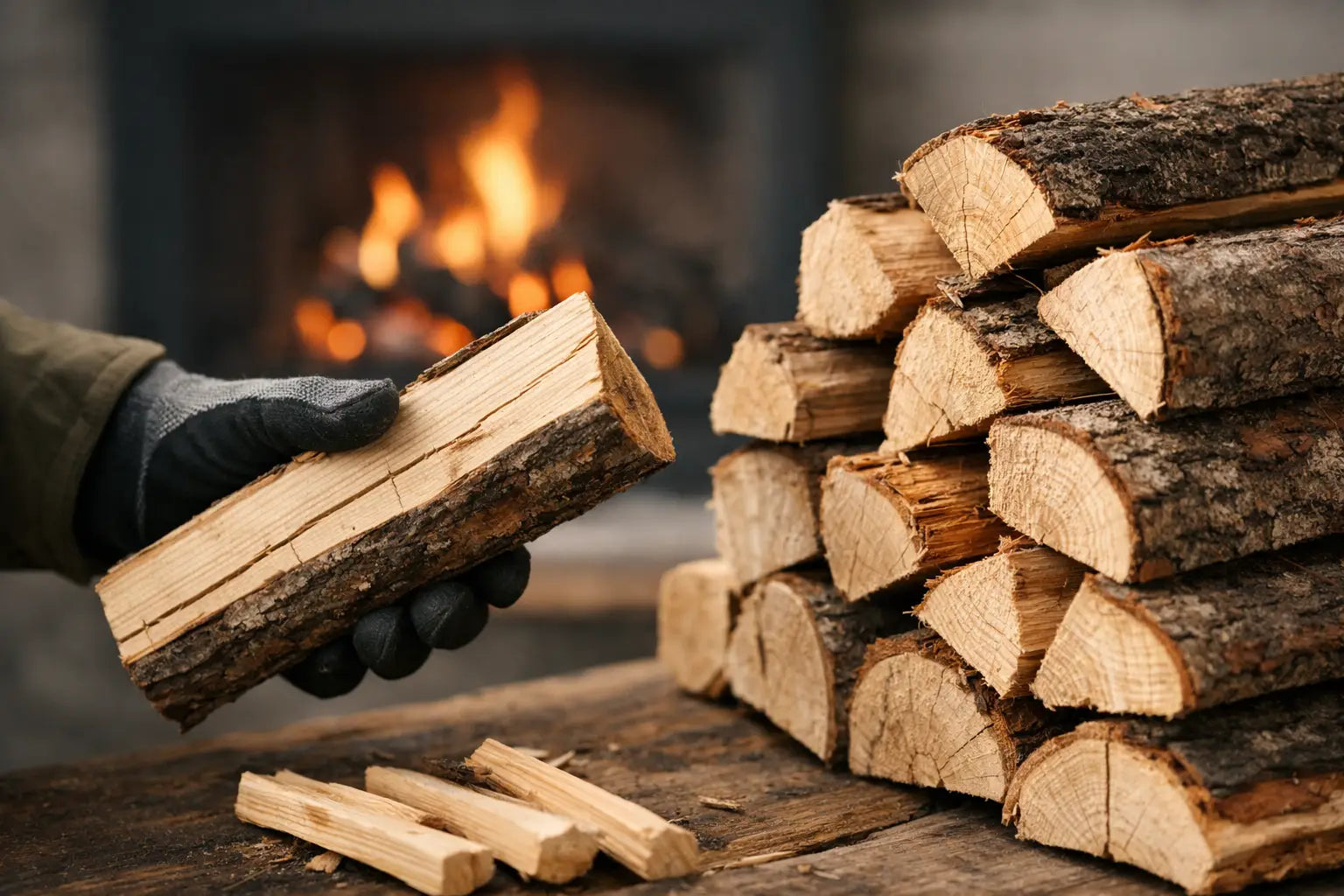
A fire that struggles to light, spits sap and leaves the stove glass black by evening usually comes down to one issue - the wood was not dry enough. Ready to burn logs solve that problem at the start. They arrive with a moisture content below 20%, so you can use them straight away without guessing how they will perform.
For households that rely on a stove, open fire or log burner, that matters more than many people realise. Dry logs are easier to light, produce a steadier flame and waste less energy boiling off excess water. You get more useful heat into the room and less frustration every time you refuel.
Why ready to burn logs matter
When timber is too wet, much of the fire's energy goes into driving moisture out of the wood before it can burn properly. That means a slower start, lower heat output and more smoke. It also means more residue inside the appliance and the flue, which is the last thing most homeowners want when they are trying to keep heating simple and efficient.
Ready to Burn certification gives buyers a clearer standard. Rather than relying on appearance or a vague claim that logs are seasoned, certified firewood is tested to meet the moisture requirement needed for domestic burning. It is a practical safeguard, especially if you are buying online and want to know the product will perform as described.
There is also the cleanliness factor. Properly dried logs tend to burn with a brighter, cleaner flame and create less soot than wetter alternatives. That can help keep stove glass clearer and reduce the amount of ash and residue you deal with day to day. No fuel is completely mess-free, but dry wood is noticeably easier to live with.
What makes logs ready to burn
The key measure is moisture content. Ready to burn logs should be below 20%, which is the accepted threshold for efficient domestic use. Kiln drying is one of the most reliable ways to achieve this because it removes moisture in a controlled environment, giving a more consistent result than outdoor seasoning alone.
Consistency is the point. One or two dry logs mixed into a load of damp ones will not give you a reliable fire. If you have ever bought cheap mixed loads from an uncertain source, you may already know the pattern: some pieces burn well, others hiss, smoulder or refuse to catch properly. A properly prepared load avoids that uncertainty.
Wood species also play a part, though not in the way people sometimes assume. Dense hardwoods such as oak, hornbeam and ash can provide a longer, slower burn, while birch and alder are often valued for their easy lighting and lively flame. There is no single best choice for every household. It depends on your appliance, how you like to run it and whether quick heat or longer burn time matters more to you.
How to choose ready to burn logs for your stove or fire
The first thing to check is certification and moisture content. If logs are described as ready to burn, the supplier should be clear about the standard being met. Vague terms such as naturally dried or well seasoned are less useful because they do not tell you what moisture level you are actually getting.
Next, consider the log size. This is often overlooked, yet it affects everyday convenience. Logs that are too large for your stove make loading awkward and can reduce airflow. Logs that are too small may burn through quickly. A reliable supplier will usually set out dimensions or at least provide enough product detail for you to judge whether the format suits your appliance.
Packaging format matters as well. Crates can be a sensible option for households that want stronger value over a larger volume, particularly through the colder months. Net bags and smaller boxed packs can make more sense if storage space is tight or if you prefer to move fuel in manageable amounts. Neither is automatically better. The right choice depends on how much you burn, where you store it and how often you want to reorder.
It is also worth looking at price in context. The cheapest load is not always the best value if the logs are inconsistent, oversized, wet or loosely measured. Transparent volumetric pricing helps buyers compare like for like and understand what they are paying for. That is especially useful when ordering in bulk, where small differences in quality can become very obvious over time.
Ready to burn logs and real heating efficiency
People often judge firewood by how long it seems to last, but that is only part of the picture. The more useful question is how much controllable heat it gives you. Wet wood can appear to last because it smoulders, yet much of that time is spent producing poor combustion rather than effective warmth.
Ready to burn logs usually deliver a more efficient burn because the appliance can get up to temperature more quickly. Once a stove is operating properly, combustion improves, heat output becomes more predictable and fuel use tends to be more economical. You are not feeding the fire simply to compensate for poor-quality wood.
That said, appliance setup still matters. Even the best kiln-dried logs will underperform if airflow is restricted or if the stove is used incorrectly. Dry fuel gives you the best starting point, but the result still depends on sound burning practice. Use suitable kindling, establish a hot flame early and avoid overloading the chamber with tightly packed logs.
Storage still matters after delivery
A common mistake is assuming that once logs arrive dry, storage no longer matters. In reality, ready to burn logs can absorb moisture again if they are left exposed to rain or stacked in a damp, enclosed area. If you pay for dry fuel, it makes sense to protect that quality.
The best storage spot is sheltered, ventilated and raised off the ground. A log store with good airflow is ideal. If you keep fuel in a garage or outbuilding, avoid pushing it against damp walls or sealing it in plastic where condensation can build up. The aim is simple: keep the logs dry while allowing air to circulate.
If you buy in larger quantities, using older stock first helps maintain consistency. It is a small habit, but it prevents good fuel sitting too long in poor conditions while newer deliveries are used first.
The trade-off between convenience and cost
Buying ready to burn logs is partly about convenience, and for many customers that is a sensible priority. There is no need to buy green timber a year ahead, no need to test and rotate loads constantly, and no need to hope a local seller's version of seasoned wood is actually fit to burn.
The trade-off is that certified kiln-dried logs can cost more upfront than unverified alternatives. But that price difference often narrows when you account for easier lighting, cleaner burning and more dependable heat. For households using wood fuel regularly, consistency is not a luxury. It is what allows you to plan your heating properly.
Delivery service is part of that convenience as well. Reliable lead times, clear product formats and the option to order larger volumes without chasing local supply all reduce hassle, particularly in winter when demand rises. For many UK homeowners, that reliability is just as valuable as the logs themselves.
Who benefits most from ready to burn logs
Almost any domestic wood burner benefits from dry, certified fuel, but the advantage is strongest for people who want a straightforward routine. If you heat one main room every evening, use a stove as part of your regular heating mix or need to keep fuel stocked through colder periods, ready to burn logs remove a lot of uncertainty.
They also suit buyers who do not have the space, time or inclination to season wood at home. Not every property has room for storing large loads over many months. Not every customer wants to monitor moisture levels and hope conditions stay dry enough. Buying fuel that is prepared properly from the start is often the more practical choice.
For trade and small commercial users, consistency becomes even more important. If you are heating a holiday let, workshop or small business space, unreliable fuel creates avoidable problems. A steady supply of dry logs makes day-to-day operation simpler and more predictable.
Candowe focuses on that kind of dependability - certified dry fuel, clear product choice and delivery that helps customers stock up without unnecessary complication.
If you want firewood that works when it arrives, ready to burn logs are not an added extra. They are the baseline for cleaner heat, better stove performance and less wasted time every time you light the fire.
- Posted in:
- Firewood