Skip to content
Wholesale Firewood: What Buyers Should Check
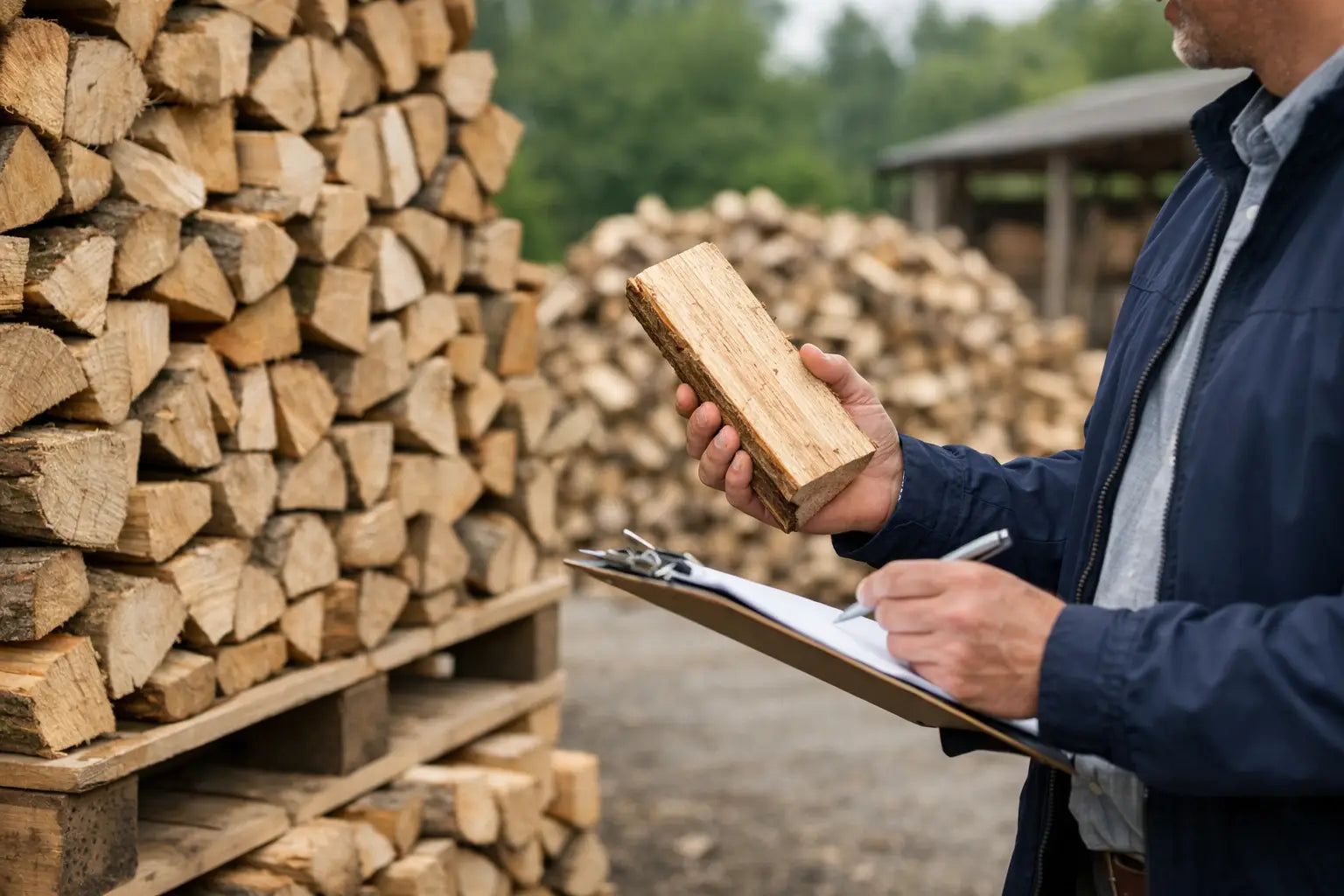
A load of logs can look like a bargain until it arrives wet, undersized or poorly packed. That is why buying wholesale firewood is less about chasing the lowest headline price and more about checking what you are actually getting for your money.
For UK households, estates and small commercial sites, the right bulk order should do three things well: burn cleanly, store neatly and arrive ready to use. If any one of those falls short, the cheap order often becomes the expensive one. More smoke, less heat, extra mess and the hassle of finding replacement fuel all add up quickly.
Why wholesale firewood can save money
The biggest advantage of buying in volume is consistency. If you rely on a stove or fireplace through autumn and winter, regular small purchases usually cost more per unit and leave you exposed to local stock gaps when cold weather hits. A well-planned bulk order gives you a known fuel supply at a clearer cost per bag, crate or cubic metre.
There is also a practical saving in delivery. Multiple small orders often mean repeated delivery charges or repeated time spent collecting fuel yourself. One larger order can be more efficient if you have the storage space and know the specification of the logs you need.
That said, wholesale only makes sense when quality is controlled. Green or poorly dried logs bought in bulk are not a saving. They are a storage problem with a slow, smoky flame.
The first check: moisture content
If you compare just one specification, make it moisture content. Firewood with moisture above 20% is harder to light, slower to burn and far more likely to produce excess smoke, soot and tar deposits. That affects not only comfort but also appliance performance and chimney maintenance.
Ready to Burn certified logs remove much of the guesswork. They tell you the fuel has been dried to a suitable standard for domestic burning, which is especially useful if you are buying at pallet scale and cannot inspect every pack in detail before ordering.
Kiln-dried wood usually offers the most dependable result for buyers who want convenience. It arrives ready to use without the long wait and uncertainty that come with seasoning logs at home. For many customers, that reliability matters more than the difference of a few pounds on the initial order.
Wholesale firewood by species
Not all logs burn the same, and species choice changes the feel and efficiency of the fire. The best option depends on how you use your stove and what balance you want between flame, burn time and price.
Birch and alder
Birch is popular because it lights easily, gives a lively flame and suits regular home use. Alder is also easy to burn and can be a practical choice for customers who want clean, straightforward performance without overcomplicating the decision.
Oak, hornbeam and ash
Denser hardwoods such as oak and hornbeam generally offer a longer, steadier burn. They can be particularly useful when you want stronger heat output over time rather than a quick decorative flame. Ash is often chosen as a reliable all-rounder, balancing good heat with consistent burning characteristics.
The trade-off is simple. Lighter species may catch more quickly, while denser hardwoods may reward you with a slower, longer burn. If your stove is used daily, many buyers find it sensible to think in terms of usage pattern rather than a single “best” species.
Pack format matters more than many buyers expect
When people think about wholesale firewood, they often focus on species and price first. In practice, pack format can be just as important.
Hard crates are useful when you want a structured volume and easier stacking on delivery. Net bags and plastic bags can suit customers who prefer manageable units they can move and store without opening a full pallet at once. Fire-box packs are a convenient option for households that want dry logs ready to carry straight to the stove.
This is where transparent volumetric pricing becomes valuable. Two offers may look similar until you compare the actual volume supplied. A lower price is not much use if the pack holds less wood, contains more void space or includes logs that are not cut to a practical size for your appliance.
Compare value properly, not just headline price
A sensible comparison looks at five things together: moisture level, species, log size, volume and delivery terms. If one of those is unclear, the advertised saving may be less attractive than it first appears.
For example, a very cheap pallet can lose value quickly if the logs are too large for your stove and need splitting, or too wet to burn efficiently on arrival. Equally, free delivery can make a stronger overall offer than a slightly lower unit price with additional transport charges added at checkout.
For trade buyers and high-usage homes, it is worth calculating cost against useful heat rather than simply cost against quantity. Dry, dense logs that burn efficiently may reduce how often you refuel and how much fuel you consume over the season.
Delivery and storage are part of the purchase
Bulk fuel buying works best when the delivery process is predictable. Before ordering, check how the firewood will arrive, the lead time and whether the delivery area is covered without extra cost. For many buyers, nationwide convenience is one of the main reasons to choose an established online supplier over uncertain local availability.
Storage matters just as much. Even kiln-dried logs need to be kept in a dry, ventilated place after delivery. A garage, log store or covered outbuilding works well if air can circulate. Leaving bulk packs exposed to persistent rain or damp ground can undo the benefit of buying properly dried fuel in the first place.
If space is tight, smaller packed formats may be a better choice than one large loose load. You may pay a little more for that convenience, but easier handling and cleaner storage can make it worthwhile.
Who benefits most from wholesale firewood?
Households with a regularly used log burner are the obvious fit, especially in rural and suburban areas where wood heat plays a real part in winter planning. Buying in bulk also suits customers who want to avoid mid-season shortages and the inconvenience of repeated reordering.
Small commercial users can benefit too. Holiday lets, workshops, pubs with fireplaces and similar sites often need fuel that is presentable, dry and dependable. In those settings, inconsistency is more than an annoyance. It affects guest experience, staff time and operating costs.
The main exception is occasional use. If you light the fire only a few times each winter, a large wholesale order may not be the most efficient route unless you have very good storage conditions and know the wood will remain dry and accessible.
What a reliable supplier should make easy
A good supplier should not force buyers to guess. Product details should be clear, pack sizes easy to compare and fuel standards stated plainly. Delivery expectations should be realistic, not vague. If you are buying online, you should be able to understand the difference between formats and species without needing to chase basic answers.
That clarity matters because firewood is not a decorative purchase. It is functional household fuel. Buyers need to know whether the logs are suitable for immediate use, whether they meet recognised standards and whether the order represents fair value once transport and volume are taken into account.
This is where established suppliers such as Candowe can make the process simpler. Clear specifications, Ready to Burn certified options, structured pack formats and reliable mainland delivery remove much of the uncertainty that often surrounds bulk log buying.
Choosing the right wholesale firewood for your home
The best order is the one that matches your appliance, storage space and usage pattern. If you burn most evenings, kiln-dried hardwood in a larger format may be the practical choice. If convenience matters most, smaller bags or boxed packs may fit better. If clean lighting and easy handling are top priorities, species such as birch can make everyday use more straightforward.
There is no single answer for every buyer, and that is exactly the point. Good wholesale purchasing is not about buying the most wood possible. It is about buying the right dry wood, in the right format, from a supplier that is clear about quality and delivery.
When you get those basics right, your fire is easier to light, your stove works better and your fuel lasts as it should. That is usually where the real value begins.