Skip to content
Sustainable Firewood: What to Look For
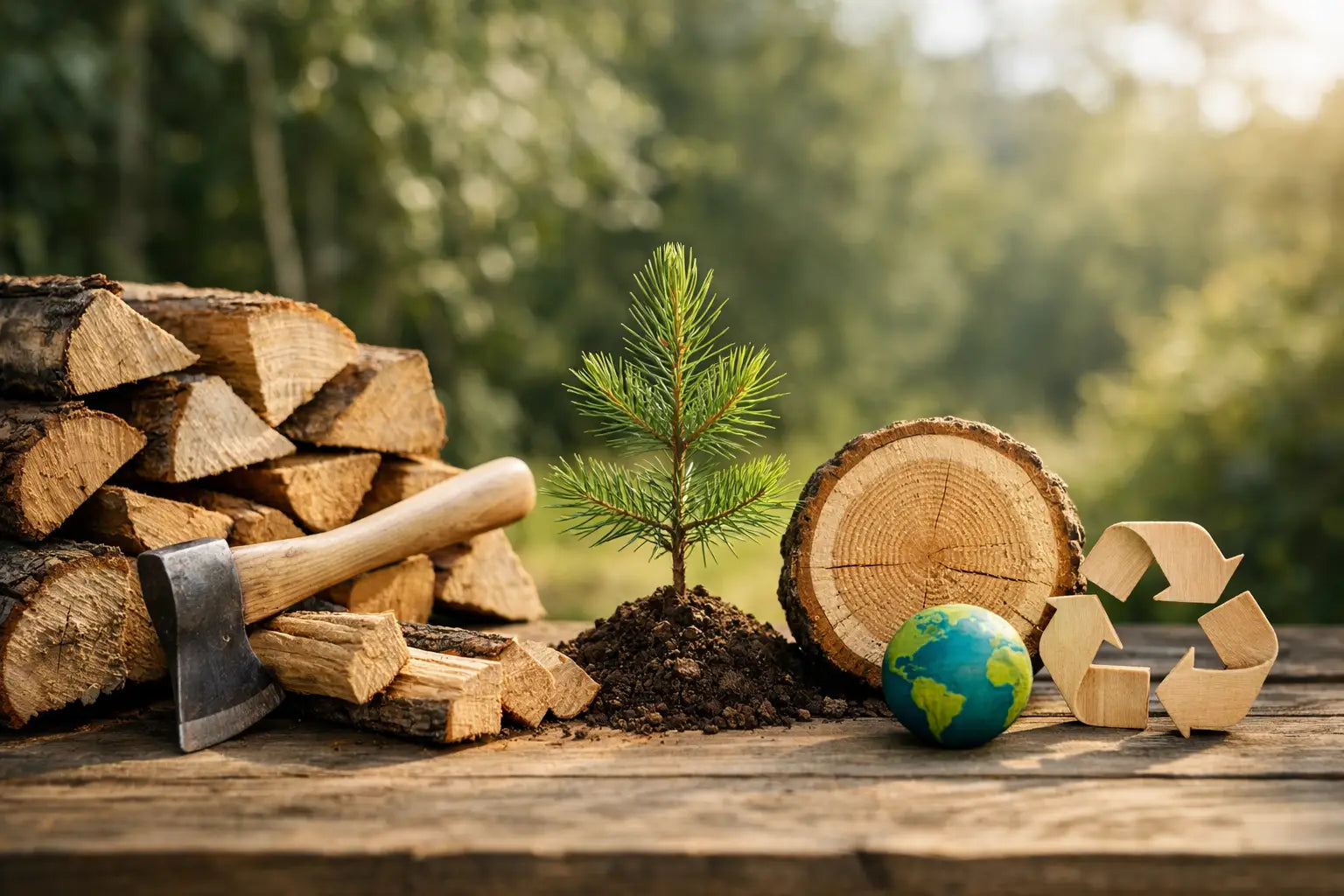
A bag of logs can look the part and still burn badly. If the wood is too wet, poorly stored or sourced without much thought, you feel it straight away - more smoke, less heat, dirtier glass and a fire that takes more work than it should. That is why sustainable firewood matters. For most UK households, it is not just about where the wood came from. It is also about how it was dried, how efficiently it burns and whether it arrives genuinely ready to use.
What sustainable firewood actually means
The term gets used loosely, so it helps to be clear. Sustainable firewood is wood fuel produced and supplied in a way that supports responsible forestry, reduces unnecessary waste and burns as cleanly and efficiently as possible in the home.
That starts with sourcing. Wood should come from responsibly managed forests or woodland operations where harvesting is balanced with regrowth and long-term stewardship. In practical terms, that means the supply is renewable rather than careless.
But sourcing is only half the picture. A sustainably managed log that is sold wet is still a poor fuel. If moisture content is too high, more of the fire's energy goes into boiling off water instead of heating your room. You burn more wood to get the same warmth, and the extra smoke and residue create avoidable waste. For domestic users, truly sustainable firewood should therefore be dry enough to burn cleanly and efficiently.
Why moisture content matters as much as sourcing
If you use a stove or open fire regularly, moisture content is one of the biggest factors in performance. Logs with moisture below 20% are far easier to light, produce a steadier flame and give more usable heat. They also reduce the build-up of soot and tar in the appliance and flue.
This is where many buying mistakes happen. Freshly cut or loosely seasoned logs can seem cheaper at first glance, but they often cost more in real use because you need a higher volume to achieve the same output. You may also need extra time, extra storage and extra patience just to make them fit for burning.
Kiln-dried logs solve that problem for many households because the moisture level is controlled before delivery. The wood arrives ready to burn rather than leaving the customer to finish the job at home. For busy households and bulk buyers alike, that reliability matters.
Sustainable firewood and clean burning at home
A sustainable choice should make life easier, not more complicated. Clean-burning logs help on both fronts. They create a more dependable fire, less visible smoke and less mess around the stove or fireplace. That is good for comfort, but it also supports better day-to-day efficiency.
Dry, quality logs can also help appliances perform as intended. Modern wood-burning stoves are designed to operate with suitable fuel, and their efficiency drops when fed with wet or inconsistent wood. If you have invested in a stove, it makes sense to match it with fuel that allows it to work properly.
There is a wider environmental point here too. Cleaner combustion means fewer wasted emissions from poor burning. No wood fuel is completely impact-free, and it would be misleading to pretend otherwise, but dry, responsibly sourced logs are a significantly better option than wet, low-grade wood that smoulders and underperforms.
How to judge sustainable firewood before you buy
For most buyers, the challenge is not understanding the principle. It is knowing what to trust when ordering. The simplest place to start is certification and clear product information.
Ready to Burn certification is a useful benchmark in the UK because it shows the fuel meets legal moisture requirements for domestic sale in smaller volumes. It gives buyers reassurance that the wood is dry enough to use and supports cleaner burning.
After that, look for straight facts rather than vague claims. A reliable supplier should tell you the wood species, moisture standard, pack format and volume, and should explain whether the logs are suitable for stoves, open fires or other solid-fuel appliances. Transparent sizing and volumetric pricing make it easier to compare value properly.
Storage and fulfilment matter as well. Even well-dried logs can lose their advantage if they are handled badly before delivery. Properly packed firewood in consistent formats helps protect fuel quality and keeps ordering straightforward, especially if you are buying enough to cover a significant part of the heating season.
Which wood species are the most practical choice?
Different hardwoods burn differently, and that affects what feels sustainable in real use. The best option depends on your appliance, your storage space and how you use your fire.
Birch is popular because it lights easily and burns well, making it practical for regular home use. Ash is valued for reliable heat and a steady burn. Oak and hornbeam are denser hardwoods that can provide longer-lasting heat, which suits customers looking for stronger output over time. Alder can be a good balanced option where easy handling and consistent burning matter.
None of this means one species is always the right answer. A smaller stove in a family sitting room may benefit from wood that lights quickly and responds well, while a customer heating a larger space may prefer denser logs with longer burn characteristics. Sustainable firewood is not just about choosing a species with a good reputation. It is about matching the fuel to the way you actually burn it.
The role of local delivery and efficient supply
Sustainability is often discussed as a forestry issue, but supply chain efficiency matters too. A dependable delivery model reduces the need for repeated small trips to pick up fuel, last-minute emergency buying and waste caused by unsuitable storage or inconsistent stock.
For many UK households, online ordering has made it much easier to buy well in advance and choose the right quantity in one go. That is especially useful for rural and suburban customers who may not want to rely on uncertain local availability every time temperatures drop.
It also helps trade and small commercial buyers who need palletised volumes and predictable lead times. A supplier that can dispatch dry, properly packed fuel on a clear timescale is solving a practical problem as much as an environmental one. Sustainability in heating is partly about reducing friction and waste in the buying process.
Sustainable firewood is also about using less of it
This is the part that often gets missed. The most sustainable log is not simply the one with the best label. It is the one that gives you the heat you need without forcing you to overfuel the appliance.
When logs are dry and consistent, you tend to use them more efficiently. Fires catch faster, recover faster after refuelling and maintain a better burn with less trial and error. That means less wasted fuel and a more predictable heating routine.
By contrast, mixed-quality wood often encourages bad habits. People overload the stove to compensate for weak heat, keep vents open longer than necessary or use extra kindling just to get going. Those small inefficiencies add up over a season. Paying attention to fuel quality at the start usually gives better value than trying to save money on poor wood.
What good storage looks like after delivery
Even the best sustainable firewood needs sensible handling once it reaches your home. Keep it in a dry, ventilated space with protection from direct rain. If you are storing outside, a covered log store with open sides is usually better than sealing wood tightly under a sheet where moisture can build up.
It also helps to bring smaller quantities indoors ahead of use, especially during colder or wetter spells. That keeps the logs in the best possible condition for lighting and burning. Good storage is not difficult, but it does protect the quality you have paid for.
Choosing a supplier with the right standards
If you want sustainable firewood without the guesswork, consistency matters just as much as the logs themselves. Look for a supplier that is clear about moisture content, responsible sourcing, certification and pack size, and one that treats delivery as part of the product rather than an afterthought.
That is where experienced specialist suppliers stand apart from casual sellers. A structured range, dependable stock and straightforward product information make it easier to buy the right fuel first time. For customers who want clean-burning logs delivered ready to use, that level of clarity has real value.
Candowe's approach reflects what most stove owners are looking for - certified dry logs, practical format choices, clear value and dependable delivery that removes uncertainty from fuel buying.
A fire should give steady heat, not extra work. When the wood is responsibly sourced, properly dried and supplied with clear standards behind it, sustainable firewood becomes a practical decision you can feel every time you light the stove.