Skip to content
Why Firewood Moisture Content Under 20 Matters
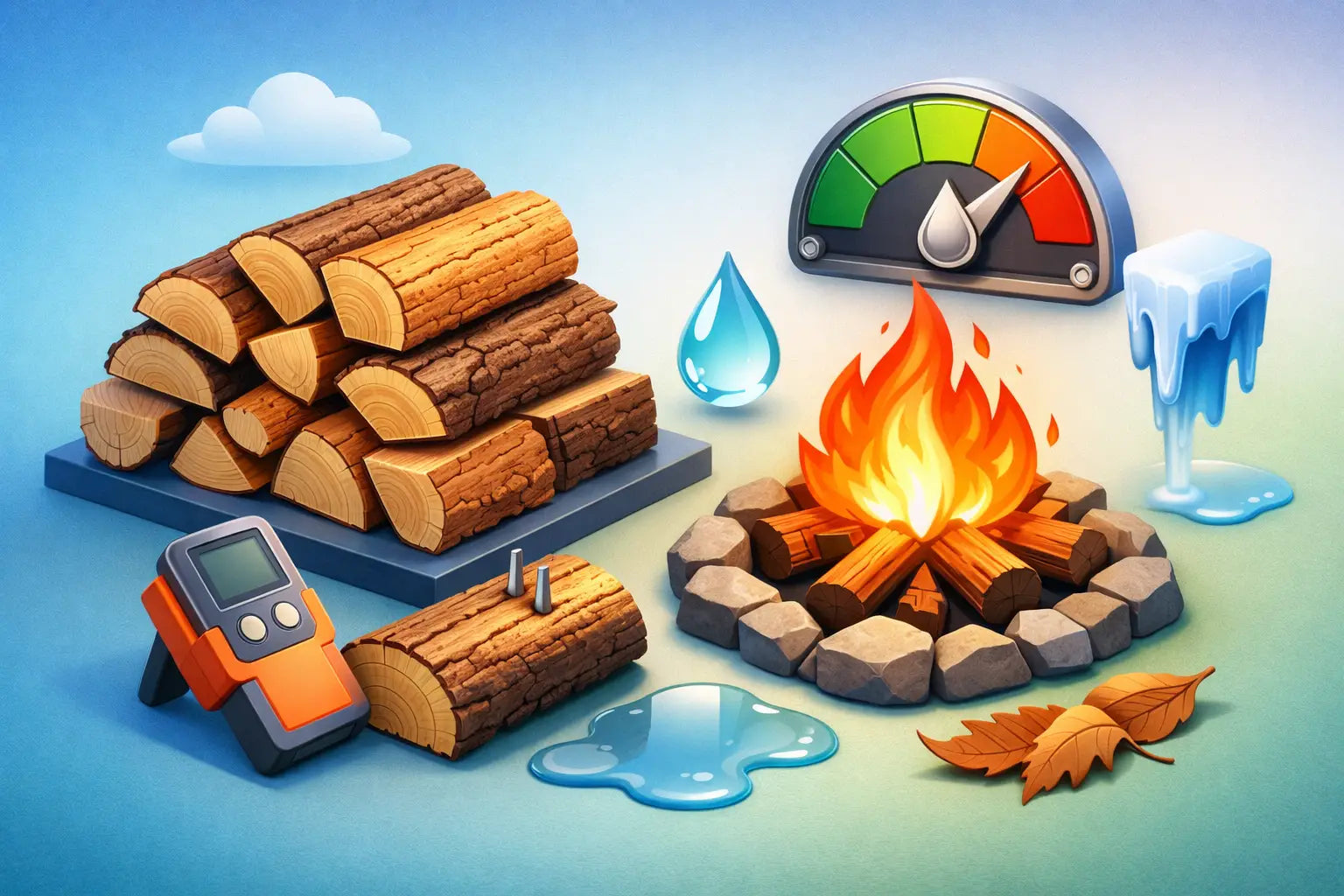
A stove that struggles to light, blackens the glass and leaves more ash than heat usually has one common problem - the logs are too wet. Firewood moisture content under 20 is not a technical nicety. It is the difference between fuel that is ready to burn and fuel that wastes heat driving off water before it can warm your room.
For UK households using log burners, open fires and solid-fuel appliances, moisture content has a direct effect on performance, cleanliness and running cost. If you are buying in bulk, storing for winter or simply want dependable results from each load of logs, this is one of the most useful numbers to understand.
What firewood moisture content under 20 actually means
Moisture content is the percentage of water held inside the wood. Freshly felled timber can hold a surprisingly high amount of water, which is why green wood is heavy, harder to ignite and inefficient in use. When logs are dried properly, whether by long seasoning or kiln drying, that moisture level falls.
Firewood moisture content under 20 is the accepted benchmark for logs that are suitable for efficient domestic burning. In practical terms, it means the wood is dry enough to light more easily, burn more consistently and produce usable heat rather than steam. It is also the standard most customers now look for because it aligns with clean-burning expectations and recognised UK fuel quality schemes.
That under-20 figure is important, but not all dry wood performs identically. Species, log size, airflow in storage and the type of appliance all still matter. A dense hardwood at 18% moisture will behave differently from a softwood at the same reading, though both can burn well if used correctly.
Why wetter logs cause so many problems
When wood contains too much water, part of the fire's energy is spent evaporating that moisture. Instead of giving you strong, steady heat, the fuel first has to dry itself in the firebox. That slows combustion and reduces efficiency.
The first sign is often poor ignition. Wet logs can hiss, smoulder and produce a dull, lazy flame. Then come the side effects that stove owners know too well - smoke, dark deposits on the glass, more soot in the flue and a room that takes longer to warm up.
This is where buying ready-to-burn fuel makes a practical difference. You are not paying for excess water, and you are not storing logs for months in the hope they become usable by the time cold weather arrives. For households that want predictable heating rather than trial and error, that matters.
Cleaner burning and better appliance performance
Dry logs do more than burn hotter. They also burn cleaner. With firewood moisture content under 20, combustion is more complete, which means fewer visible emissions and fewer residues left behind in the appliance and chimney.
That cleaner burn helps protect the stove over time. Excess soot and tar deposits can increase maintenance requirements and, in some cases, contribute to chimney problems if poor fuel is used regularly. No fuel removes the need for proper sweeping and routine care, but dry firewood gives your appliance a better chance to operate as intended.
For customers using modern Ecodesign stoves, the benefit is even clearer. These appliances are built to run efficiently with suitable dry fuel. If the logs are too damp, you are working against the appliance rather than getting the performance you paid for.
More heat from the logs you buy
One of the simplest ways to think about moisture is value. If a load of logs contains too much water, part of what you have bought cannot heat your home effectively. It adds weight, not useful output.
Firewood moisture content under 20 gives you a better return from every crate, bag or pallet because more of the fuel's energy goes into heat. That can help households manage winter fuel use more sensibly, especially when buying larger volumes. The benefit is not just comfort. It is also about making stock last longer and reducing the frustration of inconsistent burns.
There is a trade-off worth noting. Very dry logs can burn faster in some appliances if airflow is left too open, particularly with smaller pieces. That is not a fault in the fuel. It simply means the stove should be run correctly, with airflow adjusted to match the appliance and the wood type.
How to check if logs are genuinely under 20%
The most reliable way is with a moisture meter. These are straightforward to use, but the reading only means something if you test properly. Split a log first, then press the meter probes into the freshly exposed centre. Testing the outer surface alone can give a misleading result because the outside may be drier than the middle.
If you do not have a meter, there are still useful signs. Dry logs tend to feel lighter than green wood, the bark may be looser, the ends often show cracks, and when struck together they make a sharper sound rather than a dull thud. None of these checks is as precise as a meter, but together they can tell you a lot.
Buying from a supplier that states moisture levels clearly is the easier route. Ready to Burn certified logs remove much of the guesswork because the product has to meet recognised moisture requirements.
Kiln-dried versus seasoned logs
Both kiln-dried and seasoned logs can reach usable moisture levels, but they are not the same in terms of consistency. Seasoned wood is air-dried over time, often outdoors under cover. Done well, it can burn effectively. Done poorly, it may still hold too much moisture in the centre, particularly during damp UK weather.
Kiln-dried logs are dried in a controlled environment, which makes it easier to achieve and maintain firewood moisture content under 20 across the load. For many buyers, especially those who want fuel ready to use on delivery, that consistency is the main advantage.
This is why kiln-dried firewood is often preferred for domestic stoves and trade supply alike. It reduces uncertainty. You know the logs are intended to arrive ready for storage and burning, not as a project that still needs months of drying.
Storage still matters after delivery
Even properly dried logs can absorb moisture again if stored badly. Leaving bags exposed to rain, stacking crates on wet ground or keeping logs in an unventilated shed can undo good drying work surprisingly quickly.
The best approach is simple: keep logs off the ground, protected from rain and in a place with decent airflow. A log store with a cover and open sides works well. If space is limited, even a sheltered area against a wall is better than a sealed, damp outbuilding.
It also helps to bring in a small amount of fuel before use, especially in colder months. Letting logs warm and settle indoors for a day or two can improve lighting and reduce surface damp.
Choosing the right dry log for your appliance
Moisture content is one part of the decision. Wood species still affects burn speed, flame pattern and heat profile. Birch lights easily and is popular for quick, lively fires. Oak and hornbeam are denser and often chosen for a longer, steadier burn. Ash is valued for its balanced performance, while alder can be a reliable option for everyday use.
That means the best choice depends on how you heat your home. If you want fast lighting and a responsive evening fire, one species may suit you better. If you are banking the stove for a longer burn cycle, another may be the better fit. The good news is that dry, properly prepared logs give you a strong starting point whatever the species.
Candowe focuses on this practical side of firewood supply - clear product formats, dependable moisture standards and fuel that arrives ready to use rather than ready to disappoint.
Why this matters more in winter
During colder months, there is less patience for fuel that needs coaxing. You want a fire that lights cleanly, settles quickly and gives reliable heat. Wet logs are at their most frustrating when the weather is poor, storage space is limited and you are relying on the stove daily rather than occasionally.
That is why planning ahead with dry fuel matters. If your logs are already below 20% moisture, you remove one of the biggest causes of poor stove performance before winter really begins. It is a small specification with a noticeable effect on comfort, cleanliness and confidence.
If you remember one thing, make it this: good firewood should be ready when you are, not after another season in the shed.