Skip to content
Kiln Dried Firewood: Is It Worth It?
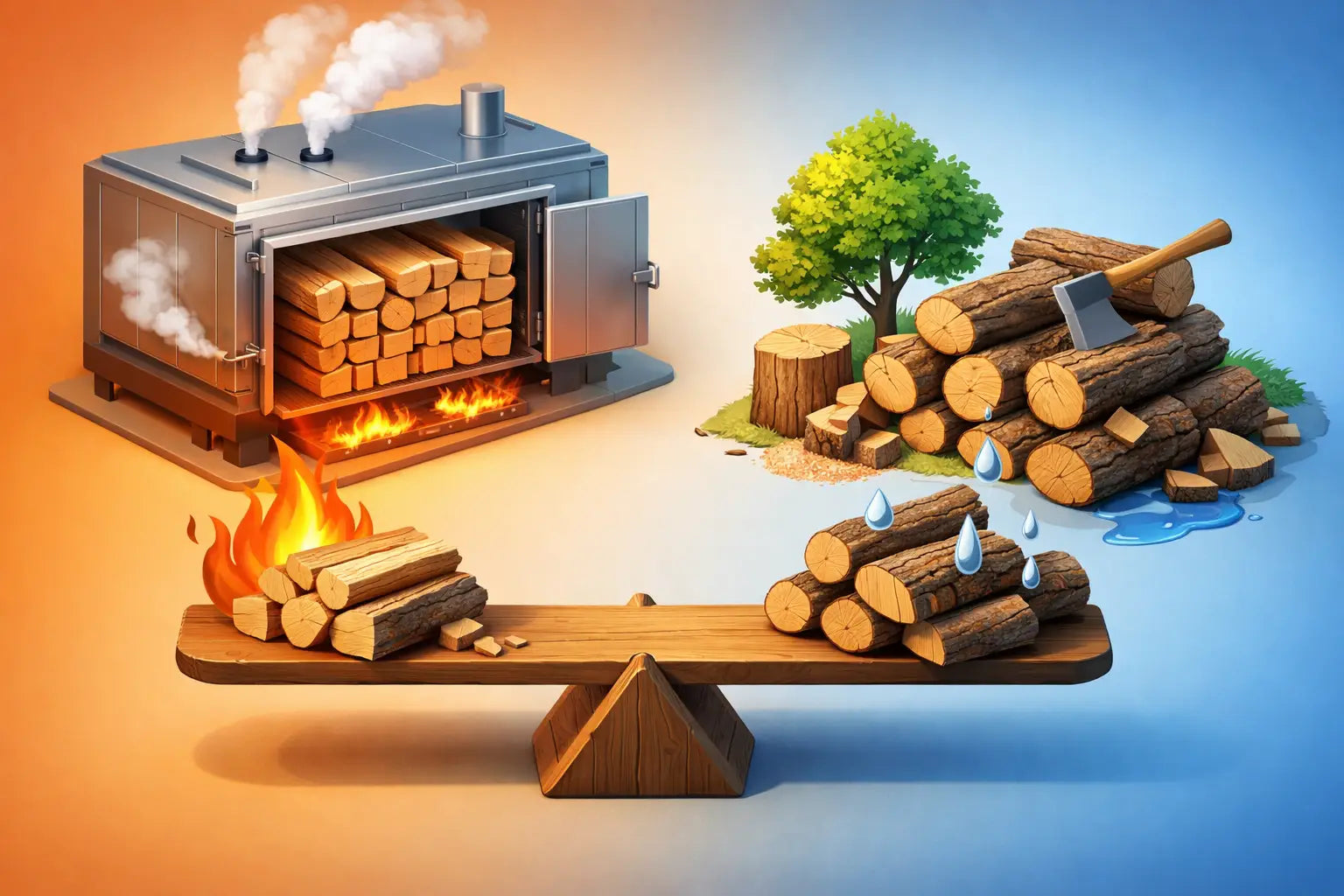
If you have ever tried to light a stove with logs that hiss, smoke and blacken the glass within minutes, you already know why kiln dried firewood matters. For households that rely on a log burner, open fire or multi-fuel stove, the difference is not minor. Dry, properly prepared logs are easier to light, cleaner to burn and far more dependable when you need steady heat.
That dependability is the main reason kiln dried logs have become the standard for many UK homes. Instead of buying wood and hoping it has been seasoned well enough, you are buying fuel that has been dried under controlled conditions to a moisture content below 20%. That threshold matters because wetter wood wastes energy driving off water before it can give you useful heat.
What kiln dried firewood actually means
Kiln dried firewood is timber that has been dried in a heated chamber to reduce its moisture content to a level suitable for efficient burning. In practical terms, that means logs arrive ready to use rather than needing months of storage and guesswork.
For most domestic users, the key benefit is consistency. Natural seasoning can work well, but it depends on time, weather, airflow and storage conditions. A stack that looks dry on the outside may still hold too much moisture in the centre. Kiln drying removes much of that uncertainty.
This is also why Ready to Burn certification matters. It gives buyers confidence that the fuel meets the legal and practical standard for clean domestic burning. If you are using a modern stove, particularly in a smoke control area, burning properly dried wood is not just a performance issue. It is part of using the appliance as intended.
Why kiln dried firewood burns better
The simplest explanation is that dry wood burns as fuel, while wet wood spends part of the burn cycle boiling off moisture. That lost energy shows up as sluggish flames, excess smoke and lower heat output.
When logs are dry enough, they catch more quickly and burn more evenly. You usually need less kindling to get started, and once the fire is established it is easier to control. Air vents respond more predictably, which helps if you are trying to maintain a steady room temperature rather than constantly adjusting the stove.
There are cleanliness benefits too. Lower moisture content generally means less smoke and fewer deposits in the flue. No firewood eliminates maintenance, but burning drier logs can reduce soot and tar build-up compared with damp or poorly seasoned wood. That is better for the appliance, better for the chimney and more pleasant in day-to-day use.
Kiln dried vs seasoned logs
This is where some buyers hesitate, usually on price. Kiln dried firewood often costs more upfront than loosely described seasoned logs, but the cheaper option is not always better value.
Seasoned wood can be excellent if it has genuinely been dried long enough and stored properly. The issue is inconsistency. One load may burn well, while the next arrives damp after poor storage or recent weather exposure. If you buy logs regularly, that variation becomes frustrating quickly.
Kiln dried logs are usually a more reliable purchase because the moisture level is controlled before delivery. You are less likely to pay for water weight, less likely to struggle with lighting, and less likely to burn through extra fuel trying to keep the fire going. For households that use wood heat regularly, that reliability often justifies the difference.
It also depends on how you buy. If you have space, time and ideal storage conditions, seasoned wood may suit you. If you want fuel that can be stacked and burned with minimal fuss, kiln dried is the more practical choice.
Choosing the right wood species
Not all kiln dried logs behave in the same way. Species affects burn speed, flame pattern, heat output and how often you need to refuel.
Birch is popular because it lights easily and gives a lively flame, making it useful for getting a fire established. Ash is often chosen for its balanced burn and dependable heat. Oak and hornbeam are denser hardwoods, so they tend to burn longer and more steadily, which suits evening heating or slower, sustained output. Alder can be a good option for those who want a clean, reliable burn without overcomplicating the choice.
The right option depends on your appliance and how you heat your home. If you want quick responsiveness, an easier-lighting hardwood may suit you best. If you are trying to maintain heat over a longer period, denser species may offer better value. Many households end up using more than one type depending on season and routine.
What to look for when buying kiln dried firewood
The first thing to check is moisture content. Under 20% is the standard to look for, and reputable suppliers should state it clearly. If the description is vague, that is usually not a good sign.
Next, look at how the logs are sold. Transparent volumetric pricing helps you compare value properly. Weight alone can be misleading, especially when different species and packaging formats are involved. Hard crates, net bags, plastic bags and fire-box packs all suit different needs, but the quantity should be easy to understand.
Log length matters too. A good fit for your stove saves time and avoids the inconvenience of splitting logs down at home. If you are buying in bulk, delivery terms are also worth checking carefully. Free delivery across most mainland UK postcodes and a clear fulfilment window make planning much easier, particularly in colder months when you do not want to be left short.
Finally, look for signs of a supplier that understands heating fuel rather than simply shifting wood. Certification, clear product specifications, consistent reviews and a structured range all suggest that quality control is taken seriously.
Storage still matters
One common mistake is assuming kiln dried logs can be left anywhere because they arrive dry. They still need sensible storage if you want them to stay that way.
Keep them off the ground, sheltered from direct rain and in a place with airflow. A covered log store is ideal. Garages and sheds can work if they are dry and ventilated, but tightly sealed damp spaces are not suitable. Bringing in a small amount at a time for indoor use can also help, especially in winter.
Good storage protects the value of what you have bought. Even premium logs will lose their advantage if they absorb moisture after delivery.
Is kiln dried firewood cheaper to use?
Per load, not always. Per useful heat output, often yes.
This is where many buyers reassess the price. Cheap wet logs can seem like a saving until you realise you are using more of them, cleaning the stove glass more often and getting less heat into the room. With kiln dried firewood, more of what you pay for is burnable energy rather than moisture.
There is also a time value that should not be ignored. Reliable logs save effort. They light faster, burn more predictably and reduce the hassle of dealing with poor fuel. For busy households, that convenience is part of the value.
For trade users or larger domestic buyers, buying in larger formats can improve cost efficiency further. Palletised or bulk options often make more sense when you are heating regularly and want to avoid repeated small orders.
A better fit for modern stoves and cleaner burning
Modern wood-burning appliances are designed to perform best with dry fuel. If the logs are too wet, the stove cannot work as efficiently as it should. That affects heat, emissions and the general user experience.
Cleaner burning does not mean zero smoke or zero maintenance, but it does mean the appliance is more likely to operate as intended. You should see better flame quality, more controllable combustion and fewer of the problems people often blame on the stove when the real issue is poor fuel.
For households trying to heat responsibly, sustainably sourced kiln dried logs also make sense. When timber is properly prepared and burned efficiently, it supports a more sensible use of wood fuel than buying unverified logs of uncertain origin and condition.
Candowe focuses on this practical side of the purchase - certified dry fuel, clear product formats and dependable delivery - because most buyers are not looking for romance. They want heat they can rely on.
The best firewood is not the cheapest bag on offer or the log that looks largest in a photograph. It is the fuel that arrives dry, burns cleanly and makes your heating routine simpler when the weather turns cold.