Skip to content
Choosing a Sustainable Firewood Supplier
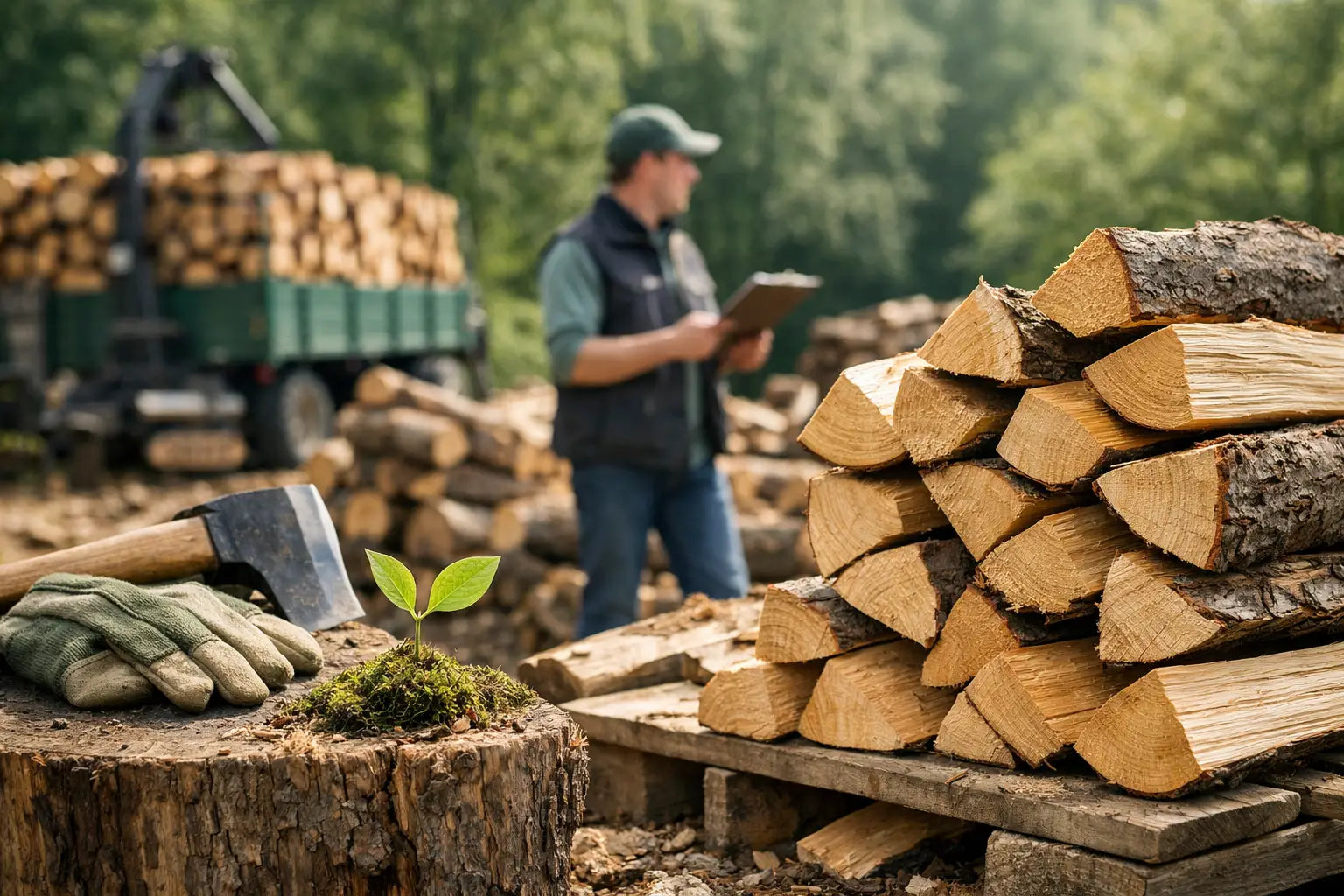
A cheap load of logs can become expensive quickly if it arrives wet, burns poorly and leaves your stove glass coated in soot. Choosing a sustainable firewood supplier is about more than buying wood from a responsible source. It means receiving properly dried fuel that gives reliable heat, stores well and is suitable for use in a modern wood-burning stove or open fire.
For UK households, the best choice balances environmental responsibility with everyday practicality: traceable sourcing, low moisture content, clear volume information and delivery you can plan around. These details affect how cleanly your fuel burns, how often you need to refuel and how much value you get from every order.
What sustainable firewood should mean
Sustainable firewood comes from responsibly managed woodland or forestry operations where harvesting is planned to support ongoing growth and regeneration. Timber should not be taken in a way that depletes woodland, damages habitats or makes the source impossible to trace.
However, sustainability is not only decided in the forest. A log with a good origin still needs appropriate processing, drying and transport. If it is supplied with too much moisture, more energy is wasted evaporating water before the wood can produce useful heat. That means more smoke, lower stove efficiency and more fuel used over the season.
For domestic use, dry wood is the practical benchmark. Ready to Burn certified firewood has a moisture content of below 20%, making it suitable for immediate use in approved appliances. It gives customers a clear, independently recognised standard rather than a vague claim that logs are simply “seasoned”.
Why dry logs support cleaner burning
Freshly cut wood contains a high proportion of water. Even wood that has been left outside for a period may not be dry enough throughout, particularly where it has had limited airflow or has been stored directly on the ground. Kiln drying removes moisture in a controlled way, helping produce logs that light more easily and burn with a stronger, steadier flame.
Dry fuel helps reduce visible smoke and excessive soot. It can also reduce tar and creosote deposits in the flue when used correctly, alongside regular chimney sweeping and good stove operation. No fuel removes the need for maintenance, but using certified dry logs is one of the simplest ways to avoid avoidable problems.
How to assess a sustainable firewood supplier
A reliable supplier should make it easy to understand what you are buying. Look beyond attractive photographs and ask whether the product information answers the questions that matter before the delivery arrives.
Start with moisture content and certification. If you are purchasing firewood for a stove, confirmation that logs are Ready to Burn certified provides useful assurance. It also supports compliance with rules on the sale of wet wood in small volumes in England, where domestic solid-fuel users are expected to use cleaner fuel choices.
Next, consider source transparency. A supplier does not need to overwhelm customers with forestry paperwork, but it should be able to state that its wood is sustainably sourced and provide confidence in its supply chain. Responsible sourcing, coupled with controlled kiln drying, is far more meaningful than an unsupported environmental label.
Then check how volume is presented. Firewood can be sold in crates, nets, bags and fire-box packs, but the format alone does not tell you how much fuel you are receiving. Clear loose-volume or cubic-metre information makes it easier to compare like for like. A large-looking bag may offer convenience for a weekend fire, while a crate can make better sense for households heating regularly through autumn and winter.
Delivery and packaging matter too
Transport has an environmental impact, so dependable delivery planning is part of a sensible supply model. Ordering enough fuel for your expected use can reduce the need for repeated small deliveries, while palletised crates provide an efficient option for customers with suitable access and storage space.
Packaging involves a trade-off. Net bags and fire-box packs are simple to carry, stack and use in smaller storage areas. Larger crates typically reduce handling and can offer stronger value per unit of wood. The right choice depends on your usage, access and whether you need fuel stored close to the house or in a separate log store.
Candowe offers a range of kiln-dried, Ready to Burn firewood formats, so customers can match their order to their stove, storage capacity and expected consumption rather than purchasing more than they can keep dry.
Choose the right species for your appliance
Sustainability and performance go together, but different woods suit different priorities. There is no single best log for every home.
Hardwoods such as oak, ash and hornbeam are valued for their dense structure and long, steady burn. They are often a good option for stove owners looking for lasting heat and fewer refuelling intervals. Oak can take a little longer to establish a flame than lighter species, so it is often best used once the fire is already burning well.
Birch is popular because it lights readily and creates an attractive flame. It can be particularly useful for starting or maintaining an evening fire, although its burn time is generally shorter than denser hardwoods. Alder also lights easily and offers a clean, consistent burn, making it a practical choice for regular household use.
Many customers benefit from using more than one product. Kindling and firelighters help establish a hot fire quickly, then a denser hardwood can provide longer heat. This approach is more efficient than repeatedly adding large logs to a weak, smoky flame.
Avoid the common buying mistakes
The most frequent mistake is choosing solely on headline price. The lowest price is not necessarily the best value if moisture content is uncertain, log sizes are inconsistent or the stated quantity is unclear. Compare certified dryness, usable volume, species and delivery terms before making a decision.
Another mistake is buying too little for the season. Small bags are useful for occasional use, but households relying on a stove through colder months often find that bulk crates offer better value and remove the worry of running out during a cold spell. Estimate your usage based on how often the appliance is lit, the size of the room and whether the stove supplements or replaces another heating source.
Storage is equally important. Even premium kiln-dried logs can absorb moisture if left uncovered in the rain. Store firewood off the ground in a ventilated log store, garage or covered area. A waterproof cover should protect the top and sides from rain while leaving room for air to circulate. Avoid wrapping an entire stack tightly in plastic, as trapped moisture can create condensation.
Use your wood fuel efficiently
Responsible buying has more impact when it is paired with good burning habits. Build the fire with dry kindling and smaller logs first, giving it enough air to establish a bright flame. Add larger logs only once the firebox is hot. Closing the air controls too early can cause incomplete combustion, leading to smoky flames and less heat.
Follow your appliance manufacturer's guidance and use the correct fuel for the stove or fireplace. Keep the flue swept by a qualified professional at suitable intervals, especially when the appliance is used frequently. If you notice persistent blackened glass, heavy smoke or an unusually weak fire, check the fuel, airflow and chimney condition rather than simply adding more logs.
For homes with different heating needs, complementary fuels may be appropriate. Wood pellets are designed for compatible pellet appliances, while briquettes can offer a compact, consistent option for suitable stoves. Smokeless coal and anthracite should only be used where the appliance is designed for them and in line with local requirements.
Ask the questions that protect your purchase
Before ordering, confirm whether the fuel is Ready to Burn certified, what species you are receiving, how the volume is measured and where the delivery will be placed. Check lead times, access requirements and whether someone needs to be present for a pallet delivery. These practical checks prevent the frustration of a load that cannot be moved safely or stored properly.
A trustworthy supplier should make these answers straightforward. When the source is responsible, the logs are genuinely dry and the quantity is clear, you can buy with confidence and focus on the part that matters: a warm, clean-burning fire when you need it.