Skip to content
Best Smokeless Fuels for Stoves in the UK
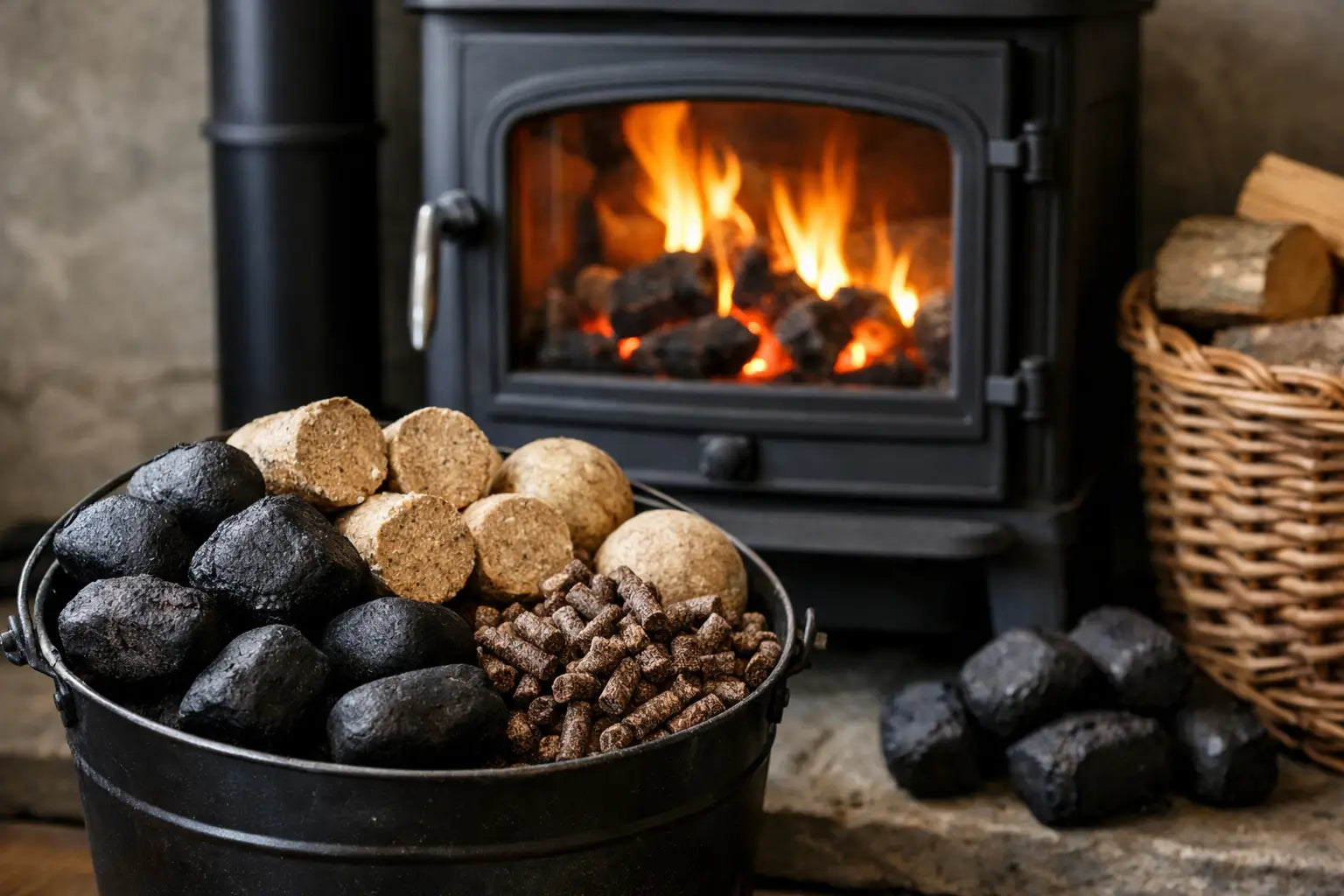
A stove that is slow to light, coats its glass in soot or leaves heavy ash in the grate usually has a fuel issue before it has an appliance issue. The best smokeless fuels for stoves give reliable heat with less visible smoke, lower particulate output than ordinary house coal and a cleaner firebox - but only when they suit the stove, flue and local rules.
For UK households, choosing well starts with understanding the difference between manufactured smokeless fuel, anthracite and wood-based products. They do not burn in the same way, and the cheapest bag is not always the best value once burn time, heat output and ash disposal are considered.
What makes a fuel smokeless?
Smokeless fuels are designed to produce far less smoke than traditional bituminous house coal. Most are either naturally low in volatile matter, such as anthracite, or manufactured from processed materials to provide controlled, long-lasting heat. This makes them a practical option for suitable closed appliances, particularly where steady overnight heat is wanted.
“Smokeless” does not mean emission-free. Every solid fuel creates emissions when burned, and poor airflow, a cold flue or unsuitable fuel can make even a good product burn badly. The aim is a hot, efficient fire with minimal smoke and residue, not simply a fuel that carries a smokeless label.
In a Smoke Control Area, the legal position matters. You may generally burn an authorised fuel, or use an exempt appliance that is approved to burn the fuel concerned. Check your local authority’s requirements and your stove manufacturer’s instructions before ordering. Do not assume that a fuel is suitable for every appliance simply because it is sold as smokeless.
The best smokeless fuels for stoves, by need
Manufactured smokeless coal for dependable, long heat
For many multi-fuel stoves, manufactured smokeless coal is the most straightforward choice. It is formed into uniform nuggets, ovals or briquettes, which makes it easier to measure, stack in the firebox and manage with a riddling grate. A quality product lights steadily from a well-established kindling fire and provides a consistent, high heat output.
This is often the best option for households looking for an extended burn through an evening or overnight. Its even shape supports airflow and usually produces less smoke and clinker than ordinary house coal. Ash is still part of the equation, however. Empty the ash pan regularly and avoid allowing ash to build up beneath the grate, as it restricts the air supply needed for efficient combustion.
Look for an authorised smokeless fuel where this is required locally. Product size matters too: smaller pieces can light more readily but burn through faster, while larger ovals may suit stoves with a bigger firebox and owners who prioritise burn duration.
Anthracite for high heat and low volatile content
Anthracite is a natural hard coal with a high carbon content and low level of volatile matter. It burns with a short, bright flame and can produce strong, sustained heat once it is properly established. It is valued by experienced solid-fuel users for its clean-burning characteristics and long burn time.
The trade-off is that anthracite can be harder to light than manufactured smokeless fuel. It needs good draught, a sufficiently hot firebed and the right amount of primary air from below. It is generally better suited to an appliance designed for solid mineral fuels, with a grate and ash pan, than to a wood-only stove.
Always check the grade. Smaller anthracite grades may be suitable for certain boilers and compact appliances, while larger sizes can be more appropriate for stove grates. Confirm that your appliance manufacturer permits anthracite, and check whether the particular product meets Smoke Control Area requirements where you live.
Smokeless briquettes for controlled, convenient burning
Some manufactured smokeless fuels are sold as briquettes rather than loose nuggets. Their regular shape can make loading simple and help create a stable fuel bed. Depending on the product, briquettes can offer a measured, slow release of heat that is useful for maintaining room temperature rather than repeatedly refuelling a lively fire.
Their suitability depends on the briquette composition and your stove. Use only fuels specified for closed appliances, and do not overload the firebox. Dense briquettes expand the heat held in a small volume, so a modest load can be enough once the stove is at operating temperature.
Wood briquettes are different from smokeless coal
Wood briquettes deserve a separate mention because they are frequently grouped with smokeless fuels. Made from compressed, untreated wood residues, good-quality wood briquettes are dry, dense and convenient to store. They can be an efficient alternative to logs in a wood-burning stove, producing strong heat with relatively little ash.
They are not interchangeable with mineral smokeless fuel. Wood needs air from above for clean combustion, while coal and anthracite normally need primary air through the grate. Wood briquettes should be used only in a wood burner or multi-fuel stove configured for wood, following the manufacturer’s loading guidance. If you are in a Smoke Control Area, check that your appliance is exempt for wood burning and use dry, suitable fuel.
Match the fuel to your stove before you buy
The fuel type printed on the stove manual is the starting point. A wood-burning stove is designed around logs and wood briquettes, while a multi-fuel stove usually has a raised grate and air controls that can accommodate approved smokeless fuels. Burning mineral fuel in a wood-only appliance can damage internal components, create poor combustion and may affect the warranty.
Then consider the heat demand. A small, well-insulated sitting room may become uncomfortable if a high-output mineral fuel is used with the controls too open. A larger, older property may benefit from a fuel that holds heat for longer, especially where the stove is a meaningful part of the home’s heating routine.
Your chimney also has a role. Mineral fuels and wood create different deposits, so sweeping should reflect the fuel you use and the frequency of burning. A qualified chimney sweep can spot issues with draught, liner condition and deposits before they become a performance or safety problem.
How to get a cleaner, more efficient burn
Even premium fuel cannot compensate for poor firing practice. Start with a clean grate, empty ash pan and open air controls. Build enough heat in the flue before adding a full load of smokeless fuel. Restricting the air too early causes the fire to smoulder, reducing efficiency and increasing deposits.
Once the fuel is burning well, adjust the controls gradually. Multi-fuel stoves commonly use lower air to support mineral fuels and upper air to burn off gases, but exact settings differ by model. The manual remains more useful than a generic rule of thumb.
Avoid mixing fuels unless your appliance manufacturer specifically permits it. A few logs alongside smokeless coal may seem convenient, but the fuels need different airflow and burn at different rates. Burning them separately is usually easier to control and makes it clearer which fuel is delivering the result you want.
Storage, ash and buying value
Keep smokeless fuel dry and protected from rain. A covered coal bunker, shed or secure fuel store is ideal; leave enough ventilation to prevent condensation. Damp fuel can be difficult to light and may break down into dust, especially when bags are repeatedly moved.
When comparing prices, look beyond the bag cost. Compare weight, fuel type, expected burn time and the amount of usable heat your stove actually produces. Larger deliveries can offer better value for regular users, provided you have dry, accessible storage. For occasional fires, smaller bags may be the more sensible choice because they are easier to handle and keep in good condition.
Ash from authorised smokeless fuel should be allowed to cool fully in a metal container before disposal. Never place hot ash in a wheelie bin, plastic tub or cardboard box. Ash is not automatically suitable for garden use, particularly where mineral fuels are concerned, so follow local disposal guidance.
Candowe supplies a practical range of solid-fuel heating products alongside Ready to Burn kiln-dried logs, helping households choose fuel that matches both their appliance and their routine.
The right choice is the one your stove is built to burn, your area permits and your household can store properly. With a clean appliance, the correct airflow and a dependable fuel supply, a stove should provide steady warmth without the uncertainty of a smoky, inefficient fire.