Skip to content
A Practical Guide to Ready to Burn Fuel
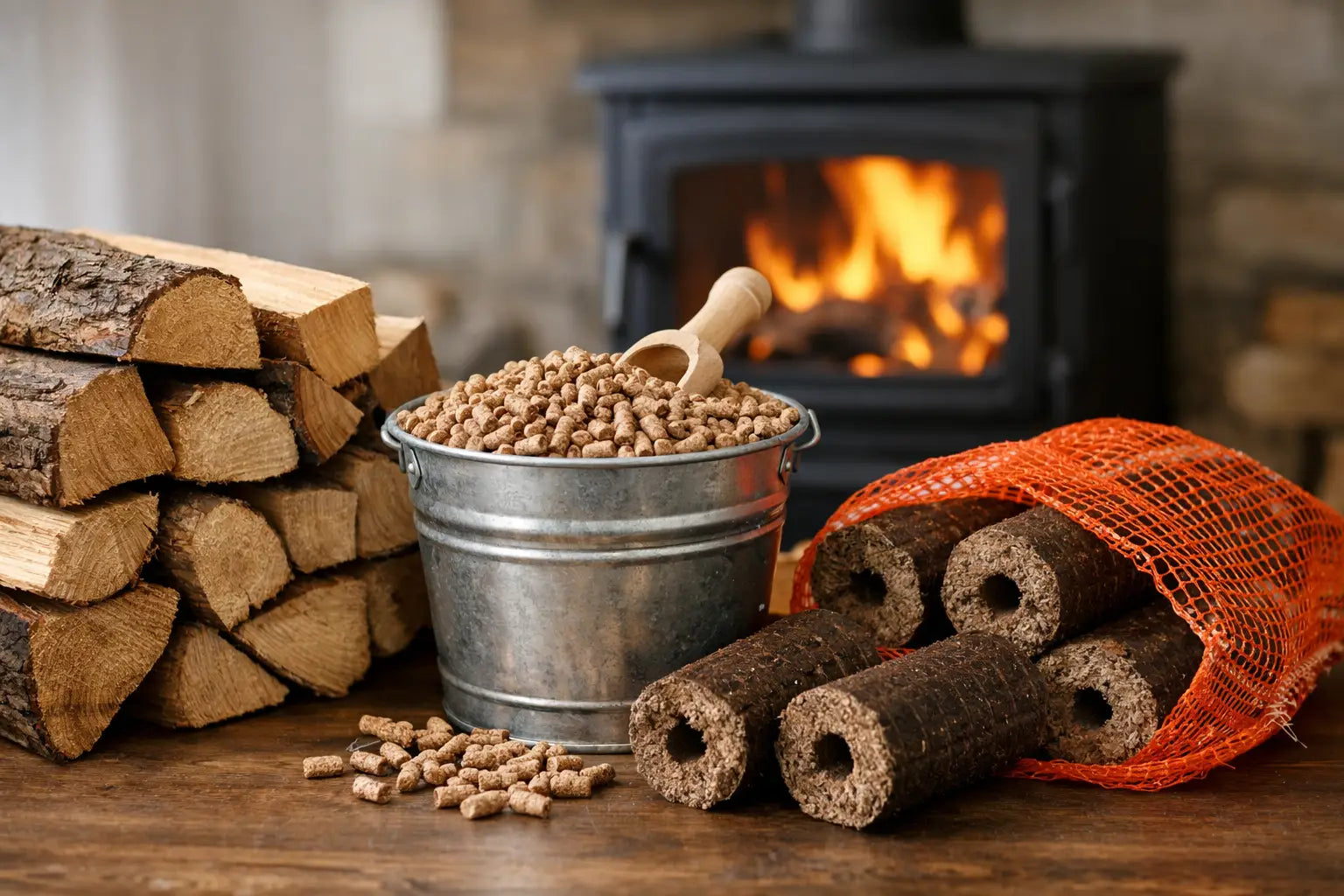
If you have ever struggled with smoky fires, reluctant stove starts or logs that hiss instead of burn, this guide to ready to burn fuel will save you time and guesswork. The difference usually comes down to moisture, storage and choosing the right fuel for the appliance you use. Get those basics right and you get a cleaner fire, steadier heat and less mess around the home.
What ready to burn fuel actually means
Ready to Burn is not just a marketing phrase. In the UK, it refers to wood fuel that meets legal moisture standards for sale in small volumes, helping households buy firewood that is suitable for immediate use. For logs, that means a moisture content of 20% or less.
That number matters because wet wood wastes heat. A large part of the fire's energy is spent boiling off excess water instead of warming your room. This is why unseasoned or poorly stored logs often create more smoke, darker glass on your stove door and more deposits in the flue.
When fuel is properly dried, it lights more easily, burns more consistently and produces a cleaner flame. It also makes buying simpler. Rather than trying to judge a load of logs by eye, you have a clear standard to work with.
Why moisture content matters more than wood type
Customers often ask which species is best, and that is a fair question. Birch, ash, oak, hornbeam and alder all have their place. But before species, moisture content comes first.
A dense hardwood with too much moisture can perform worse than a lighter species that has been properly kiln-dried. Dry fuel gives you predictable heat output and fewer problems in use. That is especially important if you rely on your stove or fireplace regularly through colder months and want to avoid wasting fuel.
Species still affects burn characteristics. Birch is popular because it lights readily and gives a lively flame. Oak and hornbeam are valued for longer, steady burns. Ash is a dependable all-rounder, while alder can be a good option for quick, clean fires. The right choice depends on whether you want fast heat, longer burn time or a balance of both.
A guide to ready to burn fuel for different appliances
Not every fuel suits every heating setup. If you use a wood-burning stove, properly dried logs are usually the most obvious choice, but size and density still matter. A small stove can be overwhelmed by oversized logs, while a larger firebox may benefit from denser hardwoods that hold heat well.
For pellet stoves, use wood pellets made to the right specification for your appliance. For multi-fuel stoves, briquettes, smokeless coal or anthracite may also be suitable, depending on the manufacturer's guidance. Open fires are less efficient than enclosed stoves, so fuel choice can make an even bigger difference to usable heat.
This is where many households lose value. They buy a fuel that is not quite right for their appliance, then assume the stove is underperforming. In practice, matching the fuel to the appliance usually improves heat, cleanliness and burn control.
Kiln-dried logs versus seasoned logs
The most common comparison is kiln-dried against seasoned. Seasoned logs can be a reasonable option if they have been dried long enough and stored correctly, but the issue is consistency. Moisture levels can vary widely within the same load.
Kiln-dried logs are dried in controlled conditions to bring moisture content down to a reliable level. That gives you more confidence when ordering online or buying in bulk. You are not paying for excess water, and you are less likely to face the familiar frustration of logs that look fine on the outside but are damp within.
That consistency is one reason many households now prefer Ready to Burn certified kiln-dried firewood. It removes a lot of uncertainty, especially for customers who want fuel delivered and stacked without needing months of further drying time.
How to choose the right format
The fuel itself matters, but so does the way it is packed and delivered. If you burn wood only occasionally, smaller net bags or compact fire-box packs may be the most practical choice. They are easy to handle, simple to store and ideal when space is limited.
For regular stove users, larger crates or palletised options usually offer stronger value. Buying in volume can reduce the cost per cubic metre and help you stay stocked through winter without repeated small orders. Trade customers and small commercial sites often prefer these formats because they make planning easier.
There is a trade-off. Bulk formats often give better value, but only if you have suitable storage. If your available space is exposed to rain or poor airflow, a smaller order that stays dry may be the better decision.
Storage still matters after delivery
One of the biggest misunderstandings around ready to burn fuel is that storage no longer matters once the logs arrive. In reality, dry fuel needs to stay dry.
Store logs off the ground, with good airflow, and protect them from direct rain. A log store with an open front or ventilated sides is usually better than wrapping everything too tightly in plastic. If air cannot move, moisture can build up and affect performance.
Try to keep a small working supply indoors or under close cover so you always have fuel ready for immediate use. This is particularly helpful in colder spells, when damp garden air can quickly affect the outer surface of logs even if the wood itself remains sound.
Signs you are buying good fuel
A proper guide to ready to burn fuel should also help you spot quality before you order. Look for clear information on moisture content, species, volume and pack format. If pricing is vague or the product description tells you very little about what you will actually receive, that is usually a warning sign.
Reliable suppliers are transparent. They tell you whether the wood is kiln-dried, how it is packed and what kind of burn performance you can expect. They also make delivery terms clear. That matters when you are planning household heating and do not want surprises.
It is also worth looking at whether the supplier offers complementary products such as kindling, briquettes, pellets or smokeless fuels. That usually indicates a more complete understanding of domestic solid-fuel heating rather than a basic firewood sideline.
Cost, value and what cheap logs often hide
The lowest price is not always the best value. Cheap logs are often larger in apparent volume because they contain more water, irregular pieces or lower usable energy. Once you factor in poorer burn performance and the extra fuel needed to achieve the same warmth, the saving can disappear.
Better fuel tends to produce more usable heat per load, less smoke and less residue. That can also reduce the amount of cleaning needed around the appliance and glass. Over a heating season, those practical differences matter as much as the headline price.
For households that burn fuel frequently, consistency is often where the real value lies. Knowing what will arrive, how it will perform and how quickly it can be delivered is worth a great deal when temperatures drop.
Choosing with confidence
If you are comparing suppliers, start with the essentials: certified dry fuel, clear product specifications, practical pack sizes and dependable delivery. From there, think about how you actually use your stove or fire. Some homes need easy-to-light daily fuel, others want slower-burning hardwoods for long evening use, and some need a mix.
That is why a broad product range matters. A supplier such as Candowe can serve both the occasional weekend fire and the household that relies on regular stove heat, because the right answer is not always one product in one size. It depends on your appliance, storage space, burn habits and how much convenience matters to you.
The best fuel is the one that arrives dry, burns cleanly and suits the way you heat your home. Once you have used properly prepared fuel, it becomes much easier to spot the difference - and much harder to go back to guesswork.